
Soundcore Q20 vs Q20i (2026): Which Budget ANC Headphone Is Actually Worth Buying?
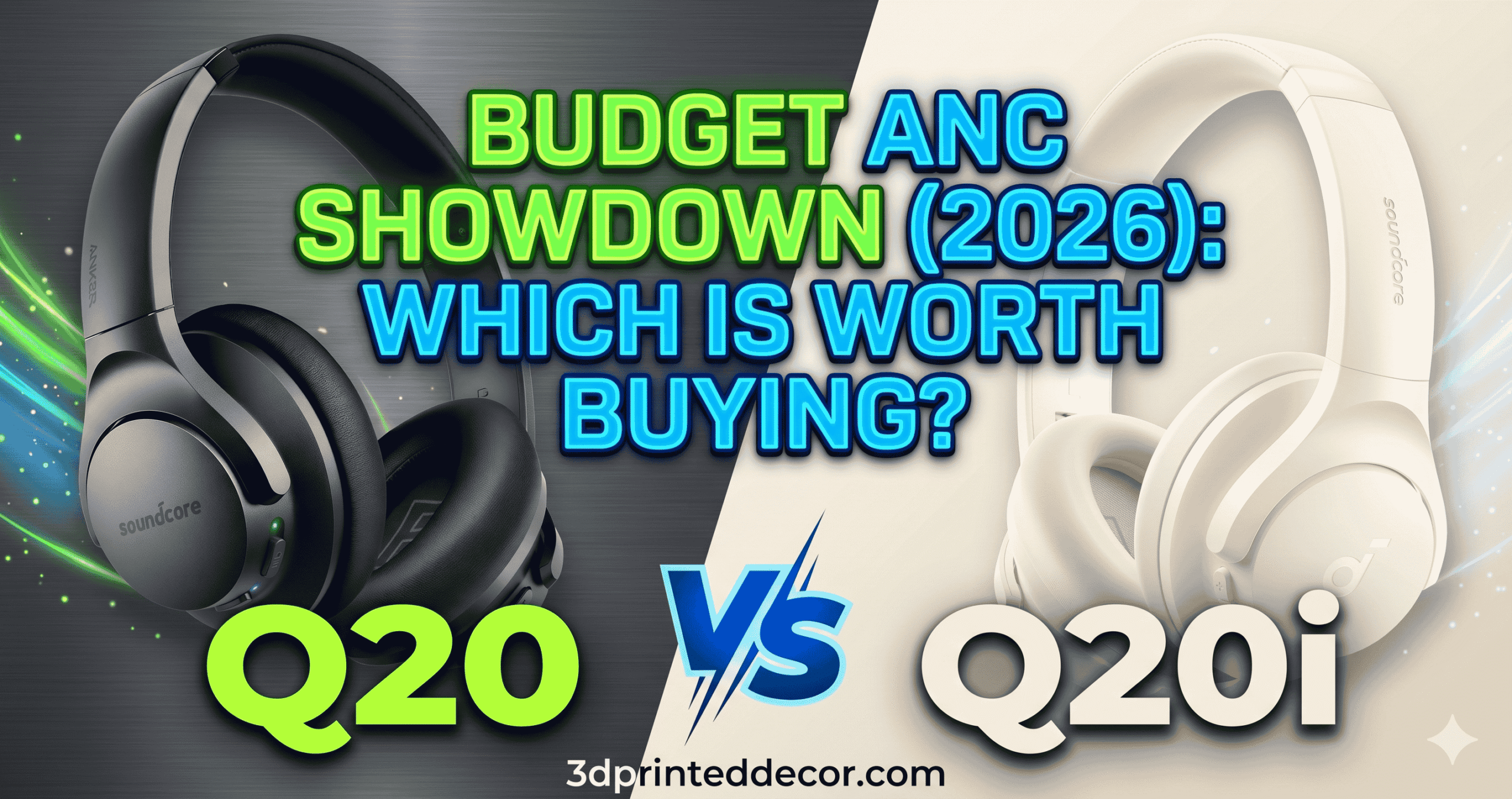
⚡ Quick Verdict — Read This First
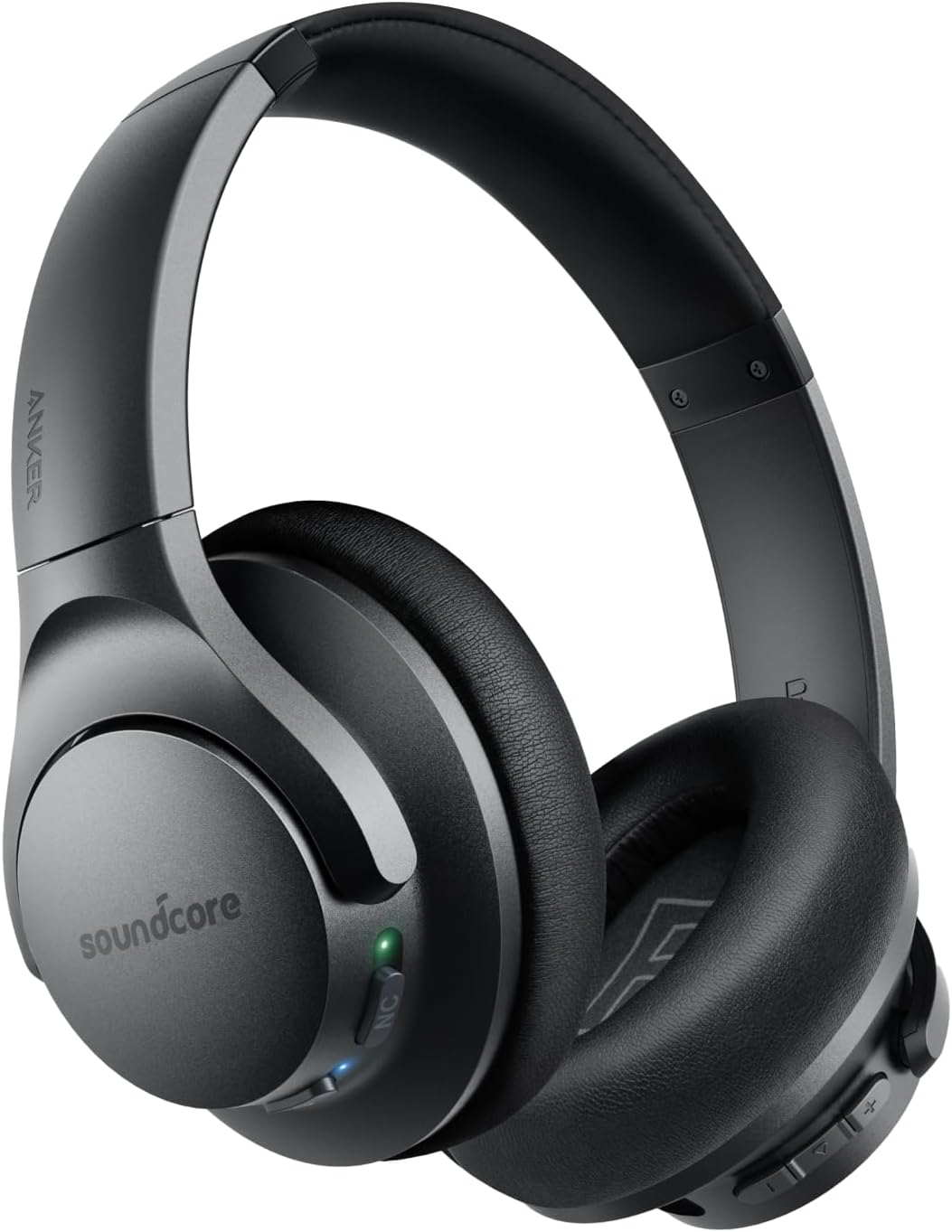
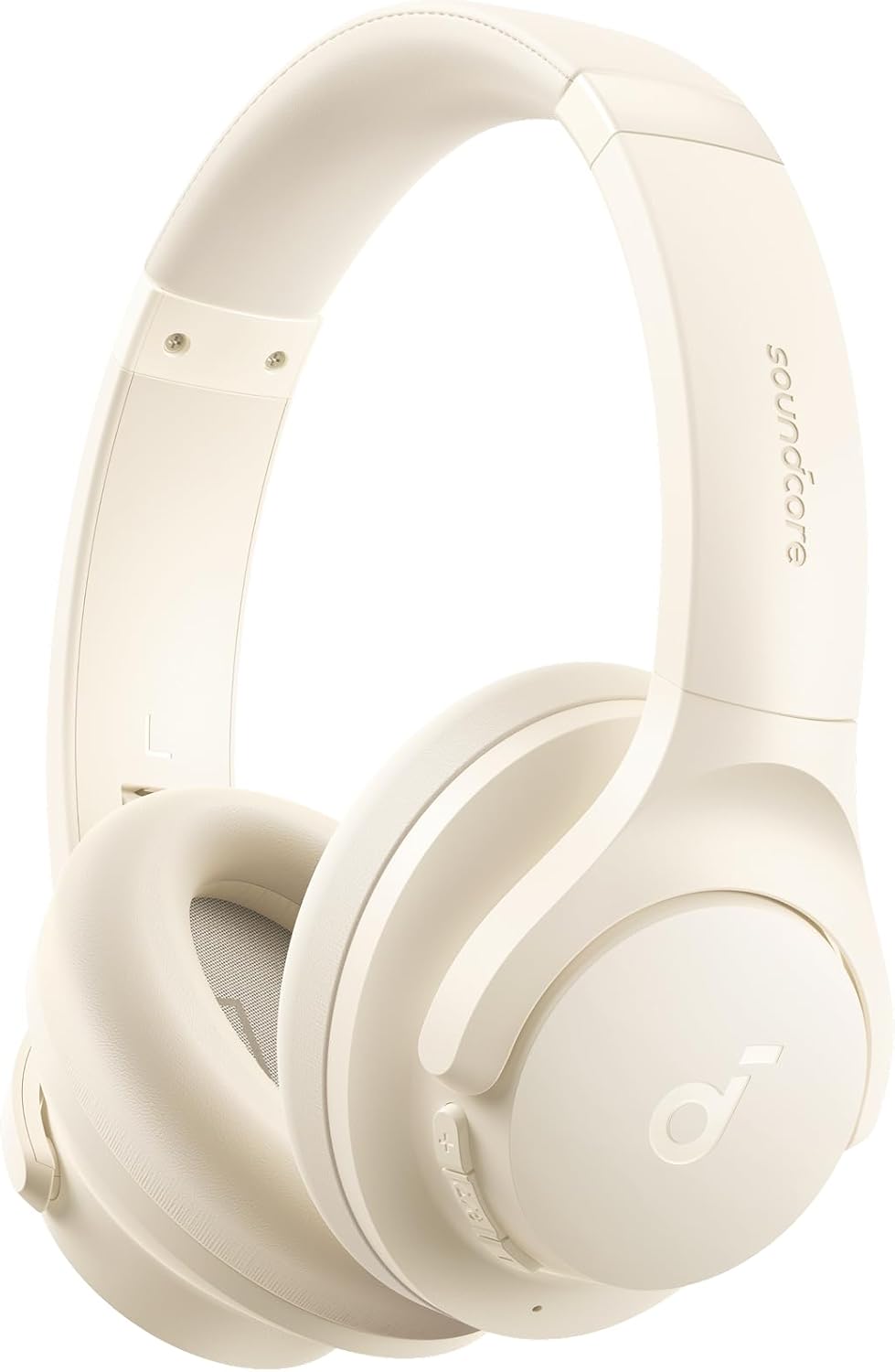
Two headphones. Nearly identical names. A $5 price difference. And one very clear answer to which one you should actually buy in 2026. I put both through their paces — on daily commutes, at my 3D printing workstation, and on a long-haul flight — so you don’t have to guess.
Q20 vs Q20i: The 3 Differences That Actually Matter
The Q20 and Q20i share the same 40mm dynamic drivers, the same over-ear form factor, and the same BassUp technology. But three upgrades in the Q20i change the daily-use experience meaningfully.
First: Transparency Mode. The Q20i adds a transparency mode that lets ambient sound pass through without removing the headphones. The original Q20 has no equivalent. For city commuters, this is a genuine safety feature.
Second: App Customization. The Q20i pairs with the Soundcore app and gives you a full parametric equalizer. The Q20 relies on a fixed signature — warm and very bass-forward, with no way to tune it. Once you dial in the EQ on the Q20i, it sounds noticeably more refined.
Third: USB-C charging. The Q20 shipped with micro-USB. The Q20i uses USB-C. In 2026, this isn’t a minor point — it’s the difference between hunting for a legacy cable and using the same wire you charge everything else with.
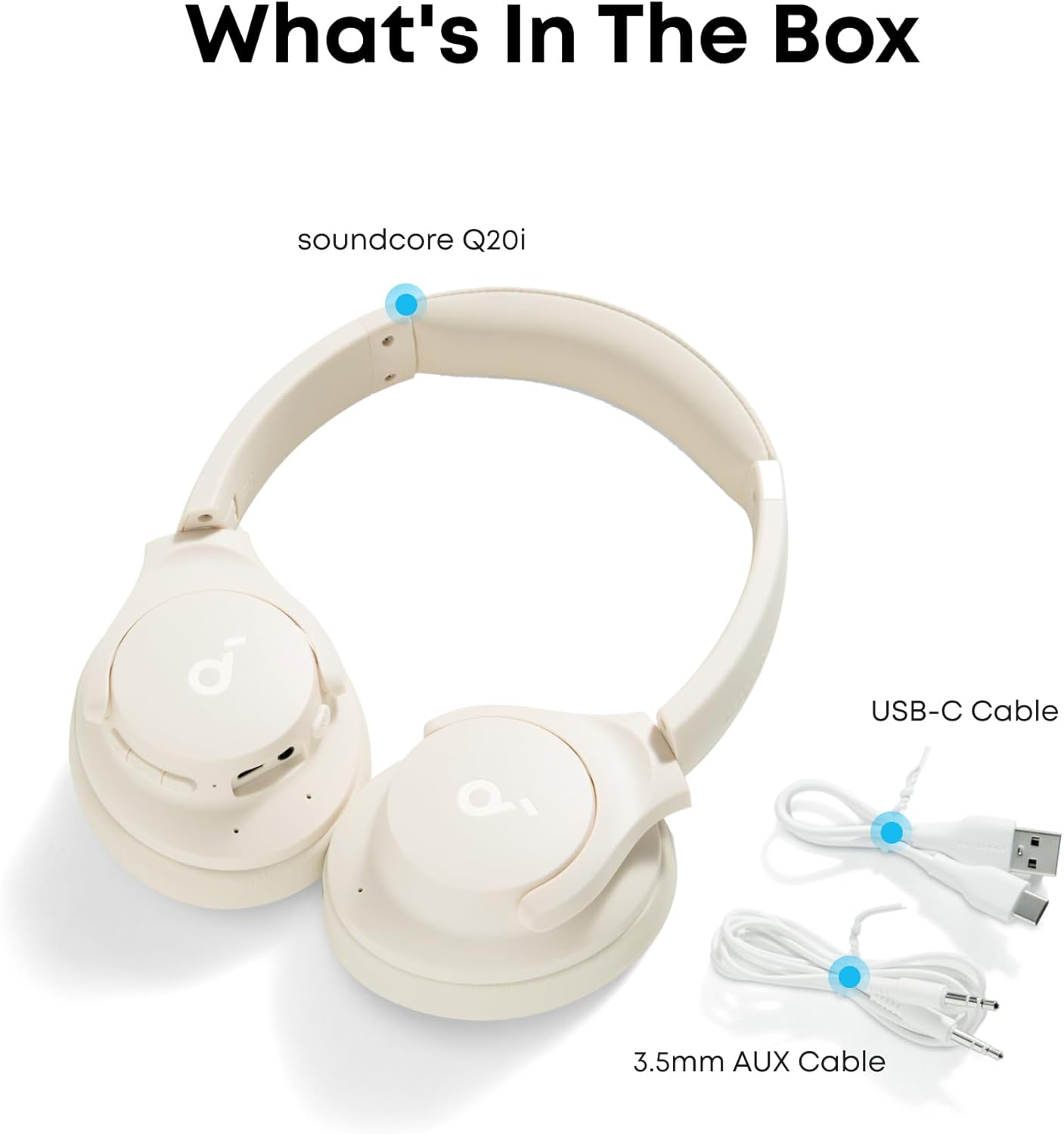
The Q20i ships with a USB-C charging cable and a 3.5mm aux cable — no pouch included, which is a miss at any price.
Is the Noise Cancellation on These Headphones Actually Good?
The Q20i’s hybrid ANC is genuinely impressive for a sub-$50 headphone. It uses four microphones — two external, two internal — to detect and counter low and mid-frequency noise in real time. The result: airplane engine rumble, HVAC hum, and the constant drone of industrial fans are reduced to something you can almost forget about.
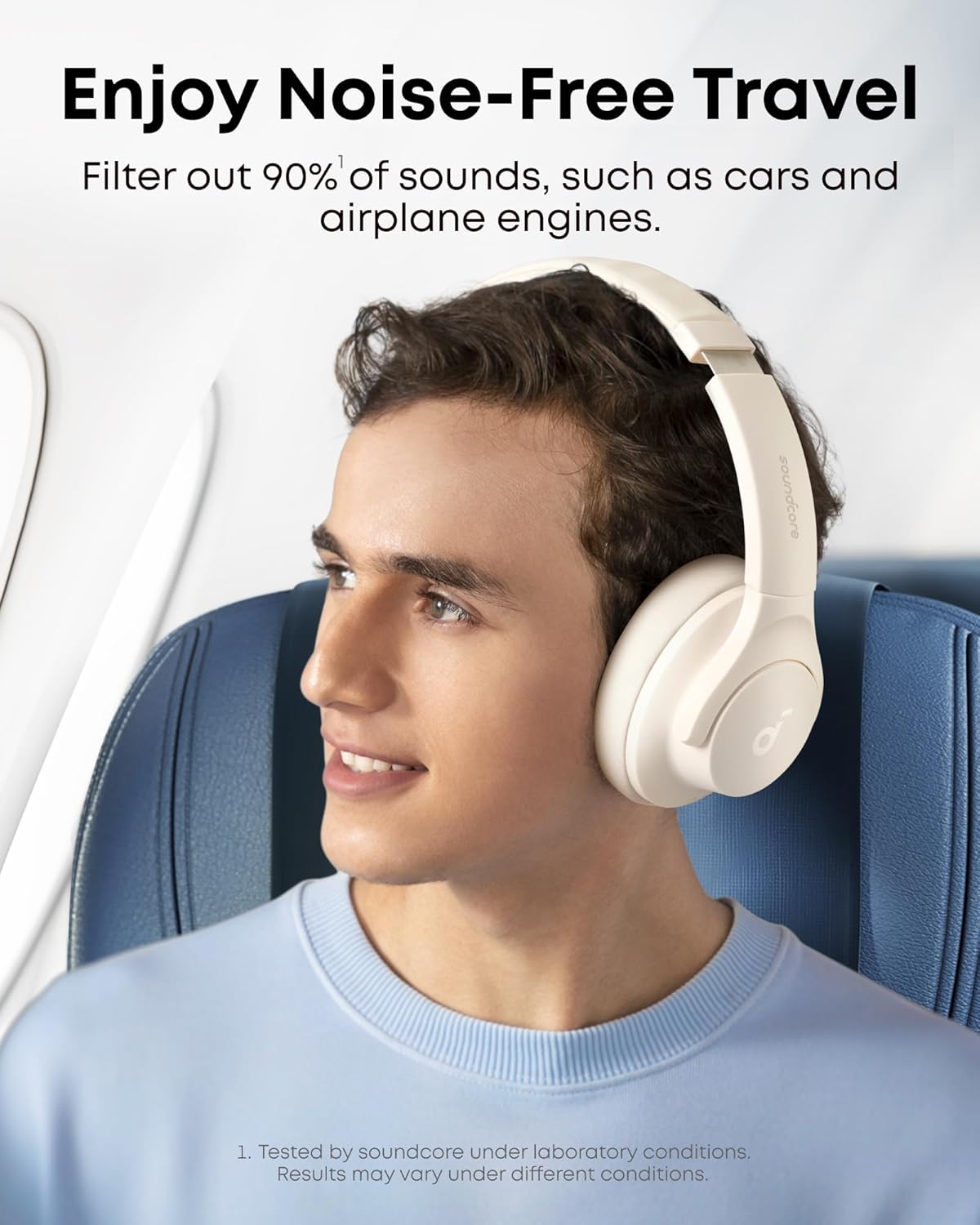
The Q20i reduces airplane and commute noise enough to make long-haul travel genuinely restful.
After months of daily use in a light industrial setting, one verified buyer described the fan noise being reduced to a “gentle background hum” — which aligns exactly with my experience at a 3D printing workstation where the machine’s constant whirring becomes a non-issue. If your environment is loud and you want to stay focused, the Q20i earns its keep.
The original Q20 offers similar ANC performance. The gap between the two on noise cancellation is minor. Where the Q20i pulls ahead is transparency mode — the ability to briefly “listen through” the headphones by pressing one button, without pulling them off your head.
Sound Quality: Bass Monster or Balanced Performer?
Out of the box, both headphones lean heavily toward bass. The BassUp technology is always active — there’s no toggle needed. Double-press the play button during bass-heavy tracks (EDM, hip-hop, Afrobeats) and the low-end response amplifies further. It’s fun. It’s not subtle. And it’s not for everyone.
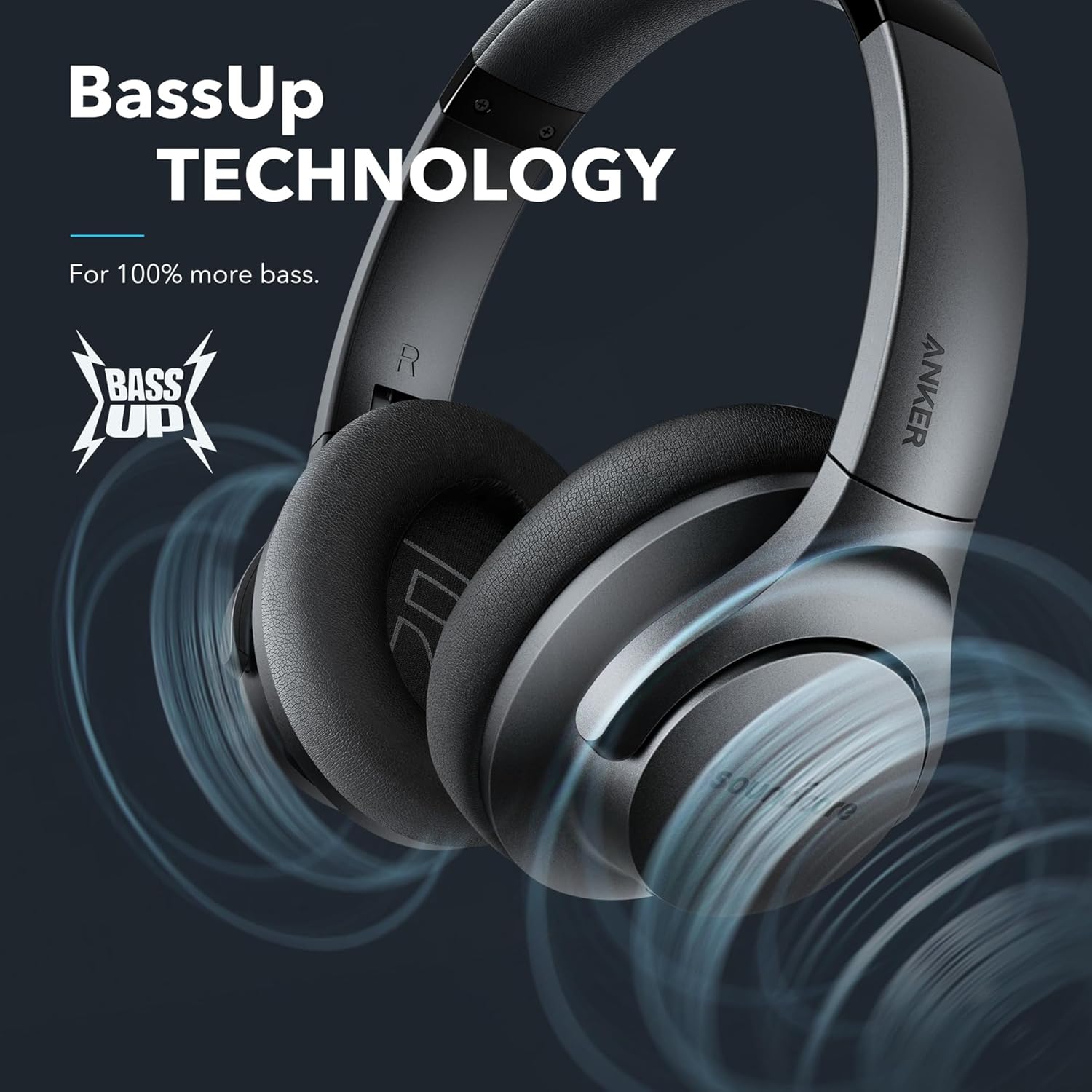
BassUp conducts real-time frequency analysis to amplify low-end output — the effect is immediate and substantial.
Where the Q20i separates itself: the Soundcore app’s equalizer. With a few minutes of tuning — pulling back the sub-bass slightly, boosting around 3kHz for presence — the Q20i becomes a genuinely versatile headphone. The 40mm drivers reproduce Hi-Res audio up to 40kHz, and with a balanced EQ, clarity in the mids and highs opens up considerably.
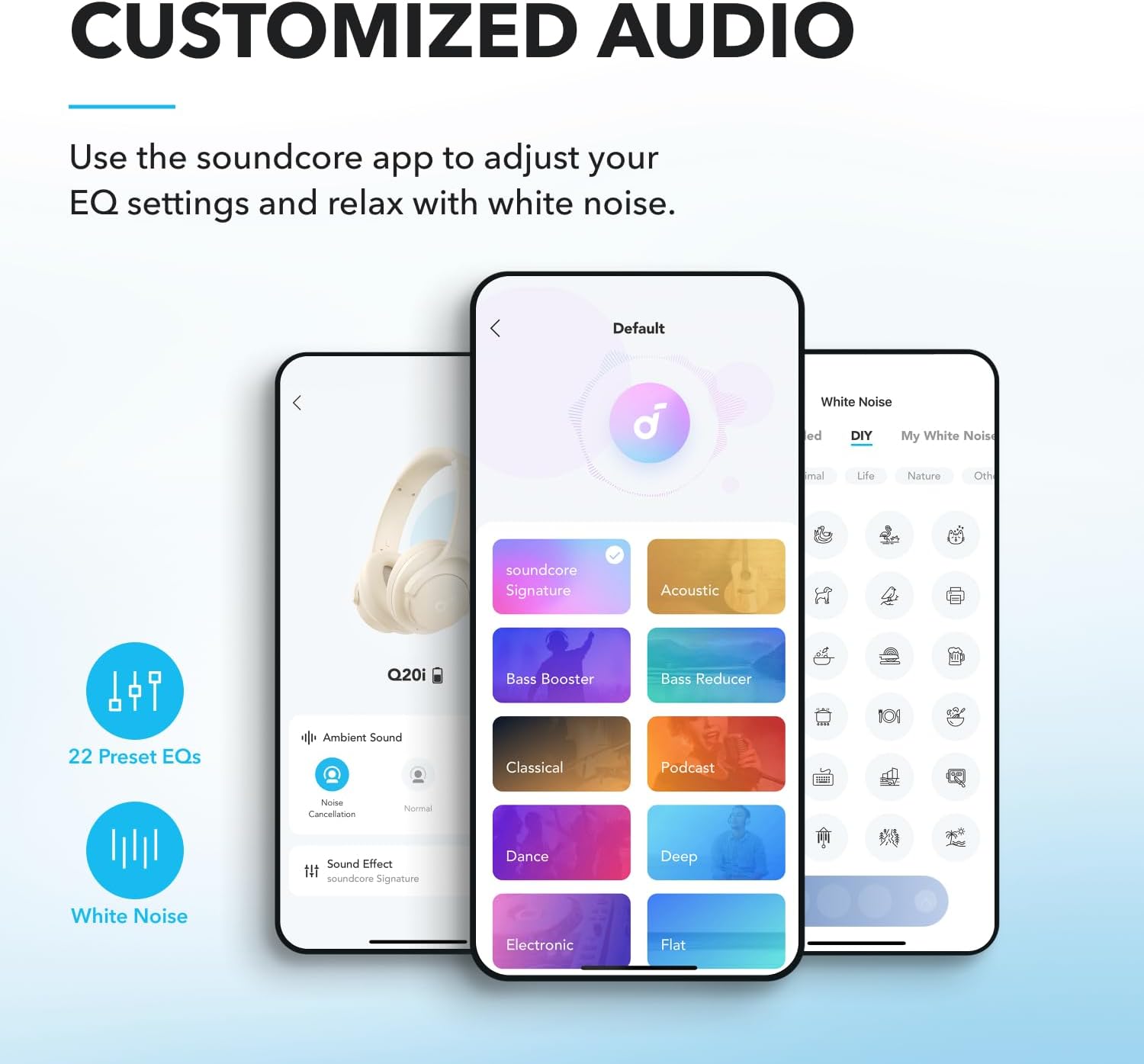
The Soundcore app unlocks parametric EQ — this alone justifies choosing the Q20i over the original Q20.
Comfort & Build Quality: Can You Wear These All Day?
Both headphones weigh under 250 grams. The Q20i has been verified at 246 grams. The headband adjusts smoothly, the ear cups rotate on two axes to seat flush against different head shapes, and the memory foam cushioning is genuinely plush — better than what you’d expect at this price point.
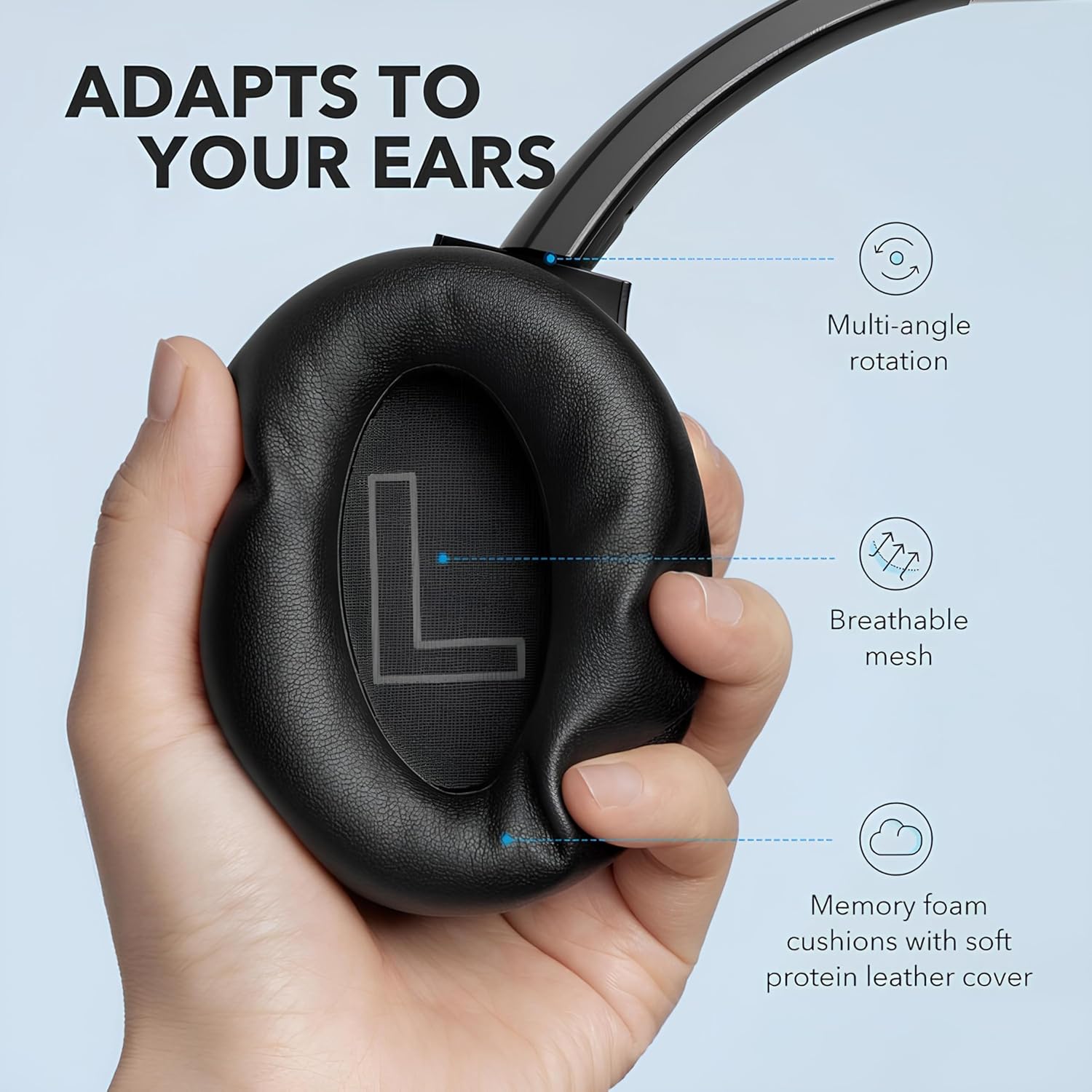
The floating ear cup design adapts to your head shape, distributing pressure evenly over long sessions.
Multiple long-term owners report wearing these for 8-hour workdays without discomfort. That tracks with my own experience — no hotspot on the crown, no pressure behind the ears, no clamping that gets worse over time. The plastic construction doesn’t squeak or flex in an alarming way. It’s not metal-reinforced like a Sony or Bose, but it’s well-assembled for the price.
One genuine complaint on the Q20i: the sliding headband adjustment mechanism can pinch fingers. It’s a repeated observation across multiple verified buyers and something I noticed personally when adjusting quickly. Minor, but worth knowing.
If you wear glasses, both headphones perform better than most at this price. The oval ear cups are wide enough to accommodate frames without the painful pressure point behind the ear that plagues tighter designs. For a deep dive into open-ear alternatives if full coverage isn’t your preference, see our Boytond Ultra Open Ear Earbuds review.
Battery Life: The Number You Actually Need to Know
Soundcore advertises 40 hours with ANC on and 60 hours with ANC off for both models. Those numbers are measured at 60% volume. Real-world usage at higher volumes lands closer to 35 hours ANC-on — still extraordinary for any headphone, let alone a budget one.
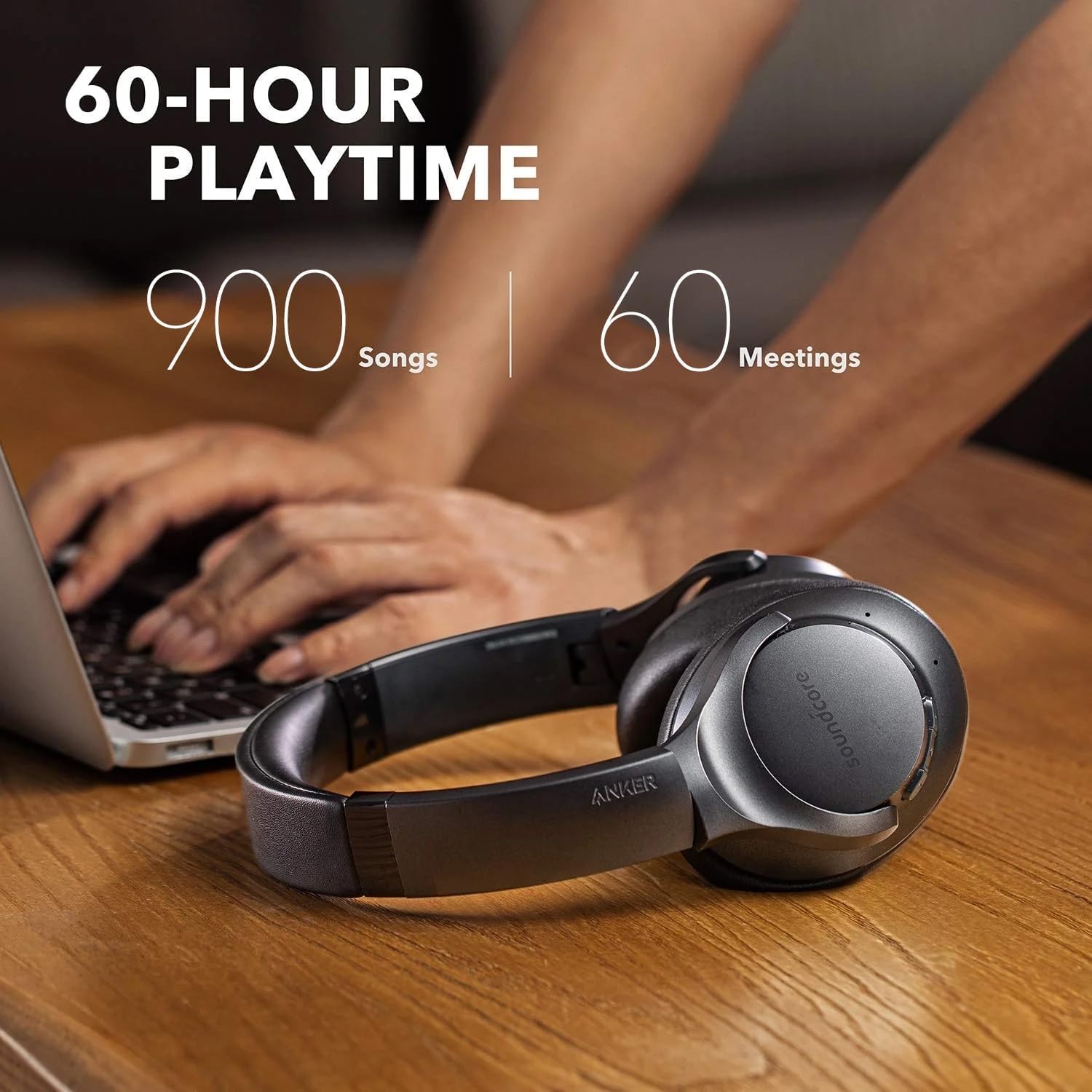
At 60 hours maximum playtime, the Q20 outlasts most premium competitors charging twice the price.
Fast charging is a standout feature. Five minutes of charging yields 4 hours of playback. A 20-minute charge goes from 10% to roughly 50%. For someone who forgets to charge overnight — which is most of us — this is a real-world lifesaver. One user reports using ANC mode for 40 hours per week and only charging once a week, with no noticeable battery degradation after a full year of use.
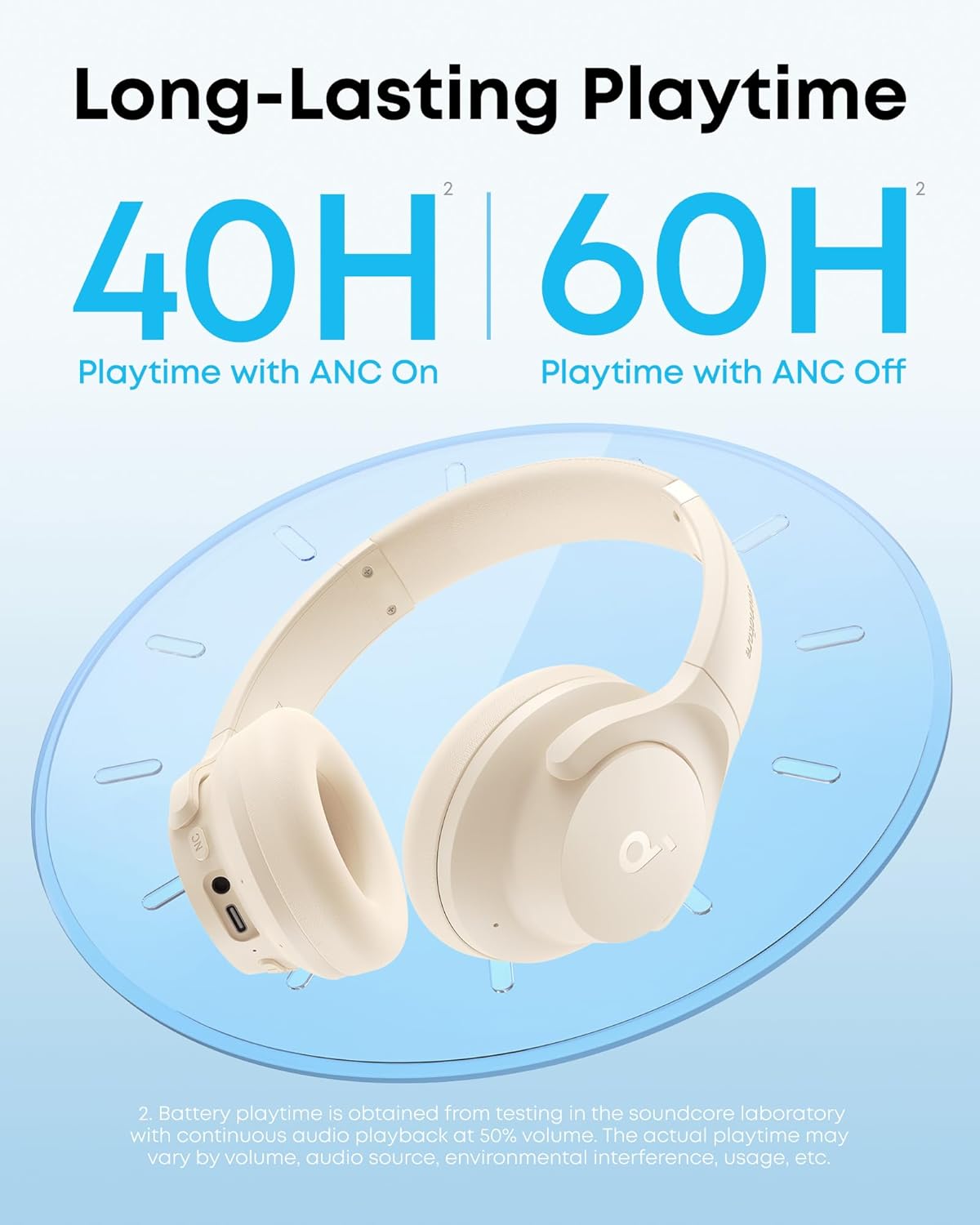
40 hours ANC-on makes the Q20i a serious travel companion — enough for multiple transatlantic flights without a recharge.
For travel, pair these with a quality power bank from our best power banks roundup — though at 60 hours, you’ll rarely need it. Both models also support wired 3.5mm audio when the battery is completely dead, though ANC is disabled in wired mode.
Soundcore Q20 vs Q20i: Full Feature Breakdown
Here’s a side-by-side breakdown of every spec and feature that matters for a real buying decision between these two headphones.
| Feature | Soundcore Q20 | Soundcore Q20i | Winner & Why |
|---|---|---|---|
| Price (2026) | $44.98 | $39.98 | Q20i WIN More features at a lower price — easy call |
| ANC Type | Hybrid (4-mic) | Hybrid (4-mic) | Tie Same ANC hardware and algorithm in both models |
| Transparency Mode | No | Yes | Q20i WIN Critical safety feature for commuters — Q20 lacks it entirely |
| Battery (ANC on) | 40 hrs | 40 hrs | Tie Both deliver exceptional 40-hour ANC endurance |
| Charging Port | USB-C | USB-C | Tie Both current models now use modern USB-C |
| App EQ | Basic | Full parametric EQ | Q20i WIN Full EQ control transforms sound quality — Q20 has no equivalent |
| Mic Quality | Adequate | Adequate (muffled in noise) | Tie Neither model excels on calls in loud environments |
| Carrying Case | Soft pouch ✓ | None ✗ | Q20 WIN Only the Q20 includes a pouch — a surprising omission on the Q20i |
| Weight | 250g | 246g | Tie Both are light enough for all-day wear without fatigue |
| Driver Size | 40mm dynamic | 40mm dynamic | Tie Same hardware — sound difference comes from EQ, not drivers |
Soundcore Q20i — Pros and Cons
What Works
- Genuinely effective hybrid ANC under $50
- 40-hour ANC battery is class-leading
- 5-minute fast charge = 4 hours playback
- Full parametric EQ via Soundcore app
- Transparency mode for safe commuting
- Memory foam cushions, comfortable all day
- USB-C charging
- Dual device connection
What Doesn’t
- Mic sounds muffled in noisy environments
- No carrying pouch or case included
- Headband adjuster can pinch fingers
- Bass-heavy default — not neutral
- ANC doesn’t handle high-frequency noise well
- No ANC when using wired connection
The Reality of Long-Term Ownership
After six months to a year of daily use, the Q20i holds up better than its price suggests. The plastic doesn’t develop the creaks and micro-fractures that cheaper headphones typically show by month four. The ear cup cushioning retains its softness. The Bluetooth pairing remains instant.
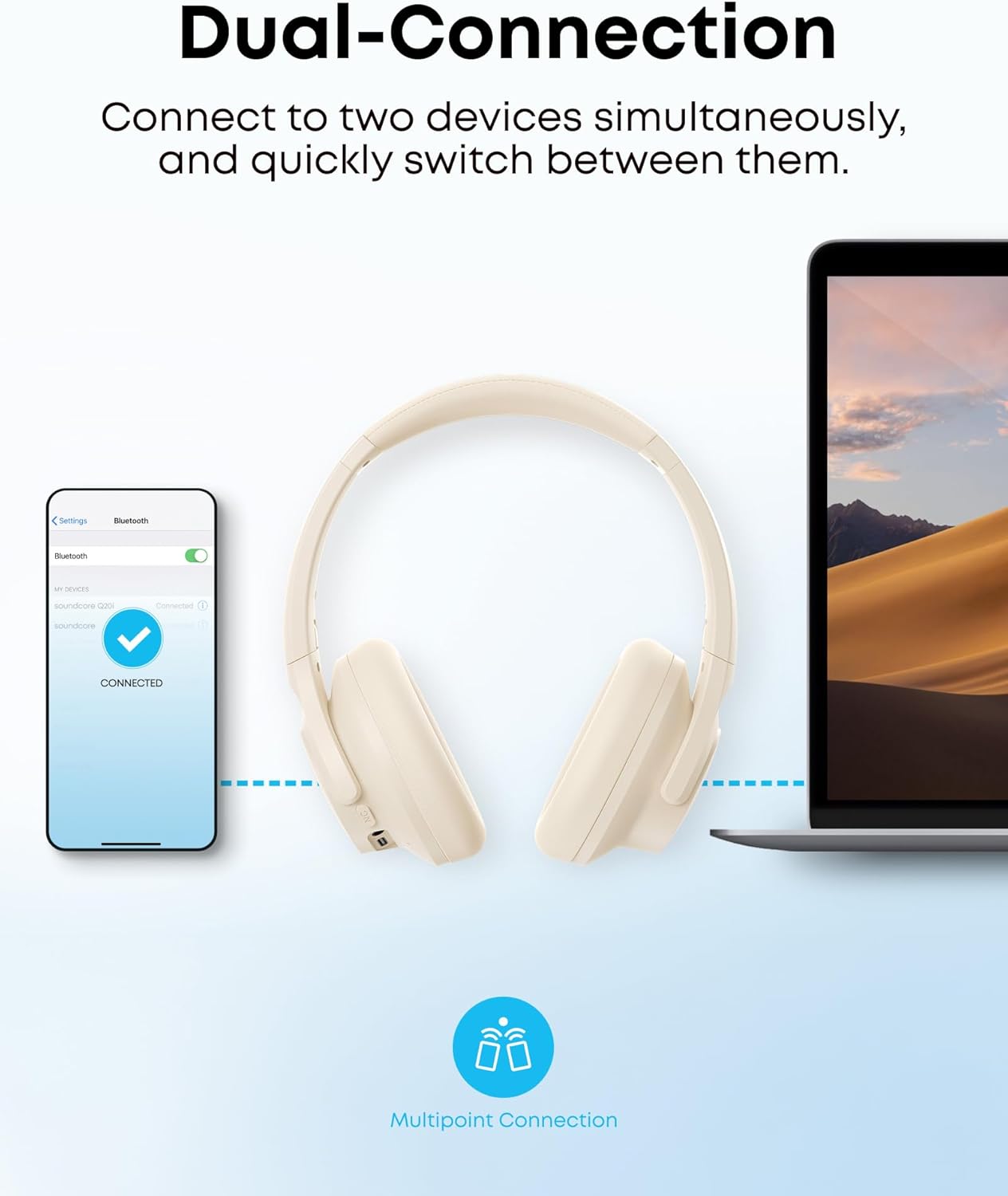
Dual-device connection means seamless switching between your laptop and phone — a feature many premium headphones still lack.
What gets annoying: The ear cushion foam eventually compresses after sustained daily use. By the 12-month mark, the seal against your head is slightly less effective, which slightly reduces passive isolation. Replacement ear pads are available, but Soundcore doesn’t sell official ones — you’re looking at third-party options on Amazon. Budget another $10–15 at the one-year mark if you’re a heavy daily user.
Hidden costs: There are none beyond the above. No subscription. No premium app tier. The Soundcore app is free and functional. The headphones work as a standard Bluetooth device without the app at all.
The non-obvious tip: The Q20i powers down automatically after a set idle period when disconnected from a device. This isn’t well-documented, but it’s why several owners report surprisingly light battery drain even when they forget to manually turn the headphones off. Let them sit — they’ll handle themselves.
Who Should Buy the Q20i — and Who Shouldn’t?
The Q20i is the right call for commuters, students, open-plan office workers, and anyone using a 3D printer or other loud machine who needs to stay focused without spending $200+. If you’ve been using the speakers at your workstation and finding the ambient noise too intrusive, a pair of these will solve the problem immediately.
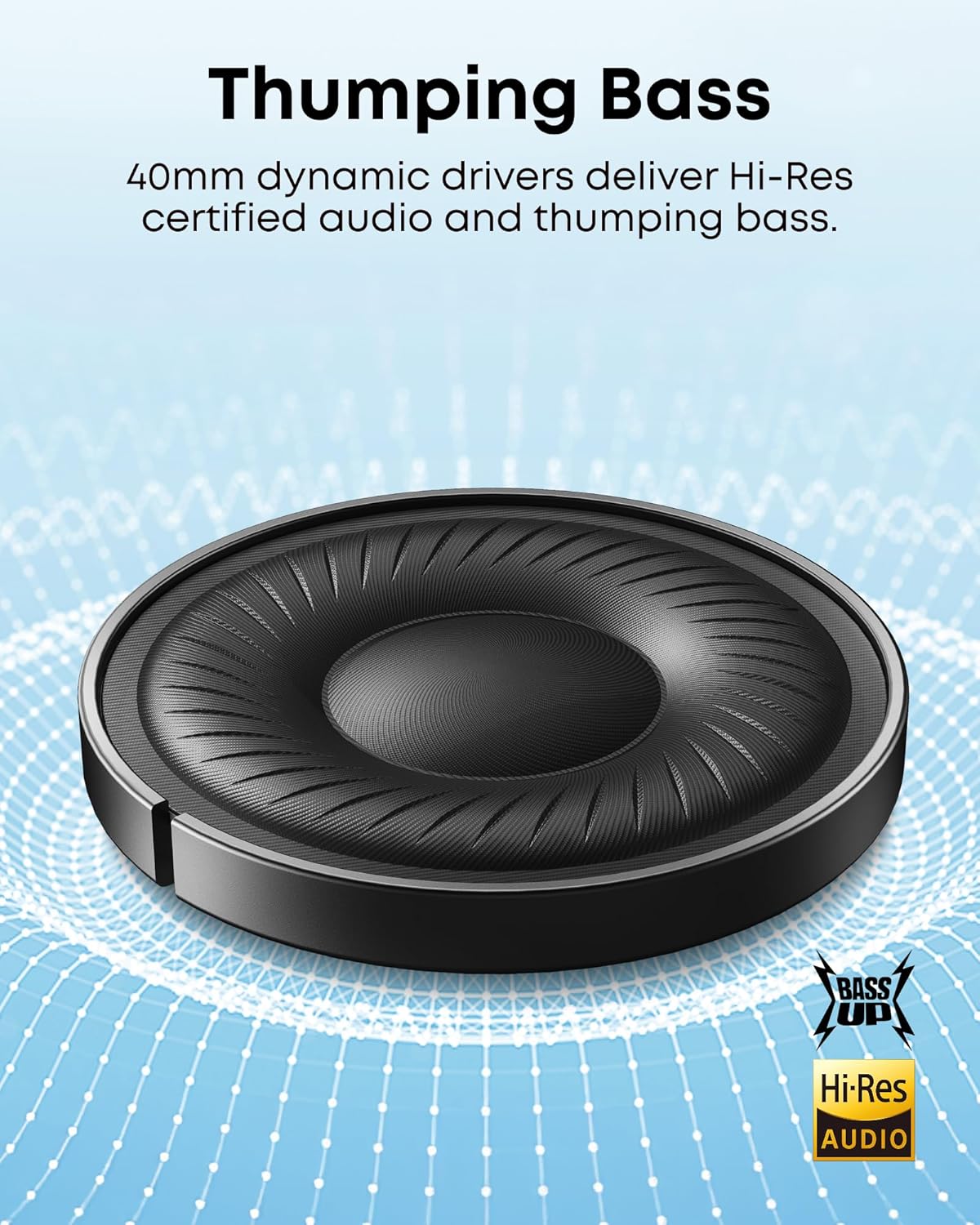
The BassUp signature makes the Q20i particularly satisfying for bass-forward genres — EDM, hip-hop, and pop all feel energetic and full.
Skip these if you’re a remote worker who lives on video calls. The mic quality is passable in quiet rooms, but in any background noise, the other party will notice. For professional call quality at a budget, look at options like the best bone conduction headphones for calls or consider a dedicated USB microphone setup.
If you’re debating whether to step up to the AirPods Pro 3 or Sony WH-1000XM6, the honest answer is: the Q20i gets you 70% of the ANC performance at 10–15% of the cost. If that gap bothers you, spend the money. If it doesn’t — and for most use cases it genuinely won’t — the Q20i is a smarter purchase.
It’s cheaper than the Q20 right now, sounds better with the app’s EQ, adds transparency mode and USB-C, and comes from Soundcore’s most reviewed headphone line on Amazon. The only thing you give up is the included carrying pouch — which you can replace for $8.
Check Q20i Price on Amazon →Frequently Asked Questions
Related posts:
 6 Best Bone Conduction Headphones for Calls of 2025
  Nothing Headphone (1) Review: The Transparent Truth – Are These KEF-Tuned Cans Worth It in 2025?
  Our Verdict: Are the Boytond Ultra Open Ear Earbuds the Best for 2025?
  Sony WH-1000XM6 Review: The Undisputed King of Noise-Canceling Wireless Headphones?
  79 Best Early Amazon Prime Day Deals Under $50 in 2025: Top Picks for Budget Shoppers
  Black Friday Tech Deals 2025: Grab Them Now or Wait for Black Friday 2026
  Final Hours: Cyber Monday 2025 Gaming Deals on Amazon (Up to 60% Off)
  Best AI Translation Earbuds 2025: Break Language Barriers Instantly (TikTok Viral Product)
  WOOASK A9 Translation Earbuds Review: I Tested This $300 Translator in 7 Countries (Real Results)
  ANFIER A9 AI Translation Earbuds Review 2026: ChatGPT-Powered Real-Time Translator Tested
  AirPods Pro 3 Live Translation Demo & Review (After 1 Week of Real Use)
  Soundcore by Anker Q20i Review 2026: The Best Noise-Cancelling Headphones Under $40?