
QIDI Max4 Combo Review 2026: The Largest Sub-$1,500 CoreXY That Can Actually Print Nylon
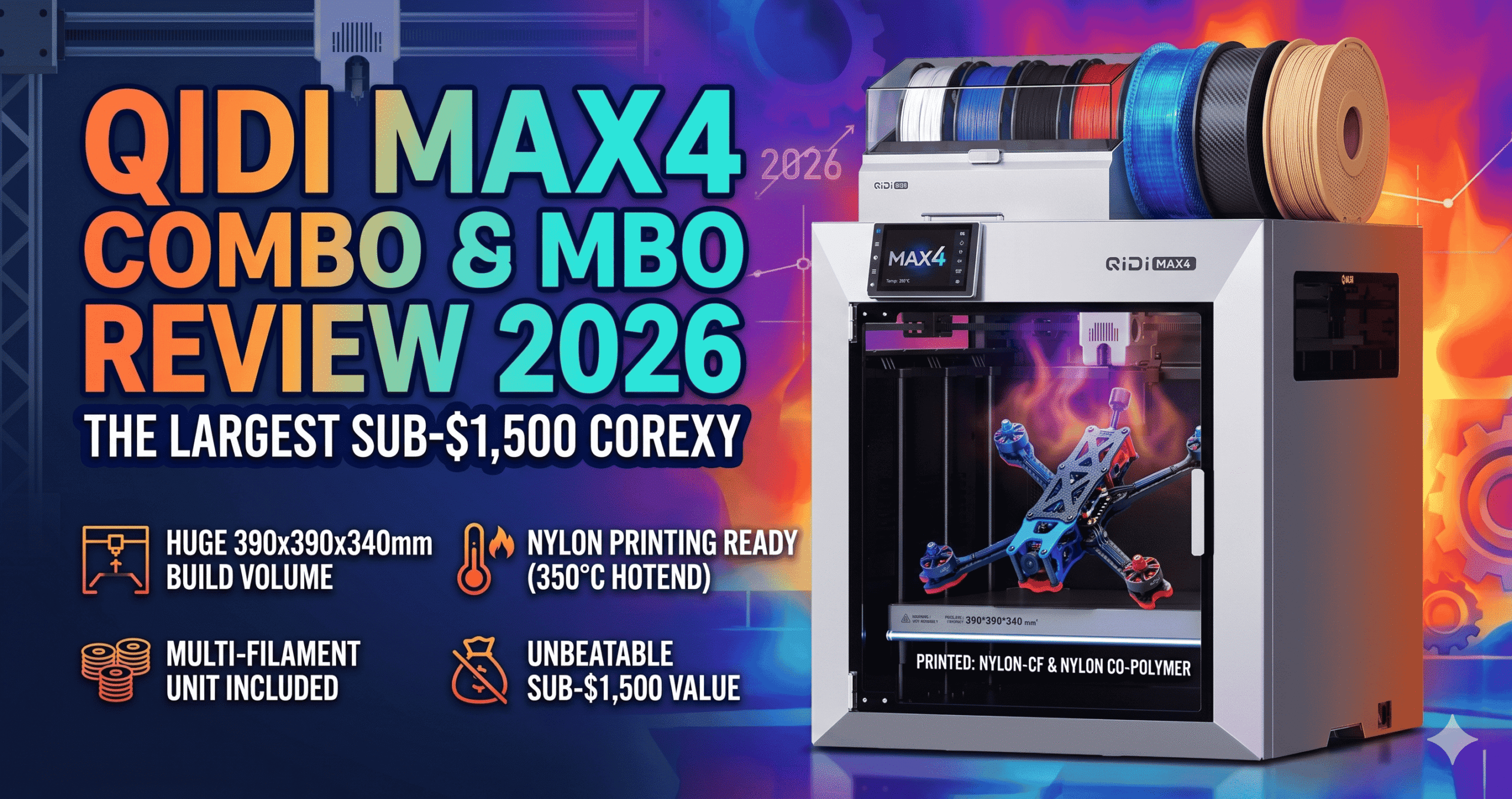
The QIDI Max4 Combo with QIDI Box mounted on top. Note the glass-paneled enclosure and the foam-insulated side panels — not just aesthetic, they meaningfully dampen sound and help hold chamber temperature.
The QIDI Max4 Combo is a monster of a printer that charges a reasonable price for it. At 390×390×340mm, it is one of the largest enclosed CoreXY machines you can buy without entering commercial territory. More importantly, it comes with a 65°C actively heated chamber and a 370°C hotend — which means it can genuinely handle engineering materials like carbon-filled nylon and glass-filled ABS without the babysitting that budget machines require.
I have a Creality K1 Max and an Ender 3 in my workspace. The K1 Max is fast. The Max4 is both fast and enormous. That combination is rarer than it sounds.
Check Price on Amazon — QIDI Max4 Combo Current Price: $1,499.00 · Prime EligibleAs an Amazon Associate I earn from qualifying purchases at no extra cost to you.
Is the QIDI Max4 Combo Worth Buying in 2026?
Yes — with one important caveat. The Max4 Combo delivers print quality that matches Bambu Lab machines at a price that undercuts the Bambu Lab H2S Combo by roughly $300. If you need a large build volume and plan to run engineering filaments like ABS, ASA, or PA-CF, it is one of very few printers at this price that are genuinely set up for that work out of the box.
The caveat: it is not quiet, and the QIDI Box multi-material system requires some setup patience. Neither of those issues affects print quality, but they affect daily workflow.
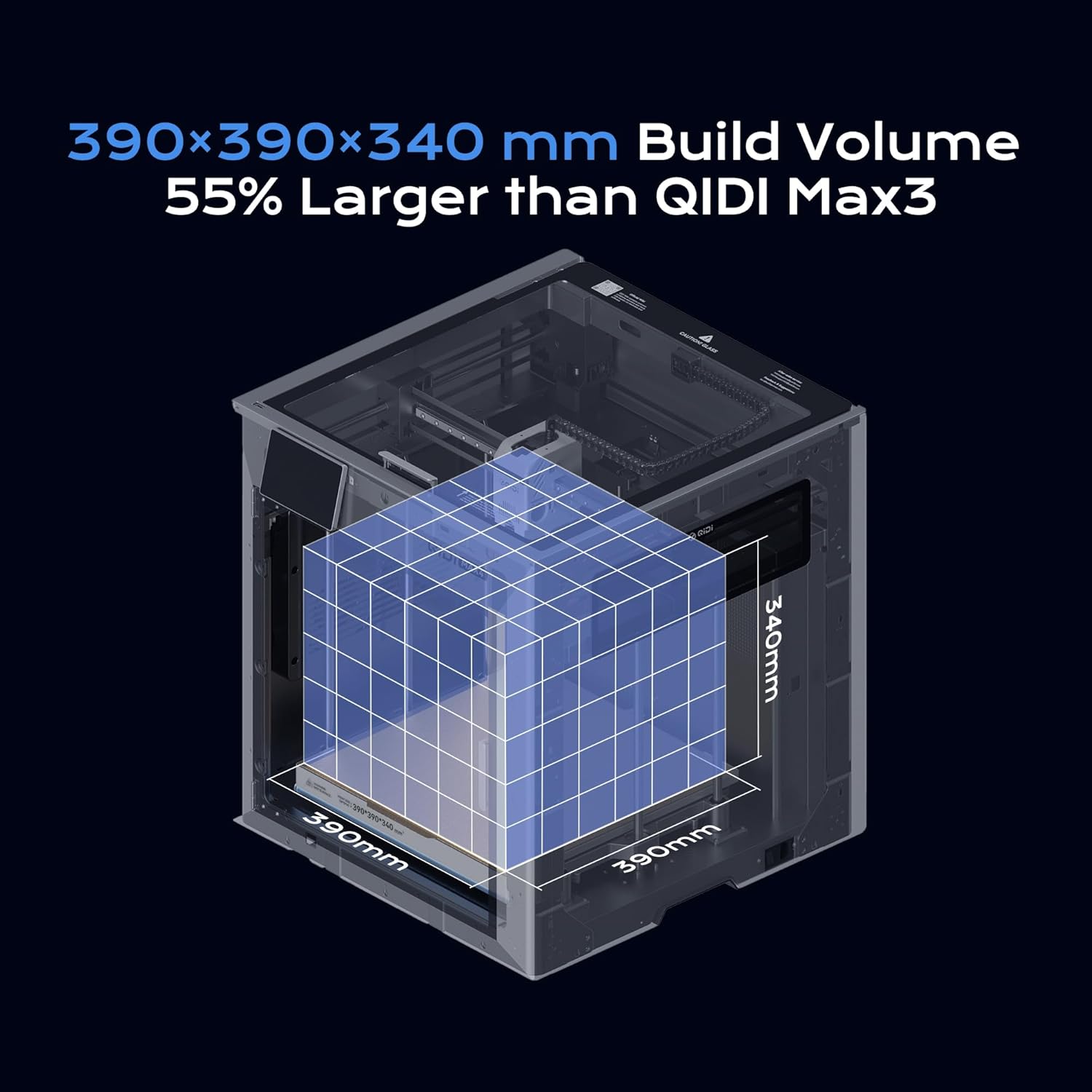
The Max4’s 390×390mm build plate next to a standard 256mm plate. The size difference is immediately obvious — this is what “large-format” actually looks like.
Print Quality: What the Tests Actually Show
Print quality on the Max4 is legitimately impressive. First layers come out nearly perfect with the auto bed leveling, and overhangs test clean up to 80° — a result that puts it at the top tier for this class of printer. Surface finish on PETG vase prints shows zero visible layer inconsistency.
Engineering Material Performance
ABS Vice Grips printed with zero warping. Glass-filled ABS Channel Lock pliers — same result. PA12-CF Adjustable Pliers, also no warping and fully functional. The slicer automatically activates the heated chamber when it detects these materials, so there is no manual configuration required.
One important note: the QIDI Box maxes out at 65°C for drying. For nylon specifically, that is not enough — PA12-CF needs 90°C. Dry your nylon in a dedicated dryer before printing. This is not a flaw unique to QIDI; it applies across all AMS-style boxes in the market.
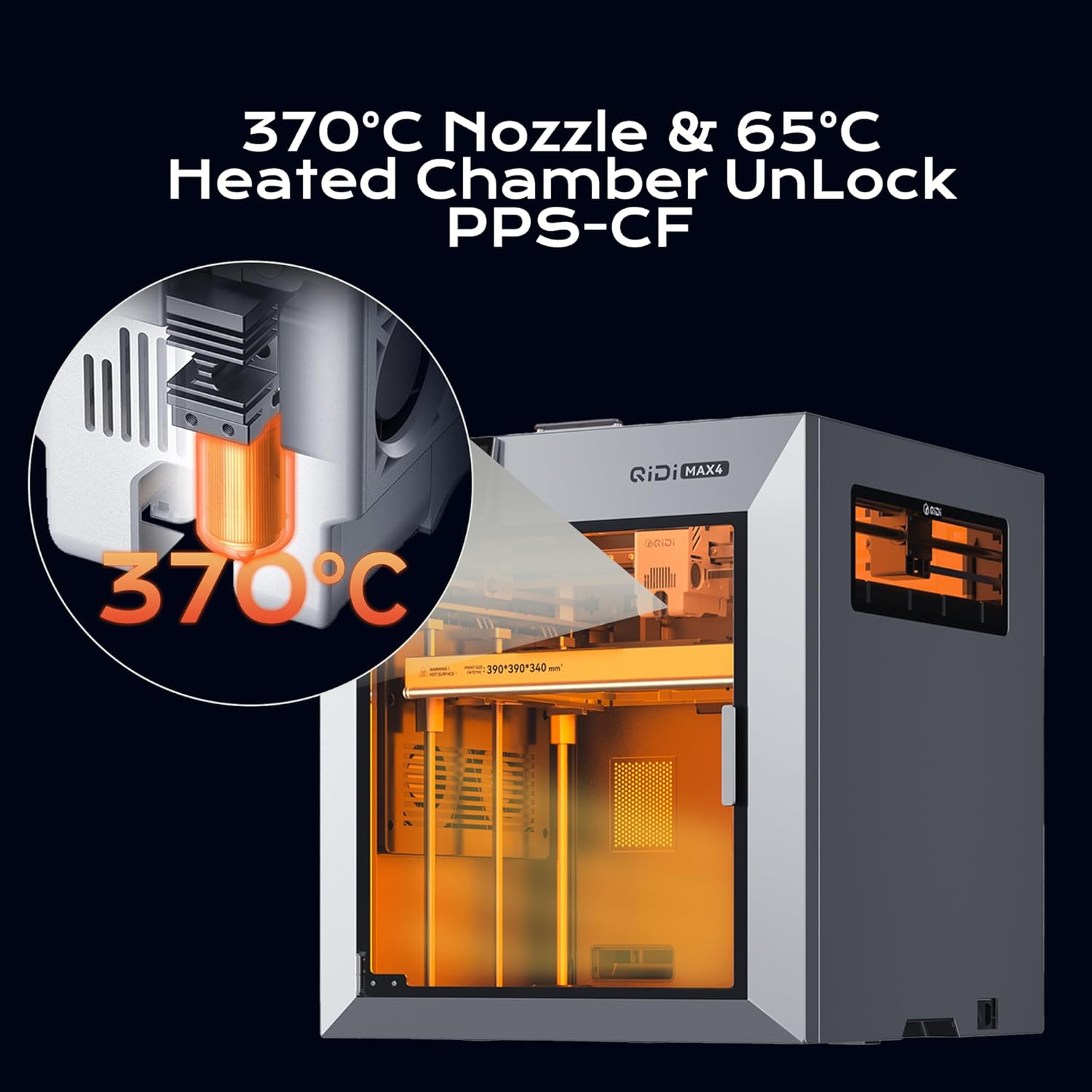
370°C hotend paired with a 65°C active chamber — this combination enables genuine engineering-grade filament support without add-on modifications.
Multi-Color Printing Reality
Multi-color printing works, but default purge settings on black-to-white transitions were insufficient — contamination was visible on test prints. Increasing the purge volume from 90mm³ to 500mm³ resolved this completely. Expect a 10+ hour print time for complex multi-color articulated designs. The waste is real, and calibrating purge volumes takes one or two test runs.
Build Size: Is 390×390×340mm Actually Useful?
The 390×390mm footprint is the largest print area of any printer the reviewers who benchmarked this machine currently own. To put it in physical terms: consolidating a four-build-plate Iron Man helmet down to two plates is the kind of time savings that makes a real difference on long projects.
The 340mm Z height is the one dimension where QIDI made a concession. Some competitors offer 350mm. For most prints this 10mm difference is irrelevant — but if you routinely print at maximum Z, it is worth noting.
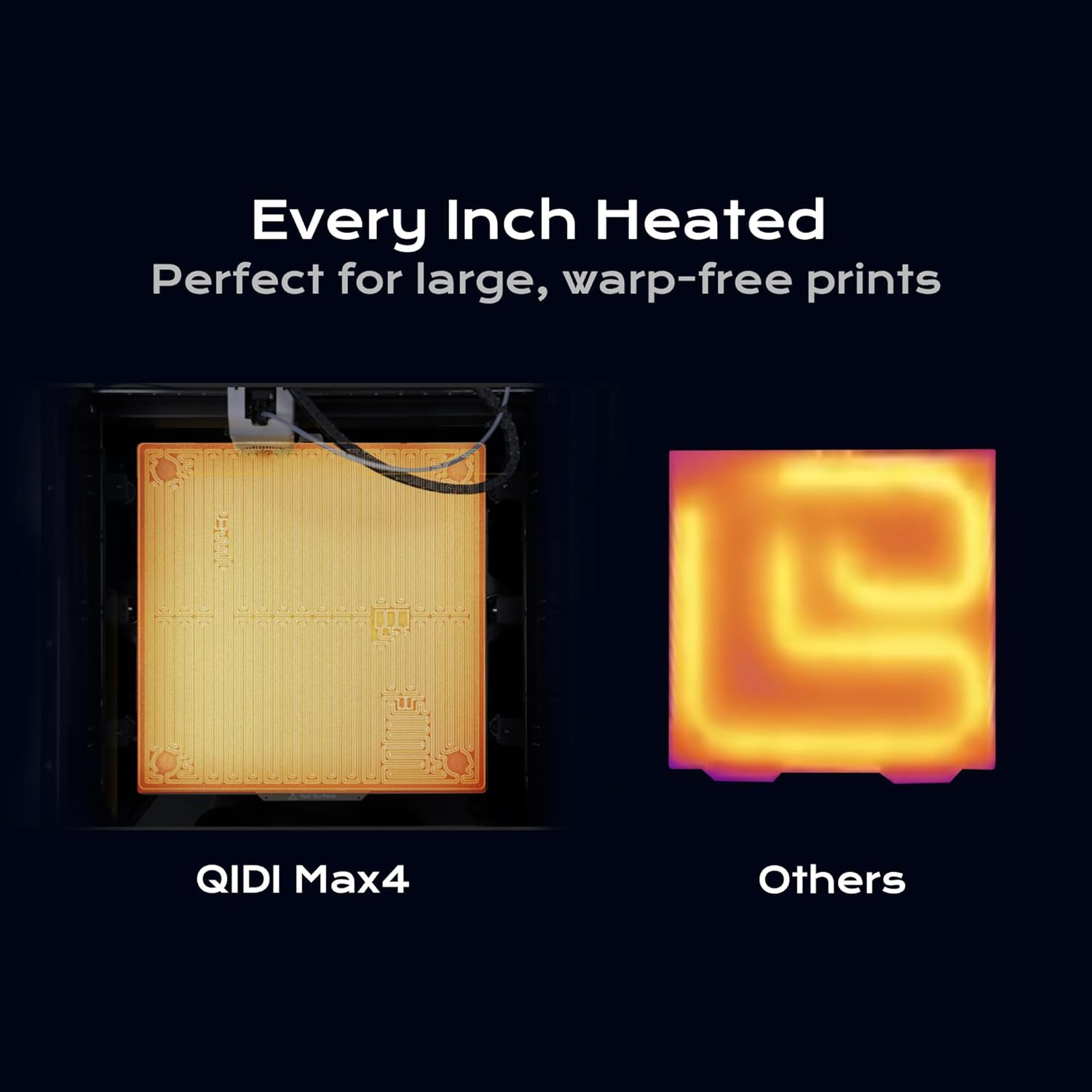
The Max4’s heated chamber is not a half-measure — the entire build envelope maintains consistent temperature, which is why warping with ABS and nylon is genuinely rare.
QIDI Max4 vs Bambu Lab H2S vs Competitor: 5-Feature Comparison
| Feature | QIDI Max4 Combo | Bambu Lab H2S Combo | Creality K1 Max | Winner & Why |
|---|---|---|---|---|
| Build Volume | 390×390×340mm | 350×350×350mm (est.) | 300×300×300mm | Max4 — largest XY footprint at this price |
| Price (Combo) | $1,499 | $1,499–$1,799 | ~$699 (no AMS) | Max4 — matched on H2S, K1 Max cheaper but no multi-material |
| Hotend Temp | 370°C | 300°C (standard) | 300°C | Max4 — enables true high-temp engineering filaments |
| Ecosystem Openness | Full Fluidd, LAN, OrcaSlicer fork | Locked Bambu slicer, limited API | Open, Creality Print / Orca | Max4/K1 Max tie — QIDI beats Bambu clearly |
| Noise Level | 60+ dB with cooler on | ~45–50 dB | ~50 dB | Bambu H2S — significantly quieter in operation |
Setup and Hardware: Straightforward With One Warning
Unboxing is the hardest part — at 40kg (88 lb), the Max4 is not a one-person job. A hydraulic cart or a second pair of hands is not optional, it is genuinely necessary. Once on your bench, removing foam, unlocking the build plate, and connecting the QIDI Box takes under 30 minutes.
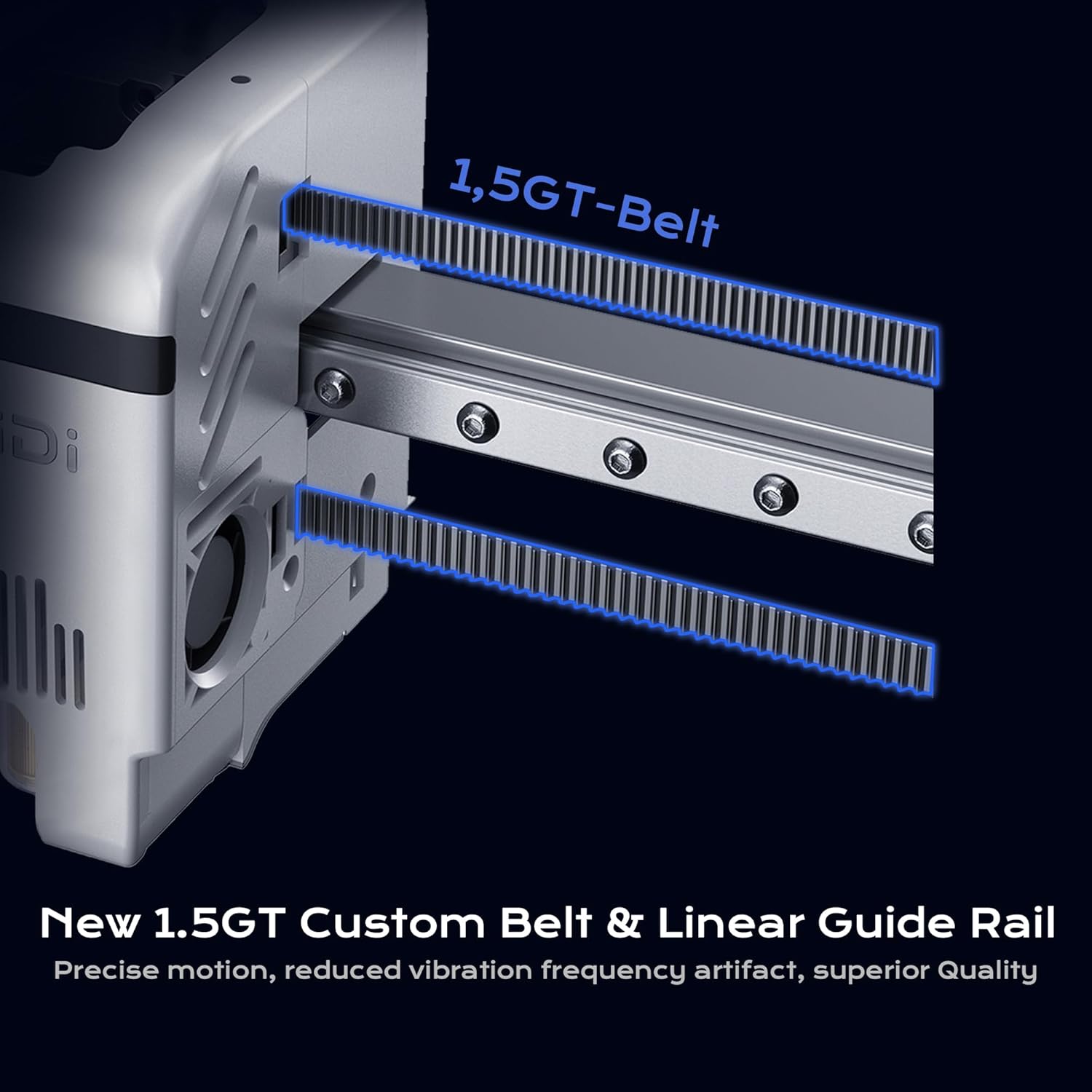
The 1.5GT custom belts are designed specifically to reduce Vertical Fine Artifacts (VFAs) — the subtle banding pattern visible on fast CoreXY prints. A meaningful engineering decision, not just marketing.
The auto-calibration sequence runs on first boot and handles bed leveling completely. The 5-inch color touchscreen is clear and responsive. Wi-Fi setup is simple. First print — a Benchy — completed in approximately 20 minutes without issues, according to verified buyer reports.
The QIDI Box installs on top. Four PTFE tubes run from the box to the toolhead. A signal cable and power cord complete the connection. The Box uses RFID tags on QIDI-branded spools to automatically identify material and color, which is convenient when switching between filament types.
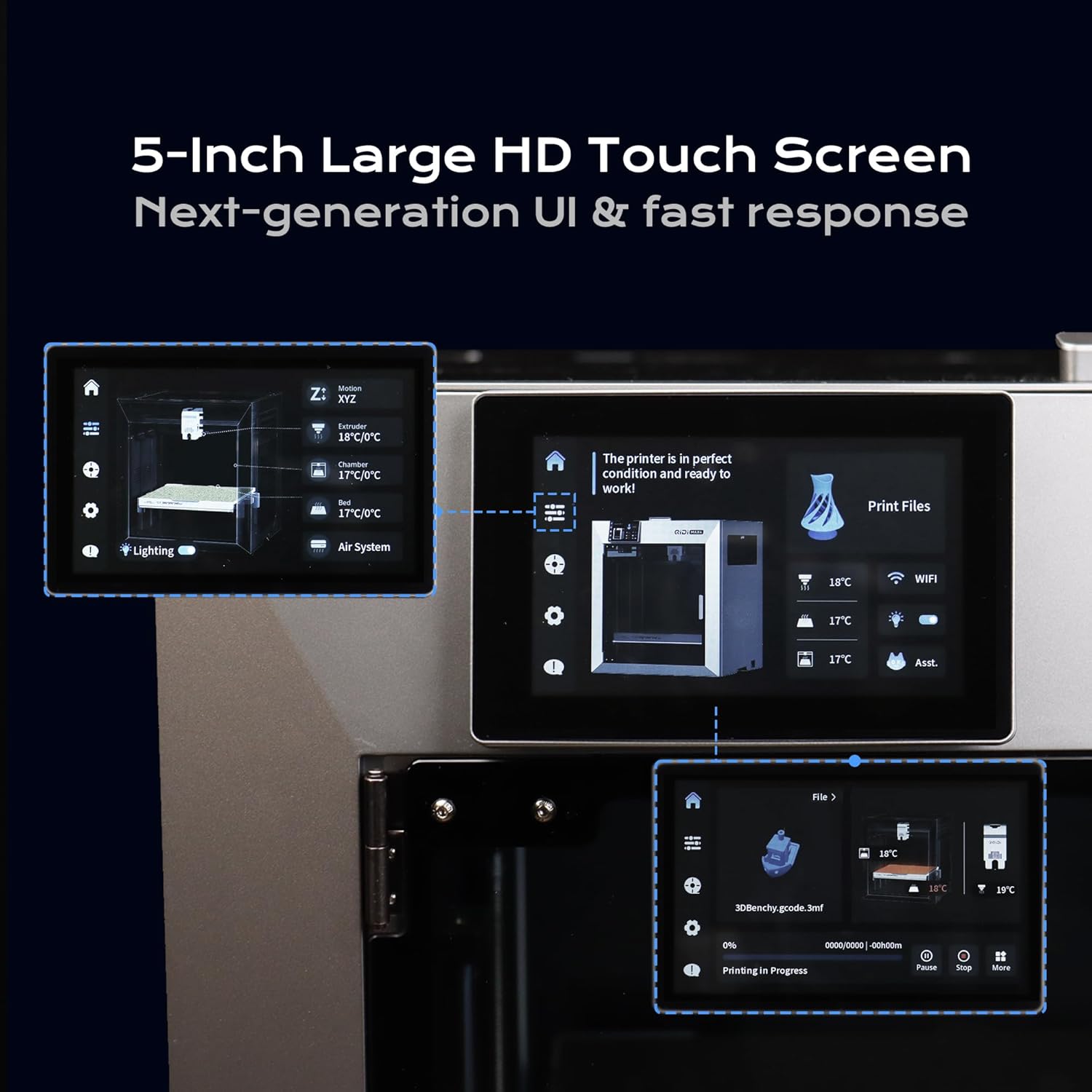
The 5-inch touchscreen handles everything from bed leveling to material management. The interface is clean and does not require diving into menus for common tasks.
The Reality of Long-Term Ownership
Maintenance & Wear: What Gets Annoying
The Polar Cooler — the external compressor that blows cool air onto the extruder — is the Max4’s most divisive accessory. It reduces nozzle clogs effectively, but it runs constantly and adds meaningful noise. At 4 AM with a long print running, this machine is audible from another room. If you are printing in a shared space, the Polar Cooler noise needs to be in your decision-making.
Nozzle changes are tool-required. The Max4 uses a screw-in nozzle rather than a quick-swap system. That is not a deal-breaker, but it is a step behind what some competitors now offer as standard. Budget a few extra minutes for nozzle changes during filament-type transitions.
Hidden Costs to Factor In
For PA12-CF and other moisture-sensitive engineering filaments, you will need a dedicated filament dryer beyond the 65°C QIDI Box limit. Budget $40–80 for a quality dryer. The QIDI Box holds four spools; adding additional boxes for more colors is an added cost. Power consumption on a machine this size, running a heated chamber over long prints, will show up on your electricity bill more than a standard PLA printer would.
The Tinkerer’s Advantage: Full Fluidd Access
Unlike Bambu Lab machines, the Max4 gives you direct access to the Fluidd interface via your local IP. This means full G-code control, custom macros, and print monitoring without going through any proprietary app. The QIDI Studio slicer is an OrcaSlicer fork — not Bambu Slicer — which means the broader Orca community’s profiles and documentation apply directly. For anyone who spends time dialing in custom profiles, this openness is genuinely valuable.
Pros & Cons — The Honest List
- Genuinely massive 390×390mm build plate
- 65°C active chamber enables real engineering-grade filaments
- 370°C hotend supports PA-CF, PC, and composites
- $300 cheaper than Bambu H2S Combo at same tier
- Full Fluidd + OrcaSlicer fork — no ecosystem lock-in
- Perfect first layers out of the box
- QIDI Box doubles as a filament dryer (up to 65°C)
- Foam-insulated side panels for sound and temp control
- Loud — 60+ dB with Polar Cooler active
- Heavy at 40kg; needs two people or a hydraulic table
- Screw-in nozzle, no quick-swap
- QIDI Box purge defaults need manual calibration
- QIDI Box cannot dry nylon adequately (65°C limit)
- 340mm Z is 10mm shorter than some competitors
Full Specifications
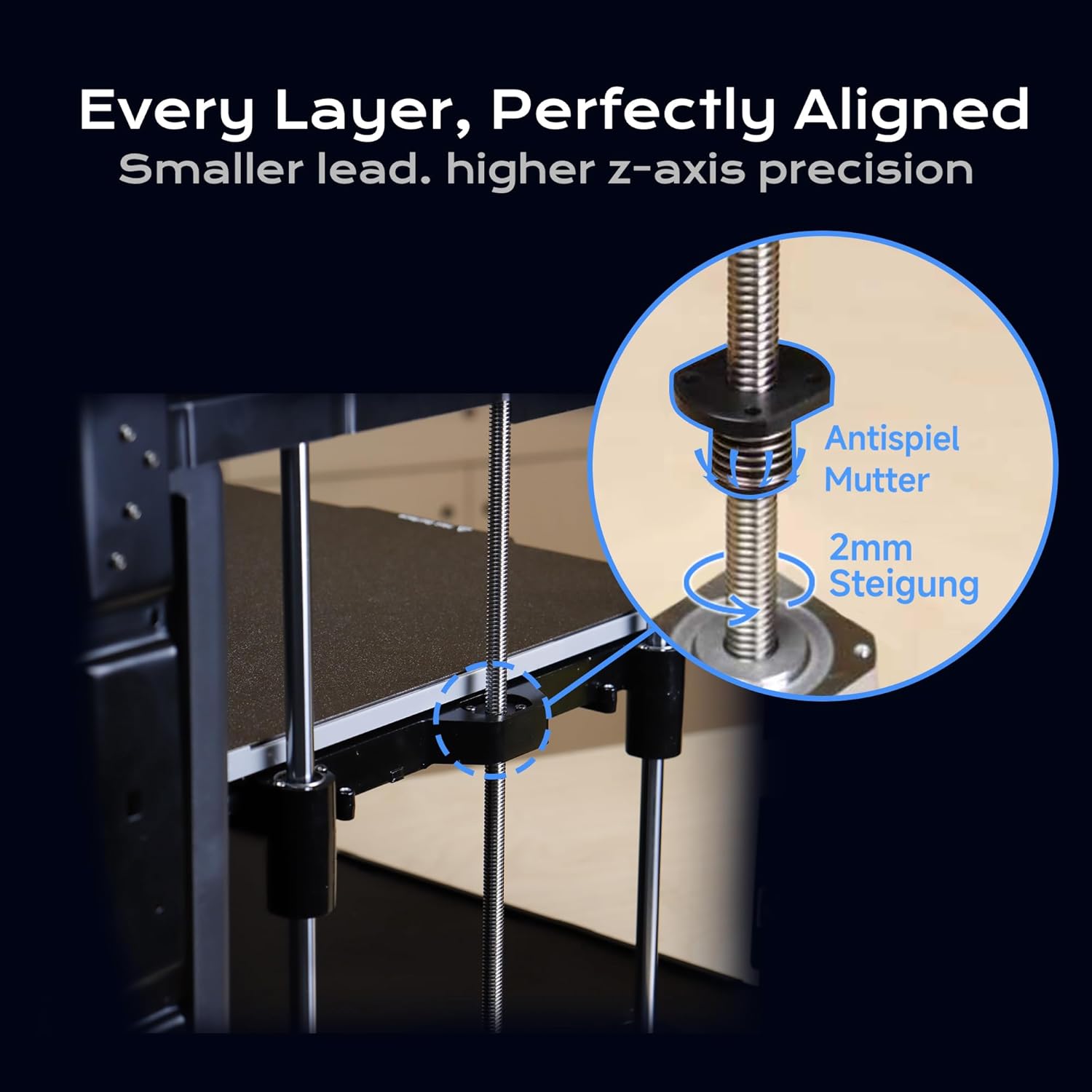
Dual lead screws on the Z-axis with dust-protected guide rods ensure the build plate stays level across the entire 340mm travel height — important for tall engineering prints.
| Specification | Value |
|---|---|
| Build Volume | 390 × 390 × 340 mm |
| Machine Size | 558 × 578 × 612 mm (excl. QIDI Box) |
| Weight | 40 kg / 88 lb |
| Max Print Speed | 800 mm/s |
| Max Acceleration | 30,000 mm/s² |
| Hotend Temperature | 370°C max |
| Heated Chamber | 65°C active |
| Build Plate Temp | 120°C max |
| Nozzle Type | 4mm bi-metal (std); 2/6/8mm available |
| X-Axis | Linear guide rail |
| Y-Axis | 12mm diameter steel shafts |
| Belts | 1.5GT custom (reduced VFA) |
| Multi-Color | Up to 16 colors (4× QIDI Box units) |
| Slicer | QIDI Studio (OrcaSlicer fork) |
| Camera | 1080p with spaghetti detection |
| Connectivity | Wi-Fi, LAN mode |
| Storage | 32 GB eMMC + USB |
| Screen | 5-inch color touchscreen |
| Supported Materials | PLA, PETG, TPU, ABS, ASA, PC, PA-CF, PA-GF |
| Build Plate | Dual-sided textured PEI |
Who Should Buy the QIDI Max4 Combo?
Buy the Max4 Combo if you need a large build volume for cosplay props, functional engineering parts, or batch printing — and you want to run ABS, ASA, or PA-CF without buying a secondary chamber heater. The price advantage over Bambu Lab is real and significant.
Skip it if you need quiet operation (bedroom, shared office), or if your use case is purely PLA/PETG at moderate sizes. For those scenarios, a Bambu Lab A1 or similar machine covers the need at lower weight and noise.
It is also the right printer if openness matters to you. Full Fluidd access, OrcaSlicer compatibility, and LAN mode make this a machine you actually control — unlike some ecosystem-locked alternatives.
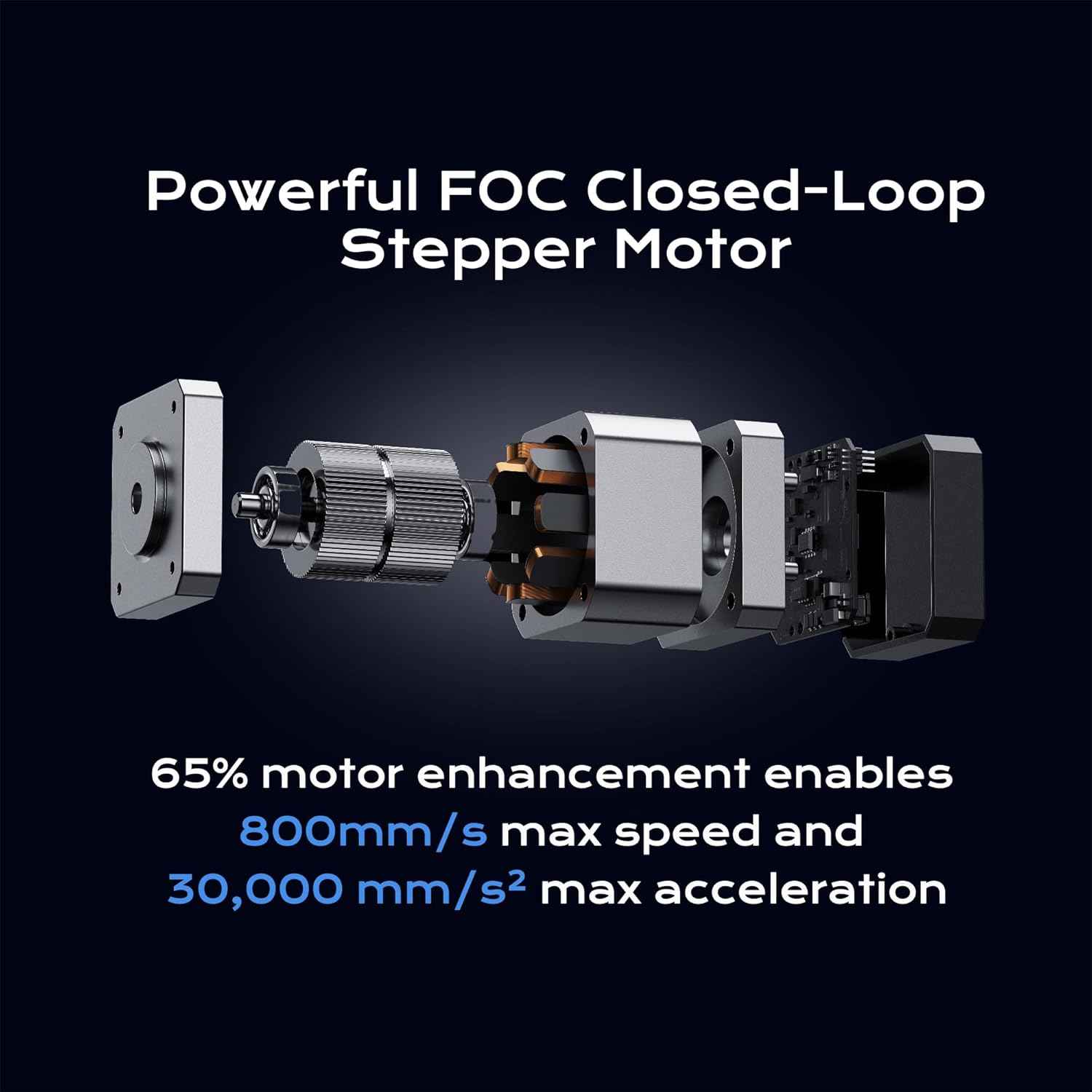
The FOC closed-loop stepper motors give the Max4 real-time position feedback — one reason first-layer adhesion and dimensional accuracy stay consistent across long prints.
Buy QIDI Max4 Combo on Amazon $1,499.00 — Check Latest Price & AvailabilityAs an Amazon Associate I earn from qualifying purchases at no extra cost to you.
Frequently Asked Questions
Related posts:
 QIDI X-MAX3 3D Printer Review: Large-Format Potential with Notable Flaws
  Creality K2 Pro Combo: Your Gateway to Pro-Level Multicolor 3D Printing
  Anycubic Kobra S1 vs Creality K1C: I Tested Both for 6 Months – Here’s the Winner (Dec 2025)
  Best Cyber Monday 3D Printer Deals 2025: Save Up to 45% on Bambu Lab, Creality & ANYCUBIC (Live Deals)
  Why 87% of Small Businesses Waste Money on Wrong 3D Printers (2025 Buying Guide)
  Best 3D Printer 2026: 14 Models Tested and Compared
  Best Multicolor 3D Printers of 2025 for Etsy Sellers Boosting Sales
  What is the Best Multi-Material 3D Printer?
  Black Friday 3D Printer Deals 2026: 18 Printers Sorted by Price
  Live Black Friday 3D Printer Offers 2025 – Updated Hourly – Save Up to $400!
  Is Bambu Lab A1 Plug and Play? Setup Time & First Print Results (Reddit Data)
  Bambu Lab P2S vs. Creality K2 Pro: Which 2026 Flagship Wins?