

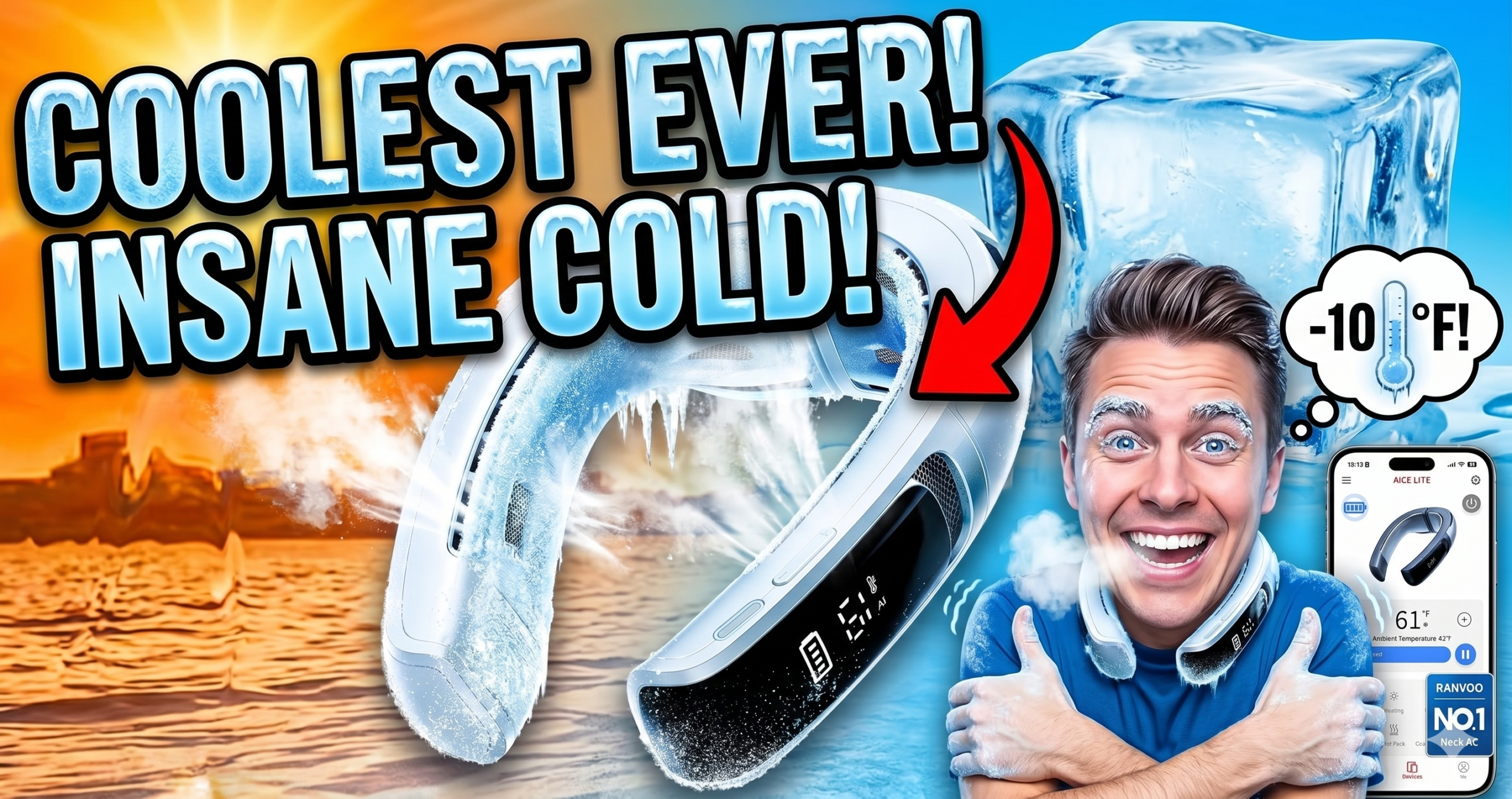
The AICE LITE MAX sits flush against the back of the neck — the cooling plates are the two metal pads visible on the inner curve.
Most “neck AC” listings are just rebadged neck fans with a cold marketing claim slapped on top. The RANVOO AICE LITE MAX isn’t that — it actually uses cooling plates, not just airflow, to pull heat off your skin. That’s the real difference between this and the $30 fan-only version sitting next to it on the shelf.
It won’t replace a window unit. It won’t fix a 95°F apartment. But for the specific job of cooling one person’s neck and upper back fast — sitting in a parked car, standing at a concert, walking a dog at noon — it does something most neck fans can’t: it drops surface temperature, not just moves air around.
What Is the RANVOO AICE LITE MAX, Exactly?
It’s a wearable neck air conditioner that uses true cooling plates — not just a fan — to lower the temperature of skin it touches. RANVOO calls this a “micro AC system,” and functionally that’s accurate: there’s active thermoelectric cooling happening at the contact points, supplemented by airflow from the 720° vent design.
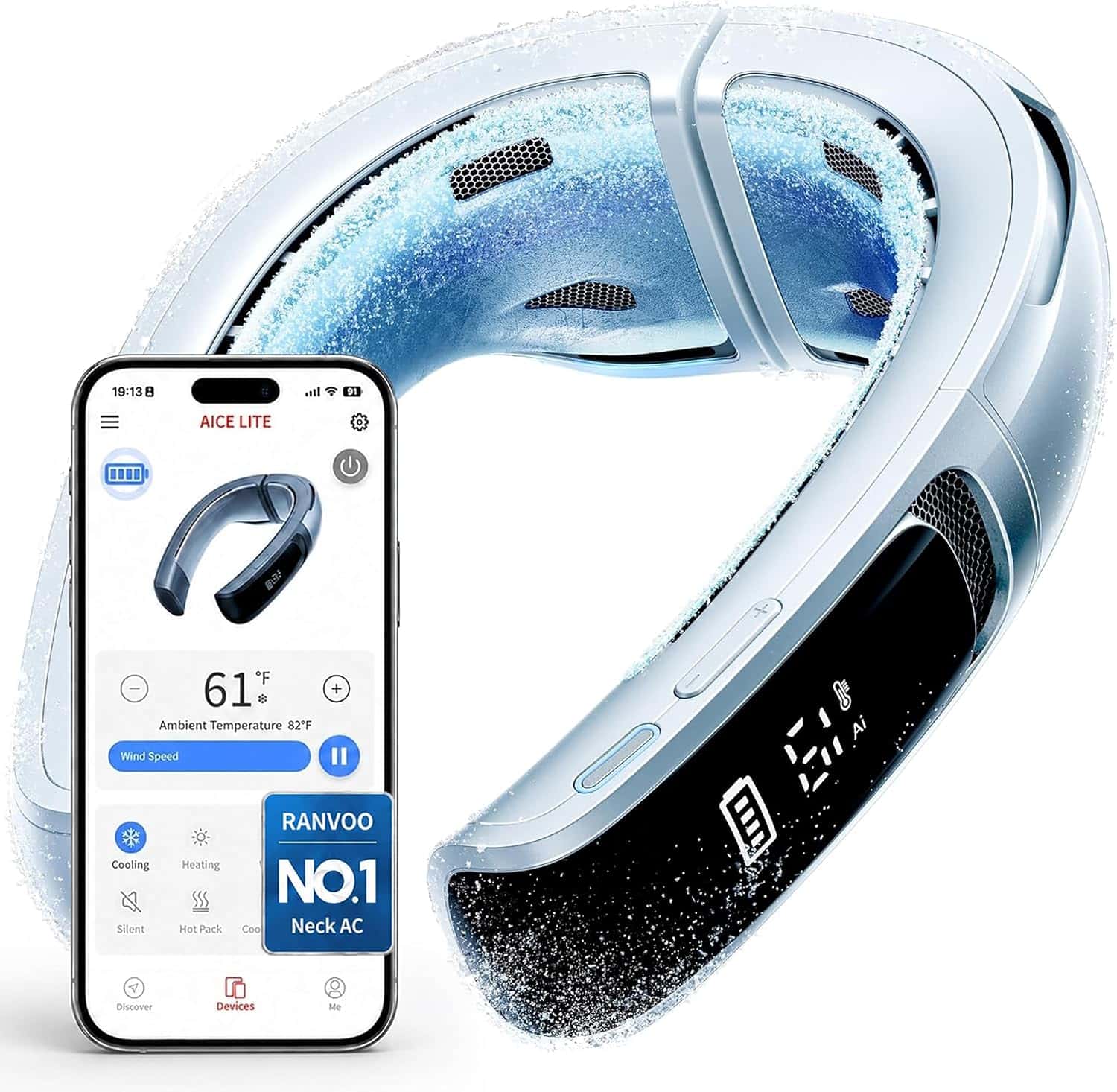
The two metal cooling plates (inner curve) are what separate this from airflow-only neck fans — that’s the part doing the actual cooling.
Does the AICE LITE MAX Actually Cool, or Is “39°F Drop” Marketing Hype?
The 39°F drop claim refers to surface contact temperature at the cooling plate, not ambient air temperature around you — that distinction matters and RANVOO’s listing doesn’t make it clear. Skin-contact cooling like this is the same basic mechanism used in cooling vests recommended by occupational safety researchers for heat-stress prevention, just scaled down to a wearable size.
One verified buyer who uses it specifically to avoid idling her car for AC confirmed something similar happens with other cryo-plate personal coolers — the cold sensation is immediate at the contact point, and it creates a noticeably cooler microclimate around the neck and head even though the surrounding air stays hot. That tracks with how these devices are designed to work: target zone cooling, not room cooling.
How Long Does the Battery Actually Last?
RANVOO claims up to 30 hours, but that number almost certainly reflects the lowest fan-only setting with cooling plates idle — real mixed-use runtime (cooling plates active, mid power) lands meaningfully lower. The 6000mAh / 22.2Wh cell is generous for this product category, and the 15W fast charging means a full top-up fits inside a lunch break.
The actual operating cost is close to negligible. One owner who measured it directly found the unit draws roughly 5V at 3A while charging a 22.2Wh battery, which works out to a few cents in electricity per full charge — trivial next to idling a car engine for the same cooling effect.
Is the RANVOO AICE LITE MAX Safe to Wear All Day?
Yes, with normal lithium-ion precautions. The device uses a rechargeable lithium battery, and consumer safety regulators are explicit that the real risk with this battery chemistry comes from damaged cells, non-OEM chargers, or charging unattended overnight — not from normal day-to-day wear. Always charge it with the included cable, on a hard surface, and don’t leave it charging unattended while you sleep.
The Reality of Long-Term Ownership
Maintenance & Wear
The cooling plates are the part to watch. They sit directly against skin and sweat, so a film of oil and salt builds up within a few weeks of daily wear. Wipe them with a damp microfiber cloth after sweaty sessions — skipping this is the single most common cause of reduced cooling performance buyers report after month two.
Hidden Costs
No subscription, no proprietary cartridges. The only real ongoing cost is replacement if you lose the charging cable — RANVOO doesn’t include a spare, and the connector isn’t a universal USB-C tip you’ll have a drawer full of already.
The “Watch Out” Pitfall
Several buyers set the unit to max power immediately out of the box expecting instant relief, then complain about battery drain within 3–4 hours. The stepless 0–100 control exists because most of the cooling benefit shows up well below max — start around 40–50% and only push higher in direct sun or extreme heat.
Who Should Buy the RANVOO AICE LITE MAX?
Best fit: commuters sitting in hot cars, outdoor workers taking short breaks, anyone who wants targeted neck cooling without running a vehicle or window unit. Worst fit: anyone expecting it to cool an entire room or replace a portable AC — it’s a personal device with a personal-sized cooling radius, full stop.
RANVOO AICE LITE MAX: Pros and Cons
Pros
- Real cooling-plate contact, not just airflow
- Large 15,020 mm² cooling surface vs typical neck fans
- Stepless 0–100 power control, not just 3 presets
- Fast 15W charging, ~2 hours to full
- Pass-through charging works with a power bank
Cons
- 30-hour claim is best-case, not mixed-use realistic
- Cooling intensity tapers on lower settings during long sessions
- Plates need regular cleaning to maintain performance
- Non-standard charging cable, no spare included
Frequently Asked Questions
Sources: OSHA Heat Stress Guide · CPSC Lithium-Ion Battery Safety
Related posts:
 Amazon Creator Top Sellers 2025: Best-Selling Products You Need to See
  iOS 26 Features Unveiled: Top Features, Liquid Glass Design & Apple Intelligence Magic
  Don’t Miss Top Amazon Prime Day Deals 2025 USA: Biggest Savings October 7-8 (Hourly Updates!)
  Top October Prime Day MacBook Deals 2025: Save Big on Macs and MacBooks for 3D Designers
  DJI Mini 3 Fly More Combo Review 2026: Worth $575?
  EF ECOFLOW DELTA 3 Max Review 2026: Tested & Rated
  16 Best Amazon Big Spring Sale Deals 2026 – Up to 40% Off (Live Now!)