
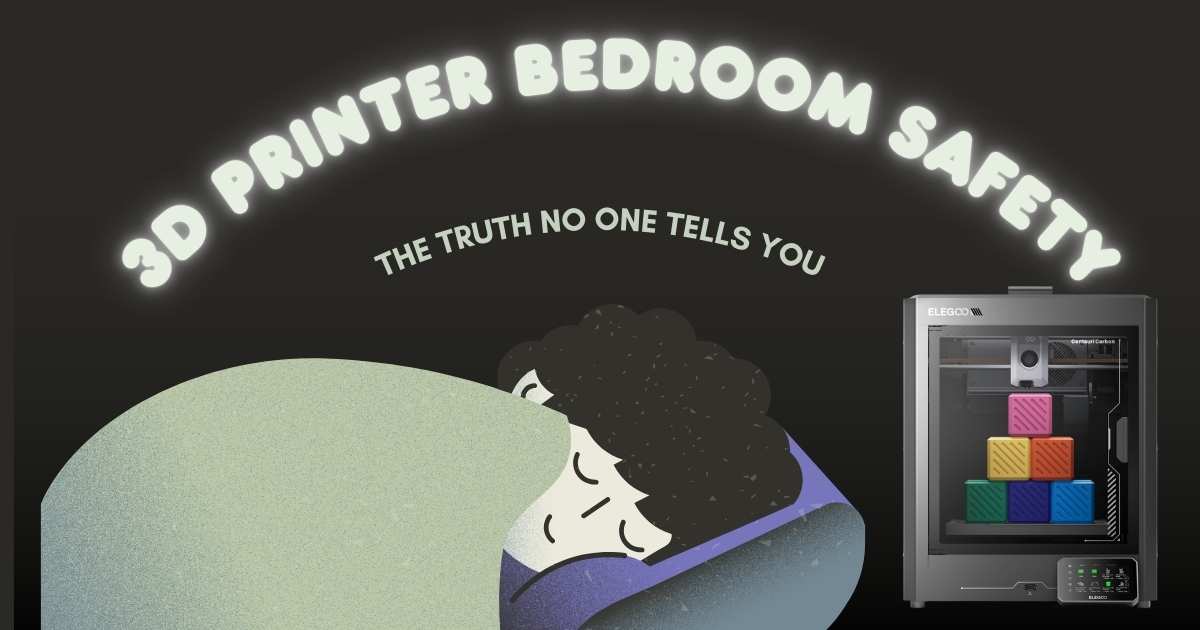
The Truth No One Tells You About Health Risks, Fire Hazards, and Safety Solutions
The Hidden Danger Floating in Your Bedroom
While you’re sleeping peacefully next to your humming 3D printer, it’s releasing between 100 million to 1 trillion ultrafine particles per hour into the air you’re breathing. These aren’t visible. You can’t smell most of them. And they’re small enough to bypass your body’s natural defenses.
Studies show desktop 3D printers emit ultrafine particles (UFPs) at rates ranging from 10⁸ to 10¹¹ particles per minute, with volatile organic compound (VOC) emissions between 0.2-1.0 mg/hour for filament printers and significantly higher for resin systems.
To put this in perspective: the World Health Organization recommends indoor PM2.5 levels stay below 5 µg/m³ annually. Research shows that 3D printers in poorly ventilated spaces can exceed outdoor pollution levels found near busy highways.
What Your 3D Printer Actually Releases
Ultrafine Particles (UFPs): The Invisible Threat
UFPs are particles smaller than 100 nanometers (nm). They’re concerning because:
- They penetrate deep into lungs: Unlike larger particles that get trapped in your upper airways, UFPs deposit in the pulmonary and alveolar regions
- They enter your bloodstream: Research shows these particles can translocate from lungs to blood, potentially reaching your brain via the olfactory nerve
- They’re not filtered by standard dust masks: Regular face masks are ineffective against particles this small
The EPA reports that exposure to UFPs has been linked to cardiovascular mortality, hospital admissions for stroke, and asthma symptoms. A consolidation study of 447 emission evaluations found particle emission rates of 10⁹-10¹¹ particles per hour across various printing scenarios.
Volatile Organic Compounds (VOCs): What You’re Actually Breathing
Different materials release different VOCs:
| Material | Primary VOCs | Emission Level |
|---|---|---|
| PLA | Lactide, Methyl methacrylate | 550-600 ppb during printing |
| ABS | Styrene (possibly carcinogenic), Ethylbenzene | 10-110 µg/min |
| PETG/Nylon | Caprolactam, Aldehydes, Ketones | 2-180 µg/min |
Filament vs Resin: Which is More Dangerous?
FDM/Filament Printers
Emission Profile:
- UFP emission rate: 8.8×10⁷ – 2.8×10¹² particles/minute
- Total VOC: 0.42-4 mg/hour
- Primary concern: Ultrafine particles and material-specific VOCs
Safety ranking by material (safest to most hazardous):
- PLA – Lowest emissions, bio-based, but still emits UFPs
- PETG – Moderate emissions
- Nylon – High caprolactam emissions
- ABS/ASA – Highest styrene emissions, avoid in bedrooms without ventilation
Resin (SLA/MSLA) Printers
Emission Profile:
- UFP emission rate: 1.3×10⁸ – 4.0×10¹⁰ particles/minute
- Total VOC: 5-88 mg/hour (includes post-processing)
- Primary concern: High VOC levels even when idle
- Continuous off-gassing: Resin emits VOCs even when the printer is OFF and the vat is just sitting there
- Methacrylates and aldehydes: Including formaldehyde (known carcinogen)
- 4-acrylomorpholine: One study estimated potential bedroom concentrations of 1.4 mg/m³, approaching the 2.65 mg/m³ inhalation risk threshold
- Skin sensitization: Uncured resin causes allergic reactions and can lead to chronic sensitization
Expert consensus: Resin printers should NEVER be operated in bedrooms without dedicated ventilation venting outside. The fume exposure risk is substantially higher than FDM printing.
The Fire Risk: Can Your Printer Actually Burn Your House Down?
Yes. While relatively rare, 3D printer fires are documented and preventable.
Common Fire Causes
1. Thermal Runaway (Most Common)
- Occurs when heating components exceed safe temperatures uncontrollably
- Thermistor malfunction or loose connection causes incorrect temperature readings
- Hotends can reach 600°C+ (enough to melt aluminum and ignite most materials)
- Modern printers include thermal runaway protection, but it’s not foolproof
2. Electrical Failures:
- Poor quality power supplies in budget printers
- Loose wiring from printer vibration
- Inadequate wire gauge for current load
- Short circuits from worn insulation
3. Mechanical Failures:
- Hotend cooling fan failure causing heat creep
- Extruder jam causing localized overheating
- Heating element detachment from hotend block
4. Material Flammability:
- PLA ignition temperature: ~180-200°C (prints at 180-220°C)
- ABS ignition temperature: ~210-250°C (prints at 210-250°C)
- Printed parts can ignite if hotend remains stationary
Fire Safety Reality Check
According to RepRap documentation, hotend heaters can reach temperatures capable of fusing aluminum (over 600°C), which are sufficient to start fires on most flammable materials.
Prevention measures:
Room Size, Ventilation, and Exposure Modeling
The EPA used the Multiple Path Particle Dosimetry Model (MPPD) to predict particle deposition in respiratory tracts. Their findings are concerning for bedroom scenarios.
Why Bedrooms Are Particularly Risky
Typical bedroom characteristics:
- Volume: ~30 m³ (10ft × 12ft × 8ft ceiling)
- Low air exchange rate during sleep (windows closed)
- Extended exposure duration (6-8 hours)
- Closer proximity while sleeping
Exposure modeling results:
- Personal and residential exposure scenarios were more likely to result in high exposure levels, often exceeding recommended limits
- Children aged 9-18 showed highest predicted mass deposition in lungs
- Continuous operation in confined spaces causes cumulative exposure
🛡️ Build Your Defense System:
Ready to build or buy an enclosure? Our guide on 3D Printer Enclosures for Noise and Temperature Control shows how to achieve 90% emission reduction while keeping noise levels down—perfect for apartment dwellers.
The Math Behind Safe Printing
Using a standardized bedroom (30 m³) with an 8-hour print:
Without ventilation or filtration:
- UFP concentrations can reach levels comparable to outdoor urban pollution
- VOC levels may exceed WHO’s 100 ppb guideline
- Particle mass (PM2.5) can exceed the 15 µg/m³ 24-hour WHO guideline
With proper ventilation (0.5-1.0 air changes per hour):
- Reduces but doesn’t eliminate exposure
- Opening a window helps, but you lose climate control
- Drafts can affect print quality
The Enclosure + Filtration Solution: What Actually Works
HEPA Filter Effectiveness (Evidence-Based)
What HEPA filters CAN do:
- Capture 99.95% of particles at 300nm (EN1822 standard)
- Capture majority of 3D printer emissions by mass (200-500nm range)
- About 60% effectiveness for ultrafine particles (under 100nm) per NASA research
- Enclosure must be well-sealed (90% capture even without filter)
- Active filtration continuously recirculates air
- Filter saturation requires replacement every 500-800 printing hours
What HEPA filters CANNOT do alone:
- Remove VOCs and odors (need activated carbon for this)
- Filter 100% of UFPs on first pass (recirculation improves effectiveness)
- Work properly if enclosure isn’t sealed
💡 Recommended Reading:
Looking for the best filtration solutions? Check out our comprehensive guide on Best Air Purifiers for 3D Printing Workspaces in 2025 to find bedroom-friendly purifiers that can reduce emissions by up to 90%.
Activated Carbon Limitations
Research shows activated carbon filters:
- Capture 40-60% of VOCs per pass through 1-2 inch thick beds
- Retention varies dramatically by compound (25-30% for IPA, only 2% for formaldehyde)
- Become saturated after 500-800 printing hours with typical emission rates
- Don’t remove odor = still contaminated (contrary to popular belief)
Ventilation: Direct Exhaust vs Recirculation
| Method | Effectiveness | Pros & Cons |
|---|---|---|
| Venting Outside | 99.7% particles, 69.5% VOCs | Most effective; requires ducting; climate control loss |
| Recirculating with HEPA + Carbon | Variable (60-95%) | Practical for filament; requires maintenance; less effective for high-VOC materials |
The UL 200B Standard for 3D printer emissions provides scientifically-derived performance criteria for low-emitting printers with a two-day test protocol measuring UFPs, VOCs, and aldehydes.
The Definitive Bedroom Decision Matrix
NEVER Safe for Bedrooms
Potentially Safe With Precautions
- Fully sealed enclosure
- HEPA H13 + activated carbon filtration
- Room air quality monitor
- Smoke detector with power cutoff
- At least 20m³ room volume
- Printer away from bed (over 3 meters)
Safer Alternatives
- Door separating from bedroom
- Window for ventilation option
- Smoke detector
- Regular filter maintenance
- Natural ventilation
- Fire safety easier to manage
- No sleep exposure risk
- Print during waking hours
- Monitor prints remotely
- Remove from bedroom at night
Children, Pets, and Vulnerable Populations
The EPA specifically warns about children’s exposure to 3D printer emissions:
- Children are in developmental stages vulnerable to air pollutants
- Higher predicted particle deposition rates than adults
- Classrooms and libraries with uncontrolled printer use are concerning
- Pregnant women should avoid exposure (VOCs linked to developmental abnormalities)
- Pets with smaller respiratory systems are at higher risk
Recommendation: If children sleep in the room, don’t operate 3D printers there under any circumstances.
What About “Low-Emission” or “Safer” Materials?
Marketing claims about “bio-based” or “eco-friendly” filaments can be misleading:
PLA Reality
- Yes, it’s corn-based and biodegradable
- BUT: Still emits UFPs at rates of 10⁸-10⁹ particles/minute
- Still produces lactide and other VOCs
- “Lower than ABS” doesn’t mean “safe for bedrooms”
Specialty “Low-Odor” Resins
- Reduced smell doesn’t equal reduced toxicity
- Manufacturers aim for odorless resins, which makes people less cautious
- Still emit harmful VOCs and particles during curing
🧪 Optimize Your Filament:
Did you know dry filament produces fewer VOCs? Our Ultimate Guide to 3D Printer Filament Dryers explains how proper moisture control can further reduce harmful emissions from your prints.
Real-World Safety Checklist
Before Operating ANY 3D Printer in a Bedroom:
Assessment Phase:
Equipment Phase:
🔍 Track Your Air Quality:
Want real-time PM2.5 alerts for your bedroom setup? Our review of the Amazon Smart Air Quality Monitor for 3D Printers shows how this affordable sensor can give you peace of mind with instant spike notifications.
Operational Phase:
🦺 Complete Your Safety Arsenal:
Don’t stop at enclosures and filters. Our comprehensive guide on 3D Printing Safety Gear: Must-Haves for Resin and FDM Projects covers essential PPE beyond N95 masks—gloves, goggles, and more to protect yourself during handling and post-processing.
The NIOSH Recommendations (Gold Standard)
The National Institute for Occupational Safety and Health recommends:
- Use materials with lower emissions (PLA over ABS)
- Use enclosures for printers
- Implement ventilation to capture chemical emissions
- Reduce time spent near operating printers
For residential settings, these recommendations are even more critical because:
- Longer exposure durations
- Less robust ventilation systems than industrial settings
- Vulnerable populations (children, pregnant women) present
- Sleep state reduces awareness of hazards
Bottom Line: Should You Sleep in the Same Room as Your 3D Printer?
Professional Recommendation: No.
Even with the best enclosure, filtration, and safety measures, you’re accepting unnecessary health risks by sleeping in the same room as an operating 3D printer.
The math is simple:
- 8 hours of sleep = 8 hours of particle/VOC exposure
- Breathing rate during sleep: ~12-20 breaths/minute = 5,760-9,600 breaths per night
- Each breath contains UFPs and VOCs that accumulate in your body
- Long-term health effects are still being studied, but evidence suggests cardiovascular and respiratory impacts
Best Practices Hierarchy
- Ideal: Separate room with door + ventilation
- Good: Same apartment but different room with closed door
- Acceptable: Large room (over 40m³) with proper enclosure/filtration, PLA only, printer far from bed
- Not recommended: Sleeping in same room as operating printer
- Never acceptable: Resin printer in bedroom, or any printer without safety measures
FAQ – Questions Backed by Research
Citations and Further Reading
This article is based on peer-reviewed research and official guidelines from leading health and safety organizations:
- NCBI – Characterization of Ultrafine Particles and VOCs Emitted from a 3D Printer
- EPA – 3D Printing Research
- Environmental Science & Technology – Emissions of Ultrafine Particles and VOCs from Desktop 3D Printers
- ScienceDirect – Exposure hazards of particles and VOCs: Consolidation of 447 chamber study evaluations
- ACS Chemical Health & Safety – Volatile Organic Chemical Emissions from Resin Printers
- WHO – Indoor Air Quality Guidelines: PM2.5 updated to 5 µg/m³ (2021)
- Smart Air – WHO Air Quality Guidelines Update Analysis
- Chemical Insights/UL Research – ANSI/CAN/UL 2904 Standard for 3D Printer Emissions
- NASA Technical Reports – HEPA Filter Effectiveness for Nanoparticulates
- RepRap Wiki – 3D Printer Safety Documentation
- 4D Filtration – 3D Printing Air Quality Roundup 2024
- Nature Journal – Review of VOC Emissions from Desktop 3D Printers
- EPA Science Matters – EPA Researchers Continue to Study 3D Printer Emissions
- 3D Venting – Understanding 3D Printing Risks (Dr. Marilyn Black)
- Make Magazine – Print Smart, Breathe Easy: 3D Printer Emissions
Conclusion: Your Health Is Worth More Than Printing Convenience
The evidence is clear: operating 3D printers in bedrooms creates measurable health risks from ultrafine particle exposure, VOC inhalation, and fire hazards. While proper enclosure and filtration can significantly reduce—but not eliminate—these risks, the safest approach is simply moving your printer to a dedicated space.
Your printing doesn’t have to stop. But it should happen in a space where you’re not breathing, eating, or sleeping for 8 hours straight.
The 3D printing community needs to normalize proper safety practices. Just because something is technically possible doesn’t mean it’s advisable. Your lungs, heart, and brain will thank you for the extra few steps to a different room.
Remember:
- 100 million to 1 trillion particles per hour entering your lungs
- 5,760-9,600 breaths during 8 hours of sleep
- WHO recommends under 5 µg/m³ PM2.5 annually
- Long-term cardiovascular and respiratory risks are documented
Take Action for Your Health Today
Don’t wait until you develop symptoms. Make the change now to protect yourself and your family from 3D printer emissions.
Share this article with fellow 3D printing enthusiasts.
Proper safety information could literally save lives.
Share This ArticleRelated posts:
 Want To Know How Hot Can a 3D Printer Get?
  Printing Your Way to Riches: Selling Your 3D Printed Decor Online!
  Top 20 Profitable 3D Printed Products to Sell
  How Long Does 3D Printing Take? A Beginner’s Guide to Print Times
  Can I Become a Billionaire from 3D Printing?
  5 Surprising Reasons Why 3D Printed Houses Aren’t Taking Over Yet
  How Much Does It Cost To 3D Print?
  Is a Home 3D Printer Worth It? 10 Home 3D Printer Disadvantages!
  Top Websites for 3D Printing Services Near You in the US (2025)
  Flashforge Guider 3 Ultra Review: Is This Printer Overpowered?
  3D Printing Safety Gear: Must-Haves for Resin and FDM Decor Projects – Protect Yourself Now!
  12 Top-Rated HEPA Air Purifiers for Molds and Allergens (Sept 2025 Update): Expert Picks