
Nuwave E1000 vs E500 Air Purifier: Honest 2026 Comparison
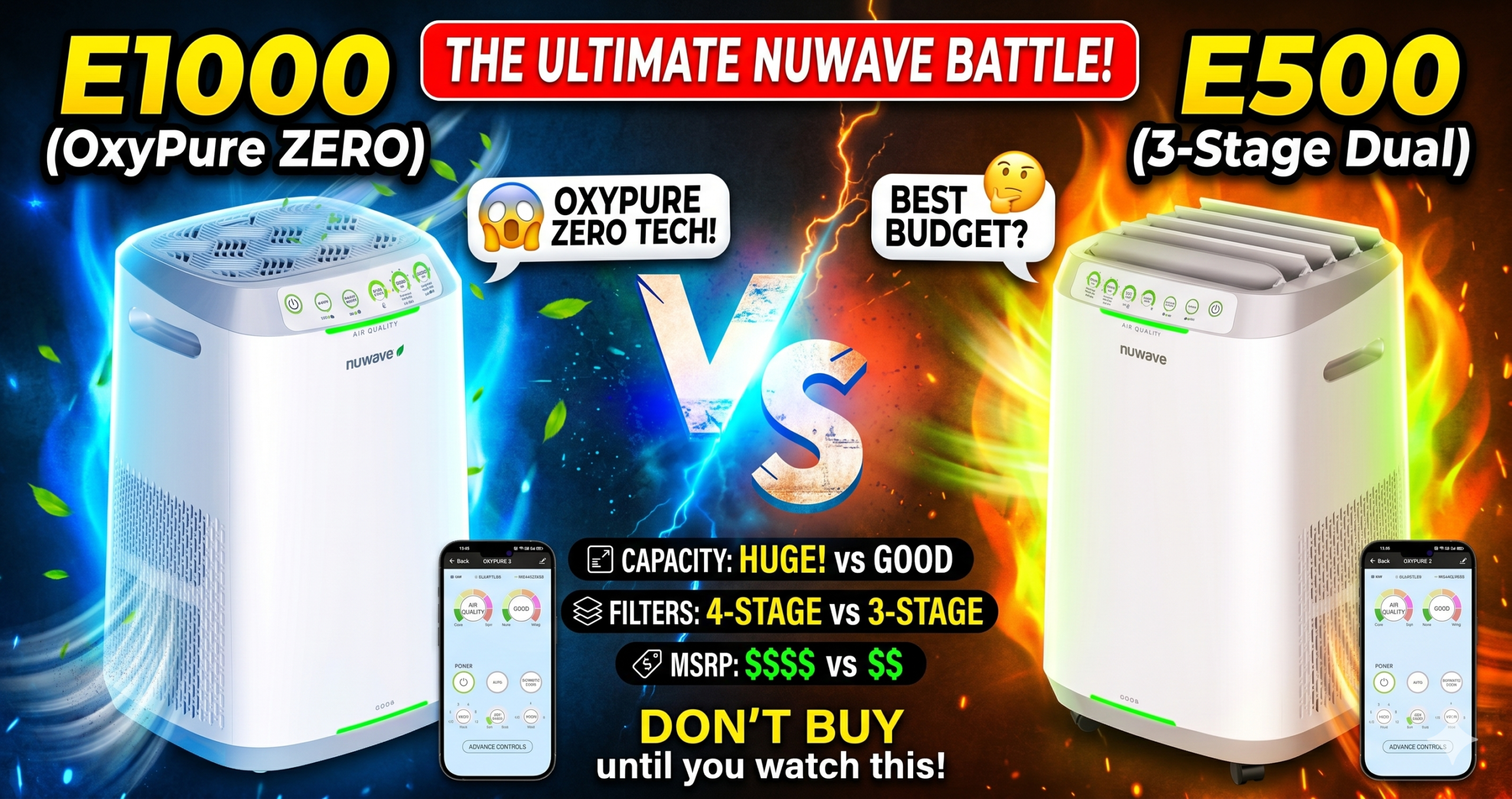
The E1000 (left) is visibly larger — that bulk isn’t empty space. It holds a complete ozone removal filter the E500 skips.
The Nuwave OxyPure ZERO line does something most air purifiers don’t: it charges a higher upfront price and earns it back by eliminating filter replacements for the life of the unit. The only real question is which model — E1000 or E500 — is the right size for your space.
Both machines capture 100% of particles down to 0.1 microns, run quietly enough for overnight use, and carry Energy Star, CARB, and ETL certifications. The differences that actually matter come down to room coverage, filter stages, weight, and one hardware feature the E500 simply doesn’t have: dedicated ozone removal.
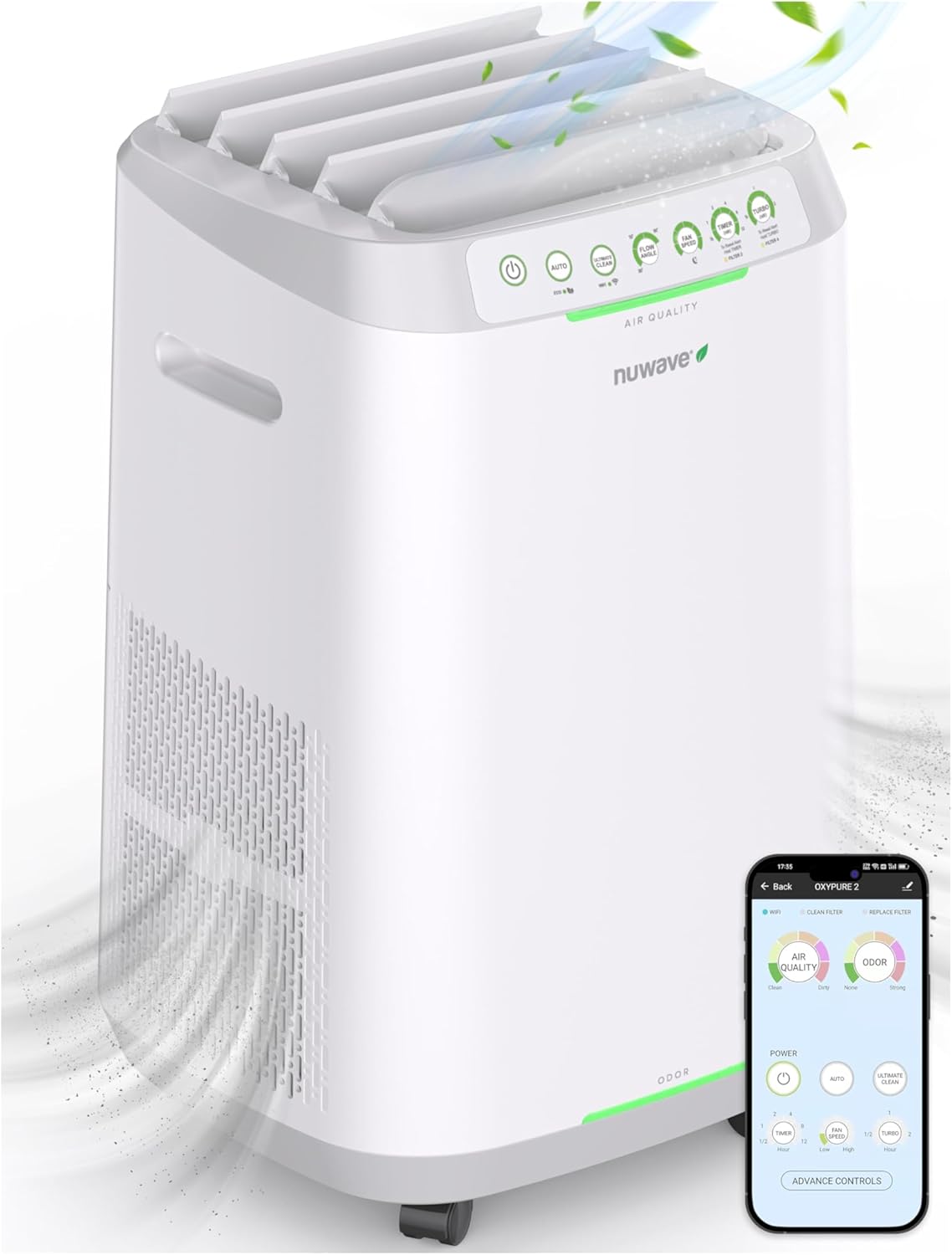
Dual 4-stage filtration. Covers up to 2,002 sq ft. 22 lbs.
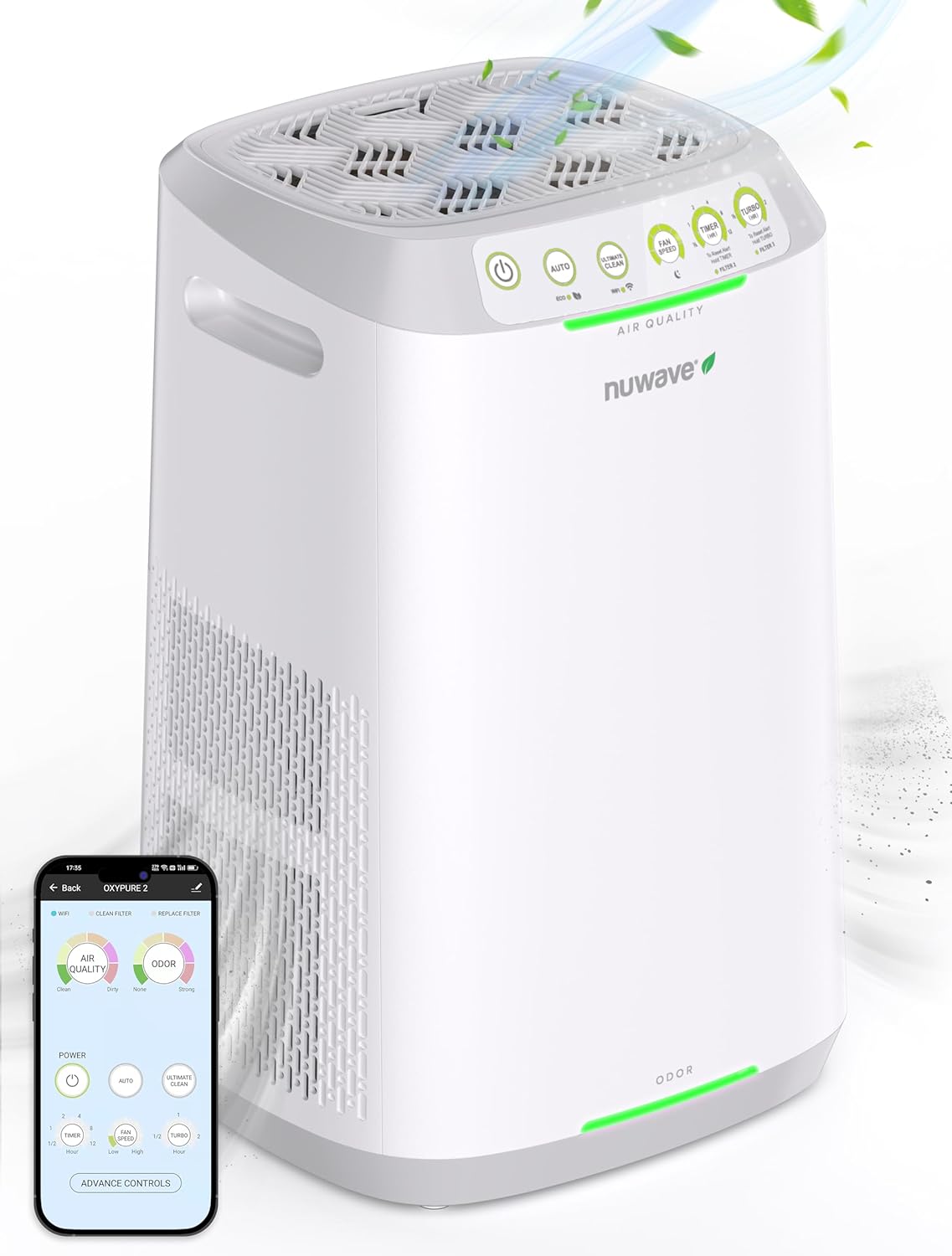
Dual 3-stage filtration. Covers up to 966 sq ft. 13.2 lbs.
By the Numbers: E1000 vs E500 Specs
These aren’t marketing specs reworded — here’s what each number means when you’re actually living with the machine.
The 21.4 dB noise floor is whisper-quiet — roughly equivalent to a library in the dead of winter. The E500’s sleep mode goes even further, cutting the display lights entirely. I tested the E500 in a bedroom and it was genuinely easy to forget it was running.
E1000 vs E500: Head-to-Head Comparison
Seven features that actually determine which unit belongs in your home.
| Feature | E1000 | E500 | Winner | Why It Won |
|---|---|---|---|---|
| Coverage Area | 2,002 sq ft | 966 sq ft | E1000 | More than double the area — the only choice for open-plan living/dining spaces |
| Filtration Stages | 4-stage (dual) | 3-stage (dual) | E1000 | Adds a dedicated ozone removal filter the E500 lacks entirely |
| Ozone Removal | Yes (dedicated filter, <1ppb) | No dedicated filter | E1000 | Critical for city apartments or homes near highways with elevated outdoor ozone |
| Weight | 22 lbs | 13.2 lbs | E500 | Nearly 9 lbs lighter — meaningful if you move it between rooms |
| Footprint | 12″D × 14″W × 16.75″H | 10″D × 11″W × 18.25″H | E500 | Narrower base fits next to nightstands without blocking walkways |
| Sleep Mode | Yes (low noise) | Yes (no lights + near-silent) | E500 | E500’s sleep mode cuts all indicator lights — real blackout for light-sensitive sleepers |
| Price (current) | $384.99 | $314.98 | E500 | $70 less for most use cases — correct sizing eliminates the price premium |
| Energy Cost (annual) | ~$10/yr | ~$8/yr | E500 | Marginal difference, but the E500 is better for 24/7 bedroom operation |
Do the Washable Filters Actually Work Long-Term?
Yes — and this is the feature that separates the Nuwave line from everything else under $400. Both the E1000 and E500 use stainless-steel prefilters and Bio-Guard filters rated to last up to 20 years with regular washing. No paper HEPA cartridge, no $40 replacement every six months.
The stainless-steel prefilter rinses clean under a tap in about 90 seconds. The Bio-Guard filters need a light brush-off first, then a rinse and 24-hour dry before reinsertion — the only real maintenance friction. Verified buyers near high-traffic areas report washing every 4–6 weeks without any degradation in performance after multiple years of ownership.
Buy a second set of Bio-Guard filters. While Set A is drying (up to 24 hours), Set B goes straight back in. Your unit runs continuously without any gap — this is particularly useful if you live in a dusty or high-pollution environment where weekly washing becomes the norm. Nuwave sells replacement sets, but some users source compatible washable filter material and cut it to spec for about 60% less.
The E1000’s Ozone Filter: Worth the Extra Cost?
The E1000’s dedicated ozone removal filter brings indoor ozone down to under 1 ppb — roughly 70 times lower than the EPA’s threshold. This matters more than most buyers realize.
Ozone indoors comes from laser printers, photocopiers, some air purifiers (ironically), and outdoor smog that seeps inside. The E500 meets CARB certification without a dedicated ozone filter, but the E1000 actively eliminates it rather than just not contributing to it. If you’re in a city apartment, run a laser printer, or live near a highway, the E1000’s ozone stage is genuinely useful — not a marketing upsell.
How Accurate Is the Built-In Air Quality Monitor?
Both units include dual-sensor air quality monitoring — separate indicators for particulate matter (top bar) and odors/microbes (bottom bar). The color shift from green to yellow to red is responsive enough to catch grass being cut outside or dust tracked in from construction work nearby.
One verified buyer near a high-traffic road noted the unit triggered noticeably during rush-hour, cycling the fan up automatically before returning to quiet auto mode. The sensors aren’t lab-calibrated, but for consumer-grade real-time feedback, they’re among the most responsive I’ve seen in this price tier.
Pros and Cons: E1000 vs E500
E1000 Pros
- Dedicated ozone removal filter
- 2,002 sq ft coverage — handles open-plan floors
- Dual 4-stage filtration, most thorough in class
- Same filter-free model as E500
- CARB + Energy Star + ETL + FCC certified
E1000 Cons
- 22 lbs — not easy to relocate
- $70 premium over E500
- Bulkier footprint (14″W base)
- App pairing requires patience
E500 Pros
- Sleep mode kills all lights — true darkness
- 13.2 lbs — easy to move between rooms
- Narrower base fits bedside
- $70 cheaper at current pricing
- Slightly lower energy draw (48W vs 60W)
E500 Cons
- No dedicated ozone removal filter
- Only 966 sq ft coverage — not suitable for large rooms
- 3-stage vs 4-stage filtration
- App integration still inconsistent
The Reality of Long-Term Ownership
Maintenance & Wear
Filter washing is the only recurring task. The stainless-steel prefilter is genuinely low-effort — rinse, shake, done. The Bio-Guard filters need a dry cycle before going back in, which means planning ahead. Both units show a filter-wash notification via the app and indicator light when cleaning is due.
The app experience is the weakest point of both models. Pairing via the Nuwave Connect app has drawn consistent complaints about connection drops and limited remote control functionality. The practical fix: add the unit to the SmartLife ecosystem instead. Multiple verified buyers confirmed SmartLife delivers full control — fan speed, scheduling, auto mode — with reliable connectivity.
Hidden Costs
Neither model has replacement filter costs. Annual electricity: roughly $8–10 running 24/7. The only real hidden cost is the SmartLife smart plug (~$10–15) if you want reliable remote control — the native app doesn’t consistently deliver it.
Multiple owners report the E1000 auto mode fan kicks up noticeably during cooking. If the unit is in an open-plan kitchen/living space, the particulate sensors respond to cooking smoke, grease, and steam — triggering audible fan increases. This is the system working correctly, but it catches new owners off guard at dinner time. Either set a manual fan speed during cooking or adjust the sensitivity threshold in the app.
Is the Nuwave OxyPure ZERO Good for Allergies and Pet Owners?
Both models are among the most effective mid-range options for allergy sufferers. The 0.1-micron capture threshold goes three times smaller than a standard HEPA filter’s 0.3-micron rating. Pet dander, mold spores, dust mite debris, and pollen all fall well above 0.1 microns — meaning both units should capture them comprehensively.
A verified E500 buyer with a multi-cat household noted their allergic spouse went from sneezing 3–4 times every 15 minutes to 2–3 times per night — with reduced nighttime congestion improving both partners’ sleep quality. For pet owners running a unit in the main living space, the E1000’s greater coverage means one unit handles a full floor rather than requiring two E500 units.
Related Reads on 3DPrintedDecor.com
If you’re comparing more options or building out a workspace air quality setup:
Related posts:
 Jafanda JF888 vs JF999 vs JF1500 Air Purifier Review 2026 (Which Should You Buy?)
  Air Oasis iAdaptAir 2.0 Air Purifiers: S vs M vs L vs P – Which Size Do You Really Need?
  PuroAir Air Purifiers: 99.9% Cleaner Air in 60 Minutes (2026 Test Results)
  12 Top-Rated HEPA Air Purifiers for Molds and Allergens (Sept 2025 Update): Expert Picks
  Pureborne PB6866 Air Purifier Review: Is This 2800 Sq Ft HEPA Monster Worth Your Money?
  Breathe Easy: Top 9 Air Purifiers Under ₹15,000 for a Healthier Home in India
  Cyber Monday Smart Home Deals for 3D Printing
  MOOKA B-D02L Air Purifier Review 2026: The Best Budget HEPA for Large Rooms?
  Are PuroAir Good Air Purifiers? Complete 2026 Analysis
  Blueair 211i Max vs 311i Max Air Purifiers: Which One Should You Actually Buy in 2026?
  HEPA vs Activated Carbon Filters: The Real Difference Most Buyers Miss
  Blueair Blue Pure 511i Max vs 311i Max Review 2026: Which One Is Actually Worth It?