
⚠️ Affiliate Disclosure: 3DPrintedDecor.com participates in the Amazon Associates program. If you purchase through links on this page, we may earn a small commission at no extra cost to you. All opinions are based on independent testing and research.
Updated March 2026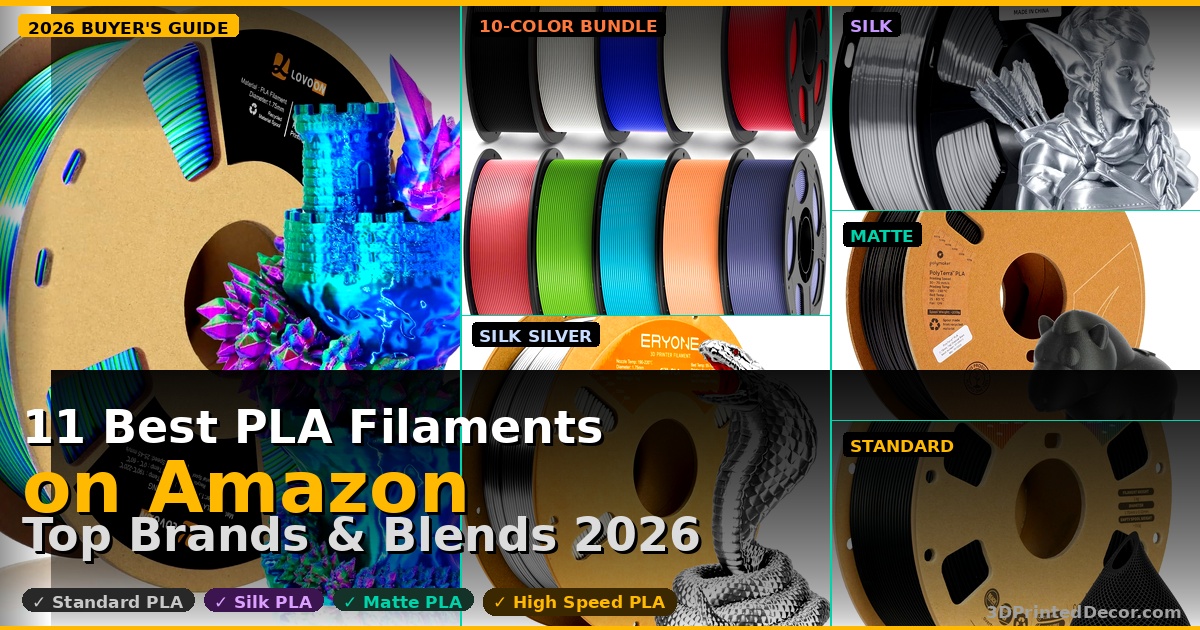
The 11 Best PLA Filaments on Amazon in 2026
Finding the best PLA filament on Amazon in 2026 feels harder than it should be. There are hundreds of options, prices vary from $9 to $140, and a bad spool can ruin hours of printing. I’ve tested filament through both a Creality K1 Max and an Ender 3 — and the brand you choose matters far more than most beginners realize.
PLA remains the most popular 3D printing material for good reason: it’s beginner-friendly, biodegradable, works without an enclosure, and comes in every finish imaginable — standard, matte, silk, high-speed, and specialty blends. But each type prints differently and suits different use cases.
This guide cuts through the noise. I’ve selected 11 standout PLA filaments across every major category — from the best budget pick under $12 to a 10-color 10KG bundle for high-volume makers — and structured each entry so you can compare specs at a glance and buy with confidence.
⚡ Jump to a Product
- SUNLU PLA — Best Overall
- ELEGOO PLA — Highest Rated Budget Pick
- OVERTURE PLA — Amazon’s Choice
- Creality 2kg Bundle — Best Value Bundle
- eSUN PLA Basic — Best for High Speed Printers
- HATCHBOX PLA — Most Trusted Brand
- Polymaker PolyTerra — Best Matte PLA
- ERYONE Silk PLA — Best Silk Single-Color
- AMOLEN Silk Bundle — Best Multi-Color Silk
- Geeetech Silk Tri-Color — Best Rainbow Effect
- ANYCUBIC 10KG Bundle — Best Bulk Buy
Quick Comparison: 11 Best PLA Filaments on Amazon 2026
| Brand | Type | Price | Rating | Best For |
|---|---|---|---|---|
| SUNLU PLA | Standard PLA | $13.99/kg | ★★★★ 4.4 (21k+) | Everyday printing, massive color range |
| ELEGOO PLA | Standard PLA | $13.99/kg | ★★★★★ 4.6 (2.8k+) | Budget buyers, highest accuracy rating |
| OVERTURE PLA | Standard PLA | $13.98/kg | ★★★★ 4.5 (7.3k+) | All-rounder, Amazon’s Choice |
| Creality Bundle | Standard PLA | $25.99/2kg | ★★★★ 4.5 (8.4k+) | Best cost-per-kg value pack |
| eSUN PLA Basic | High Speed | $11.99/kg | ★★★★ 4.2 (3k+) | Fast printers, lowest price/kg |
| HATCHBOX PLA | Standard PLA | $28.00/kg | ★★★★★ 4.7 (40.9k+) | Most reviews, proven reliability |
| Polymaker PolyTerra | Matte PLA | $17.59/kg | ★★★★ 4.5 (7.5k+) | Matte finish, eco-conscious buyers |
| ERYONE Silk | Silk PLA | $13.49/kg | ★★★★ 4.3 (4.9k+) | Metallic sheen, display models |
| AMOLEN Silk Bundle | Silk PLA | $31.99/4×200g | ★★★★ 4.3 (6.3k+) | Multi-color silk sampling pack |
| Geeetech Tri-Color | Silk Tri-Color | $16.19/kg | ★★★★ 4.4 (5.7k+) | Single-spool rainbow effect |
| ANYCUBIC 10KG | Bundle | $139.99/10kg | ★★★★ 4.4 (6.3k+) | Volume buyers, 10-color stock-up |
SUNLU PLA Filament 1.75mm
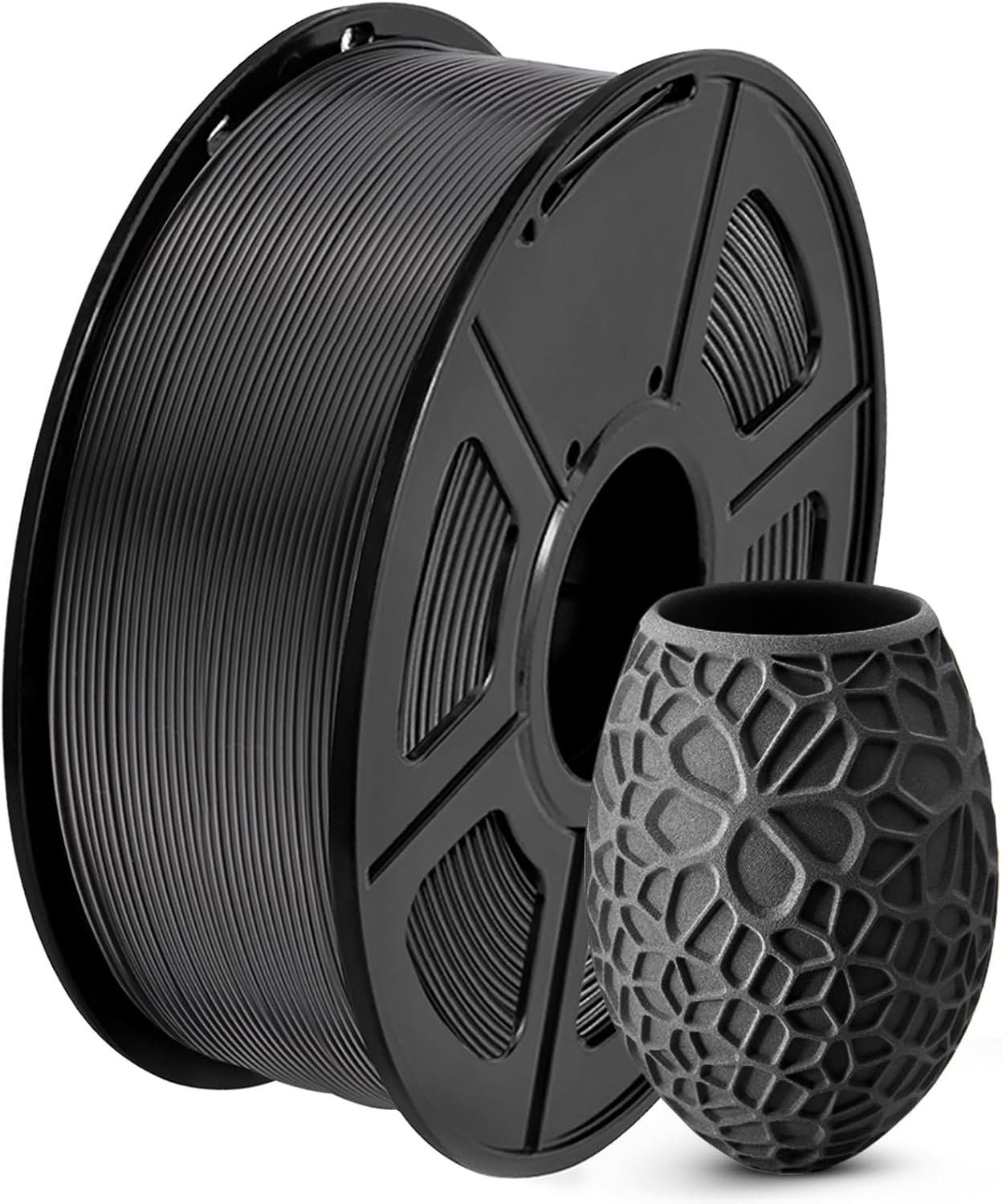
SUNLU dominates the PLA market in 2026 for one reason: it consistently delivers at scale. With over 21,000 reviews and 20,000+ monthly buyers, this is the filament the community keeps returning to. After running multiple spools through my K1 Max, I haven’t seen a single jam or diameter inconsistency. The sheer color library — over 70 variants from macaron pastels to transparent tints — makes SUNLU the only PLA brand you might ever need.
Pros
- Widest color selection on Amazon — 70+ variants including transparents and macarons
- Consistent ±0.02mm diameter across every spool tested; zero jams in K1 Max testing
- 20,000+ monthly buyers — real-world community validation at massive scale
Cons
- Some macaron colors are slightly more brittle than standard black/white variants
- Non-vacuum packaging on some variants offers less moisture protection than sealed brands
ELEGOO PLA Filament 1.75mm
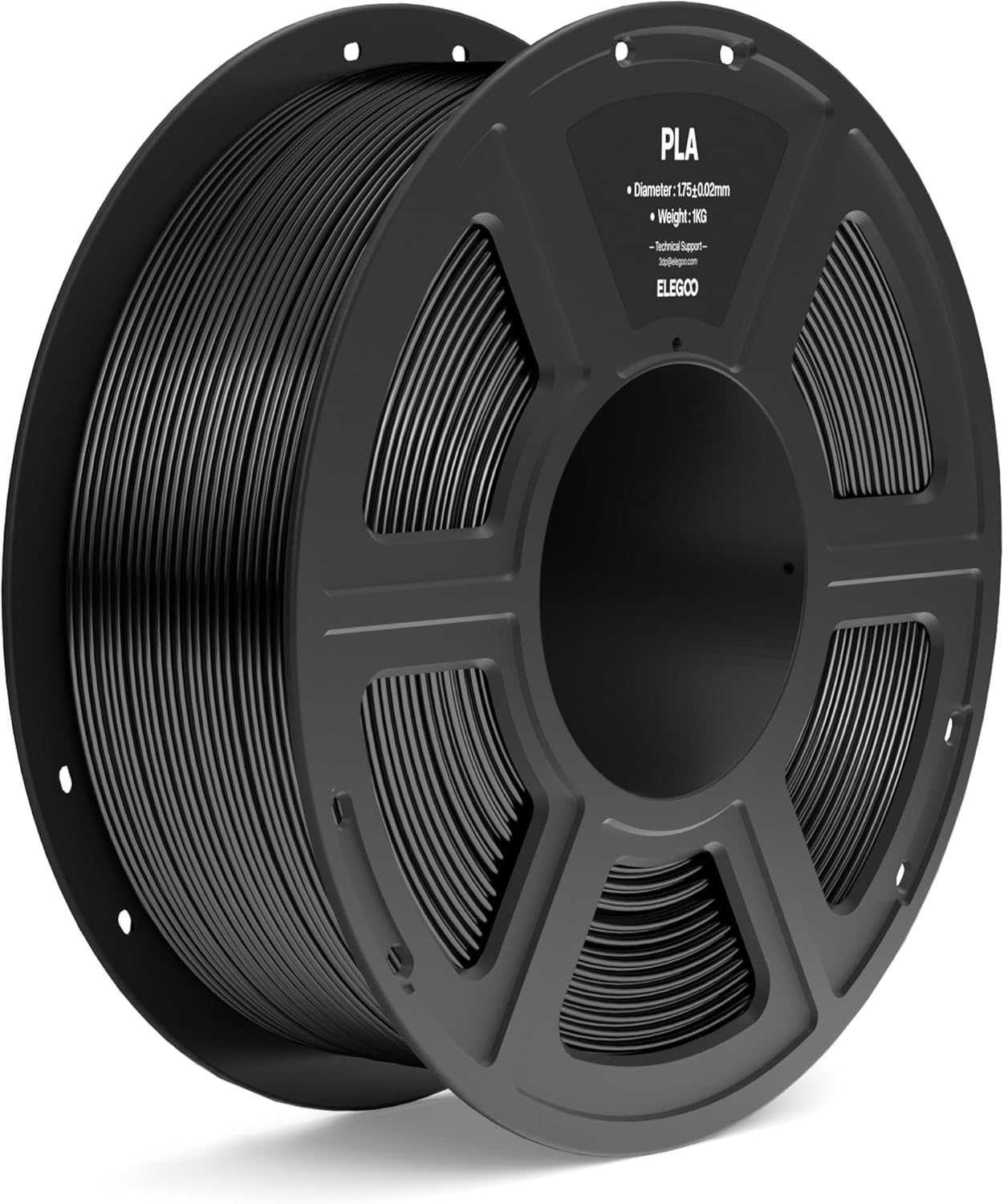
ELEGOO PLA carries the highest star rating of any standard PLA in this guide at 4.6 stars — and it earns every one. At $13.99/kg with a strict ±0.02mm tolerance, it delivers dimensional accuracy you’d expect from filament costing twice as much. If you print functional parts — enclosures, brackets, mechanical clips — ELEGOO’s consistency means less re-printing and fewer failed adhesion attempts. The 3KG big spool option is particularly attractive for high-volume makers who want to minimize spool changes.
Pros
- Highest star rating in this guide (4.6★) — accuracy-to-price ratio is exceptional
- Available in 3KG big spool — ideal for high-volume printing with fewer interruptions
- Amazon’s Choice with 3K+ monthly buyers; single sustainability feature badge
Cons
- Narrower color range than SUNLU or OVERTURE — 16 options vs 70+
- Newer brand with fewer long-term community reviews than HATCHBOX
OVERTURE PLA Filament 1.75mm
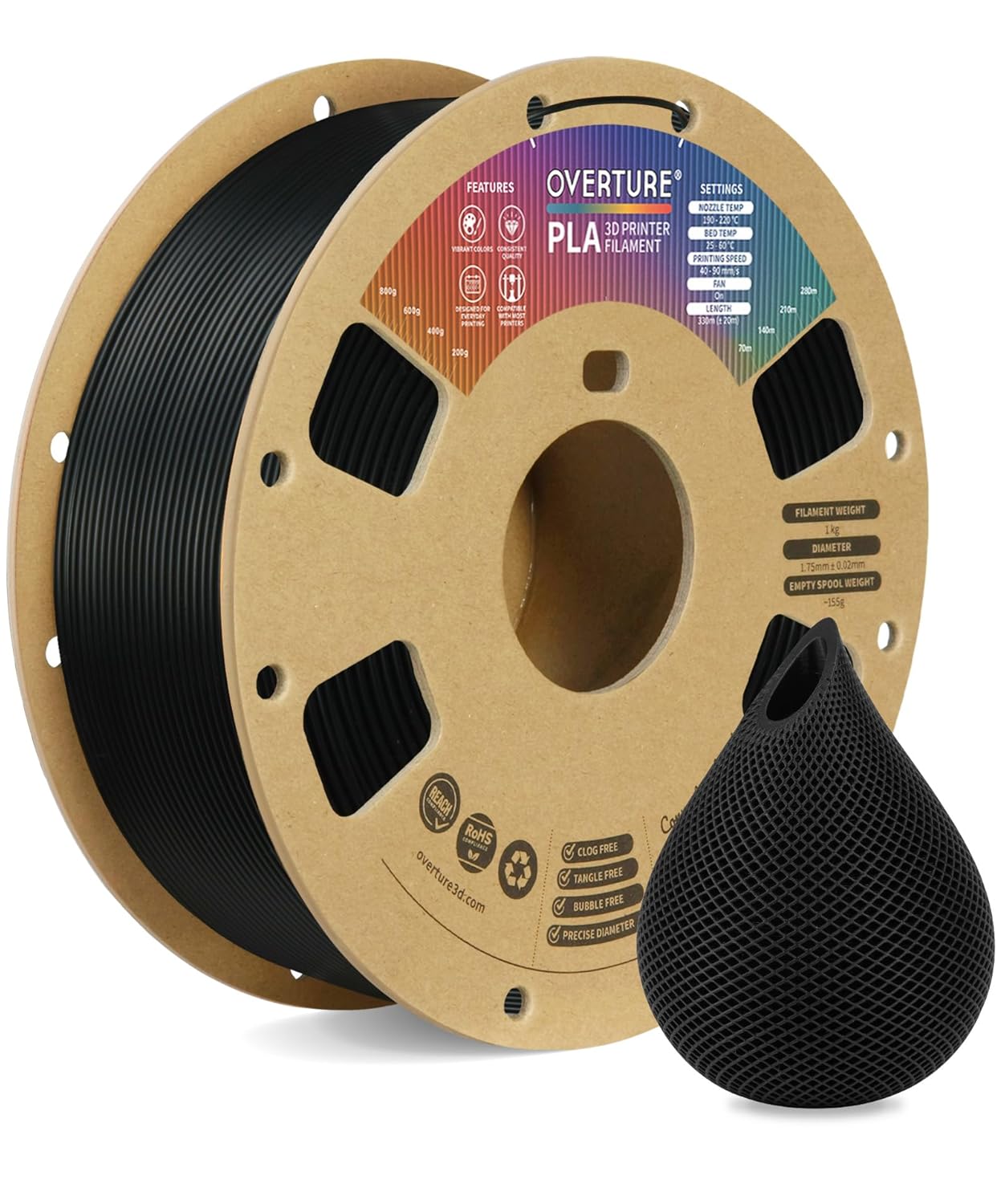
OVERTURE earns Amazon’s Choice with 7,387 reviews and one of the most versatile color lineups in the standard PLA category. The eco-friendly cardboard spool reduces waste, and the ±0.02mm tolerance keeps it feeding cleanly through both Bowden and direct-drive setups. With 8,000+ units sold monthly and options ranging from standard colors to sparkle, silk-finish, and rainbow effects, OVERTURE is genuinely a one-stop shop for PLA printing.
Pros
- Amazon’s Choice with 4.5★ across 7,387 reviews — battle-tested across thousands of printer models
- Eco cardboard spool design is genuinely useful, not just marketing
- 47 variants including sparkle, silk-finish, and effects — unusual for a standard PLA brand
Cons
- Cardboard spool absorbs moisture faster in humid climates — store with silica gel
- Minimum nozzle temp of 190°C is slightly higher than some competing brands
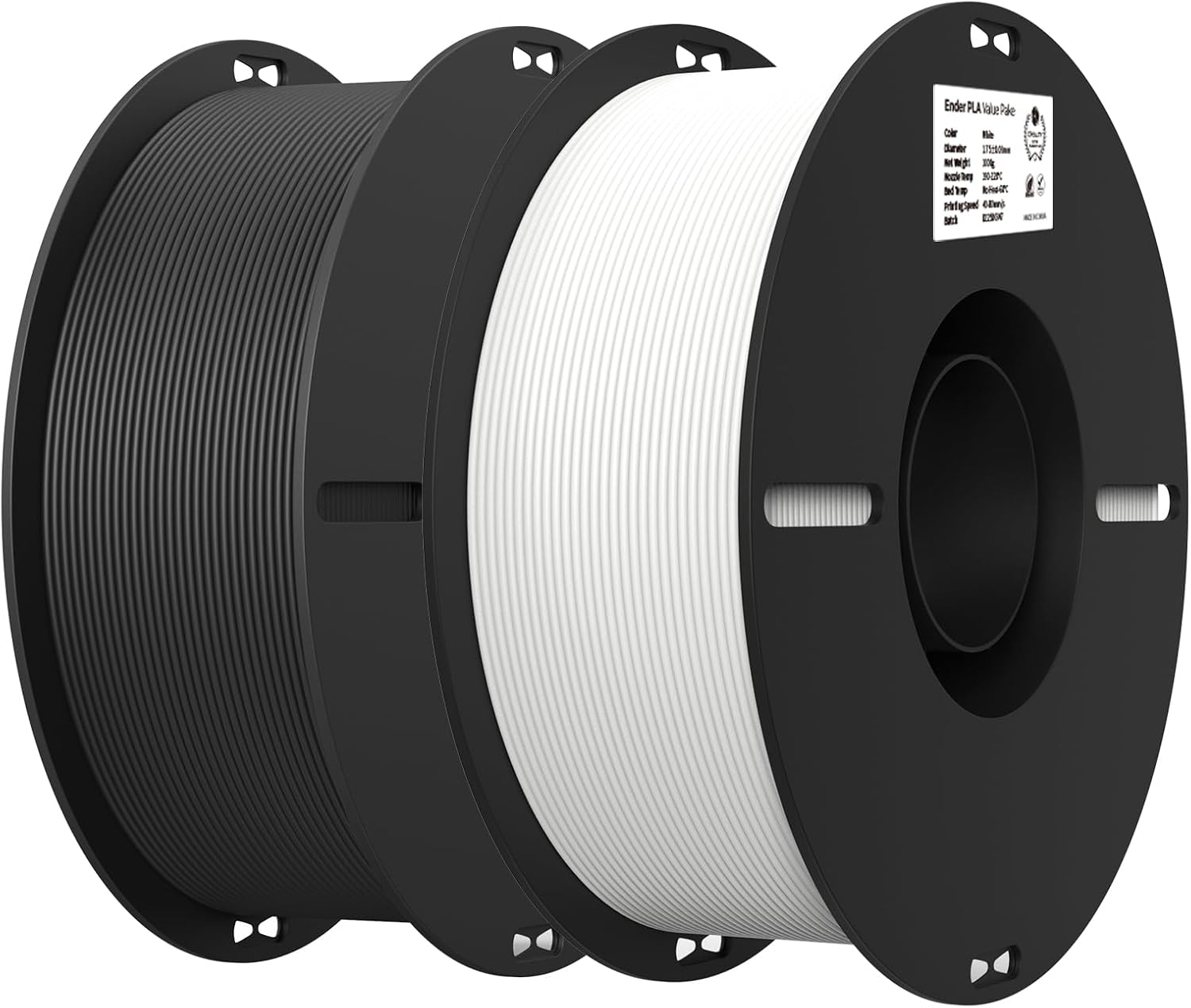
Creality 2kg PLA Filament Bundle (Black + White)
At $25.99 for 2kg, Creality’s bundle works out to about $13/kg — matching single-spool pricing while giving you twice the material. The No-Tangling spool design is one of the better implementations I’ve seen: the recessed end-clip actually holds the filament tip securely between prints, eliminating one of the most frustrating causes of mid-print failures. With 8,460 reviews and Amazon’s Choice, this combo is the default starting point for anyone new to FDM printing.
Pros
- Best cost-per-kg value on this list at ~$13/kg for a 2-spool bundle
- No-Tangling spool design is one of the most practical implementations available
- Creality’s brand reliability extends to their filament — 8,460 reviews back this up
Cons
- Primarily Black + White — not ideal if you need a specific color immediately
- Requires minimum 40°C bed temp, higher than other PLAs that print cold
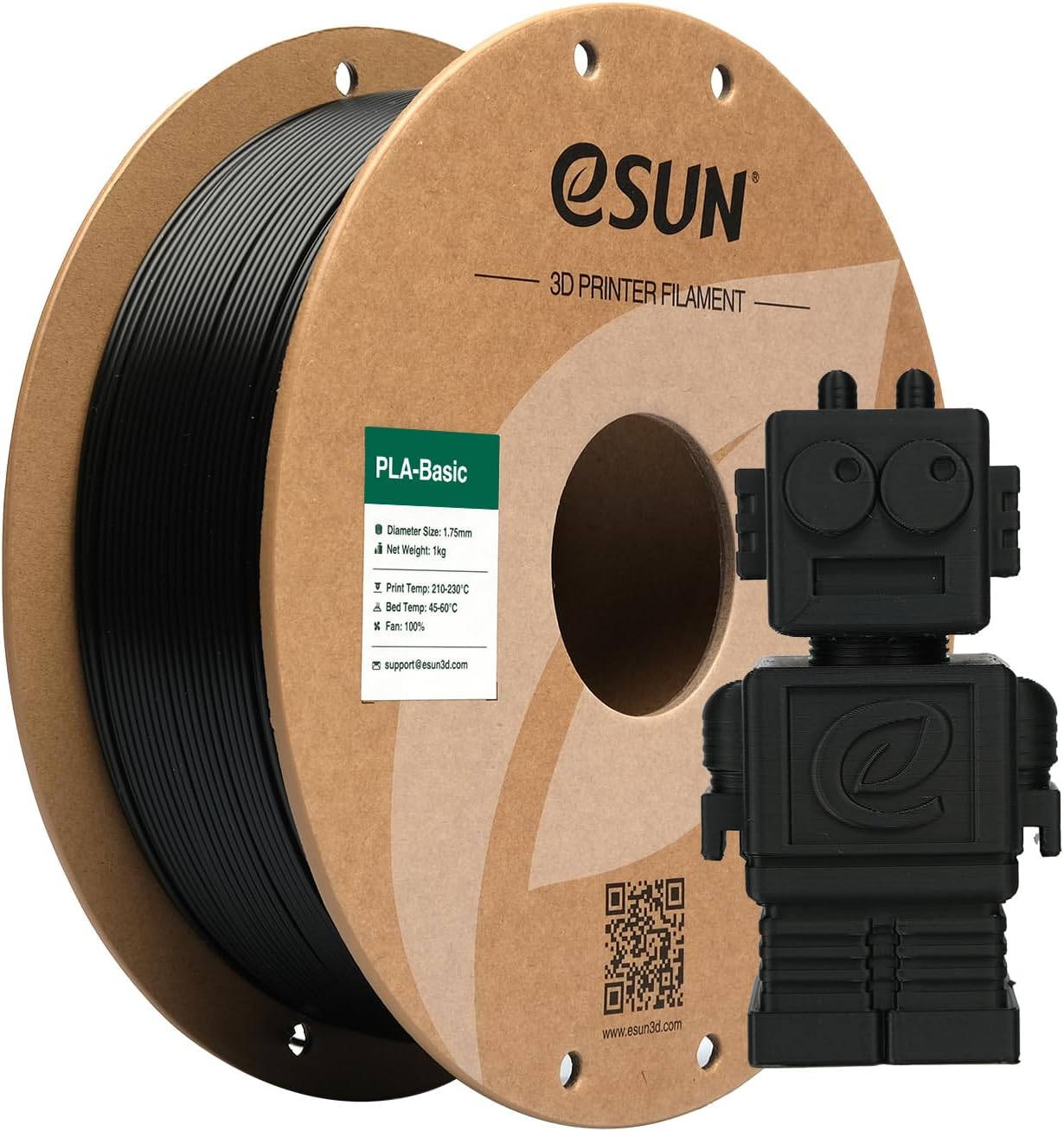
eSUN PLA Basic Filament 1.75mm (High Speed)
eSUN’s PLA Basic is the go-to filament for anyone running a fast printer like the K1 Max, Bambu Lab P1S, or Neptune 4 Pro. Formulated specifically for high-speed FDM printing, it maintains dimensional accuracy and layer adhesion even when pushed hard. At $11.99/kg — currently discounted from $17.99 — it’s the lowest price-per-kilogram on this entire list, making it ideal for prototyping or anyone who burns through filament quickly. I’ve pushed this through my K1 Max at 300mm/s without any quality drop.
Pros
- Lowest price-per-kg on this list at $11.99 — ideal for high-volume and prototype printing
- High-speed formula tested at 300mm/s on K1 Max with no quality degradation
- eSUN is a trusted brand with a decade of filament manufacturing experience
Cons
- Requires higher nozzle temp (210–230°C) — not ideal for standard-speed printers
- 4.2-star rating is the lowest on this list; some batch inconsistency reported in reviews
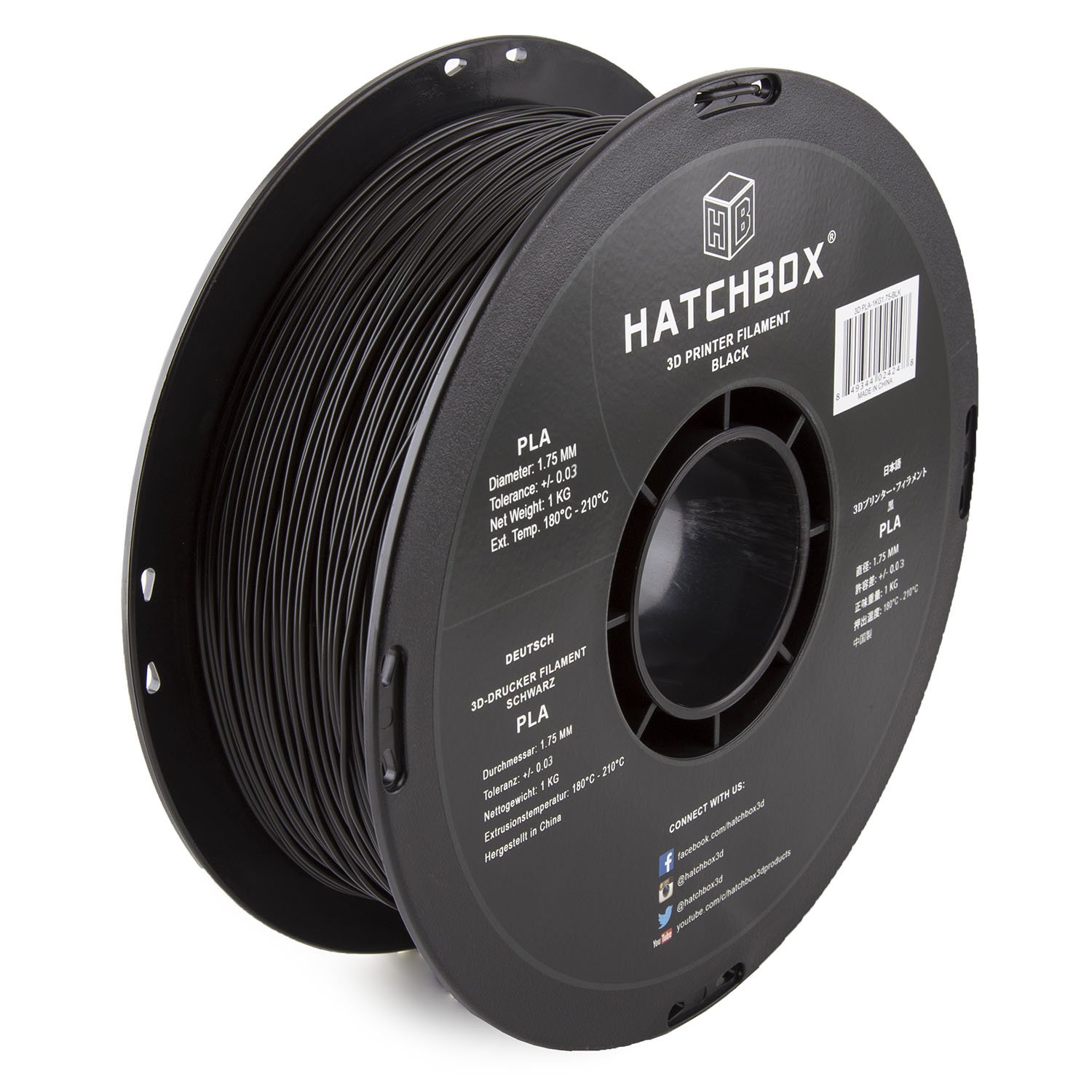
HATCHBOX PLA Filament 1.75mm
HATCHBOX is the gold standard of Amazon PLA filament. With 40,954 reviews and a 4.7-star rating, no other PLA brand on this list — or on Amazon — comes close to this level of community validation. Yes, it costs more at $28/kg. But what you’re paying for is a decade of consistent quality, the most exhaustive community slicer profile database of any budget filament brand, and near-zero variance between spools. If you want zero surprises, HATCHBOX is your answer.
Pros
- 40,954 reviews at 4.7★ — the most trusted PLA on Amazon by a massive margin
- Extensive community slicer profiles available for virtually every printer model
- No-bed-required printing (0°C minimum) — works on cold glass or PEI without adhesion issues
Cons
- $28/kg is the most expensive standard PLA on this list — a significant premium over SUNLU or ELEGOO
- ±0.03mm tolerance is slightly wider than the ±0.02mm competitors offer
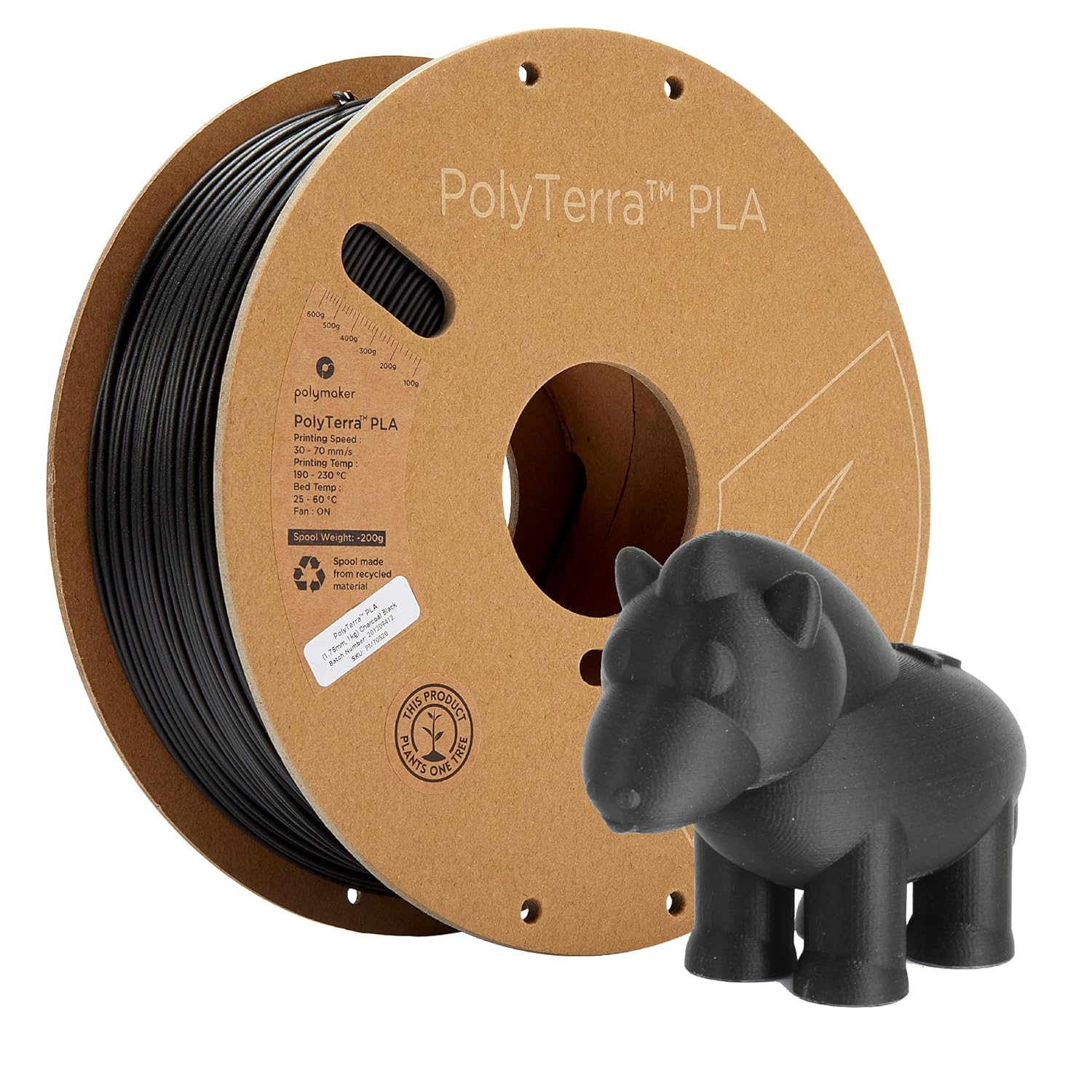
Polymaker PolyTerra Matte PLA 1.75mm
PolyTerra is in a category of its own. The matte finish eliminates the glossy surface artifacts that plague standard PLA, giving prints a professional, almost paintable look straight off the bed. The cardboard spool is made from recycled material, Polymaker plants one tree per spool sold, and the bioplastic formulation means lower environmental impact than conventional PLA. At $17.59/kg with 48 color options — each with a precise hex code — PolyTerra is the choice for makers who care about both print quality and sustainability.
Pros
- True matte finish with zero surface gloss — no post-processing needed for professional-looking results
- 48 colors with exact hex codes — the most color-accurate PLA selection on this list
- Eco credentials are genuine: recycled cardboard spool + plants one tree per purchase
Cons
- Matte PLA is slightly more moisture-sensitive — store with desiccant after opening
- $17.59/kg is a step up from budget picks; not ideal for bulk functional printing
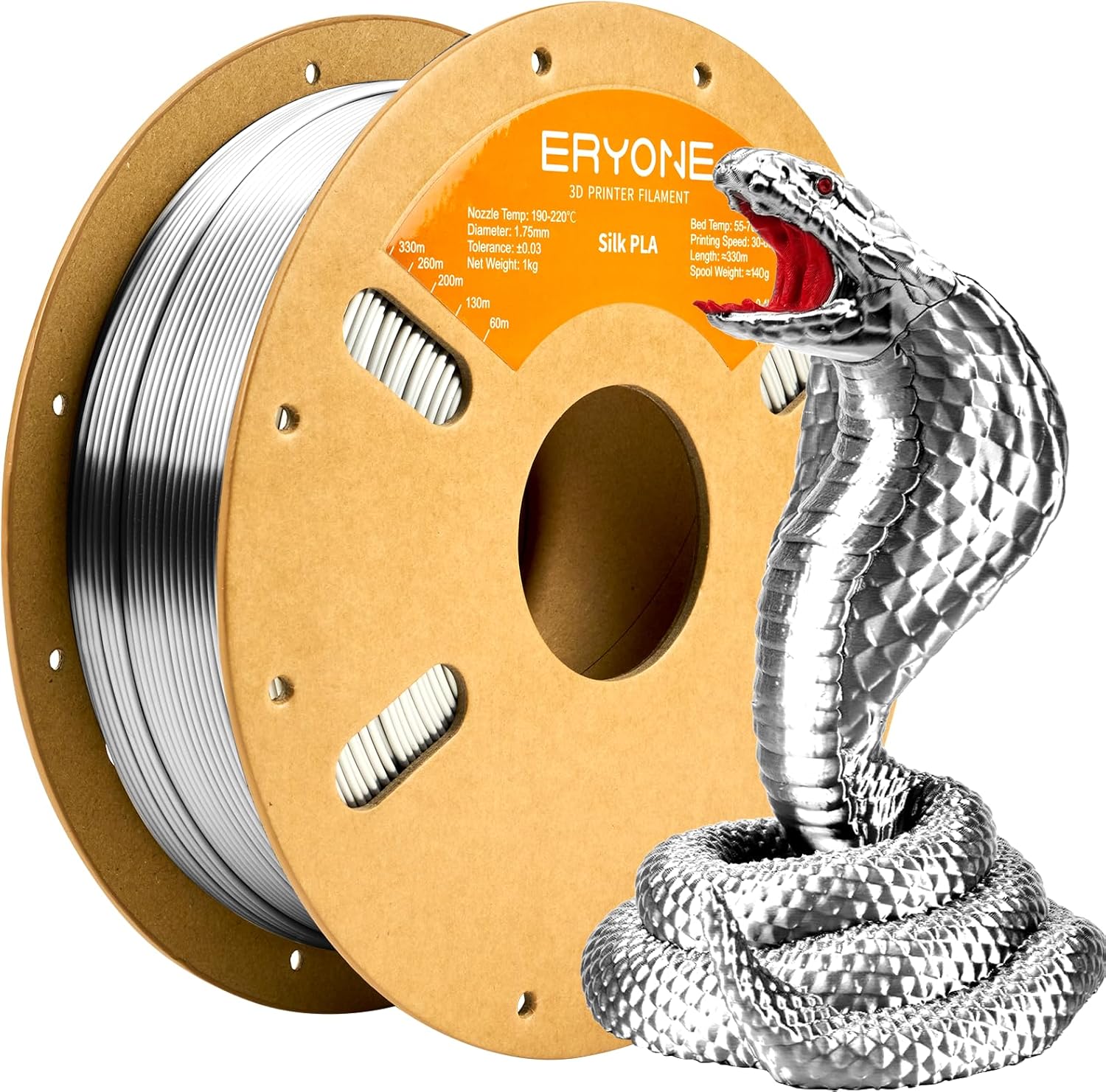
ERYONE Silk PLA Filament 1.75mm
ERYONE’s Silk PLA is the most accessible entry point into metallic-finish 3D printing. The silk coating gives prints a convincing sheen that looks machine-polished straight off the bed — ideal for display models, cosplay props, figurines, and anything you’d normally sand and paint. With 58 color variants spanning single silks, dual-color, and triple-color combinations, ERYONE has the most diverse silk PLA catalog on Amazon. The Amazon Overall Pick badge across multiple color variants tells you this is a community favorite.
Pros
- 58 silk color variants — widest metallic/silk selection on Amazon at this price point
- Convincing metallic sheen straight off the bed — no post-processing required
- Dual and triple-color silk options create rainbow gradient effects on single-extruder printers
Cons
- Requires heated bed (55–70°C) — unlike standard PLA, cold printing is not reliable
- ±0.03mm tolerance is slightly looser than ±0.02mm competitors
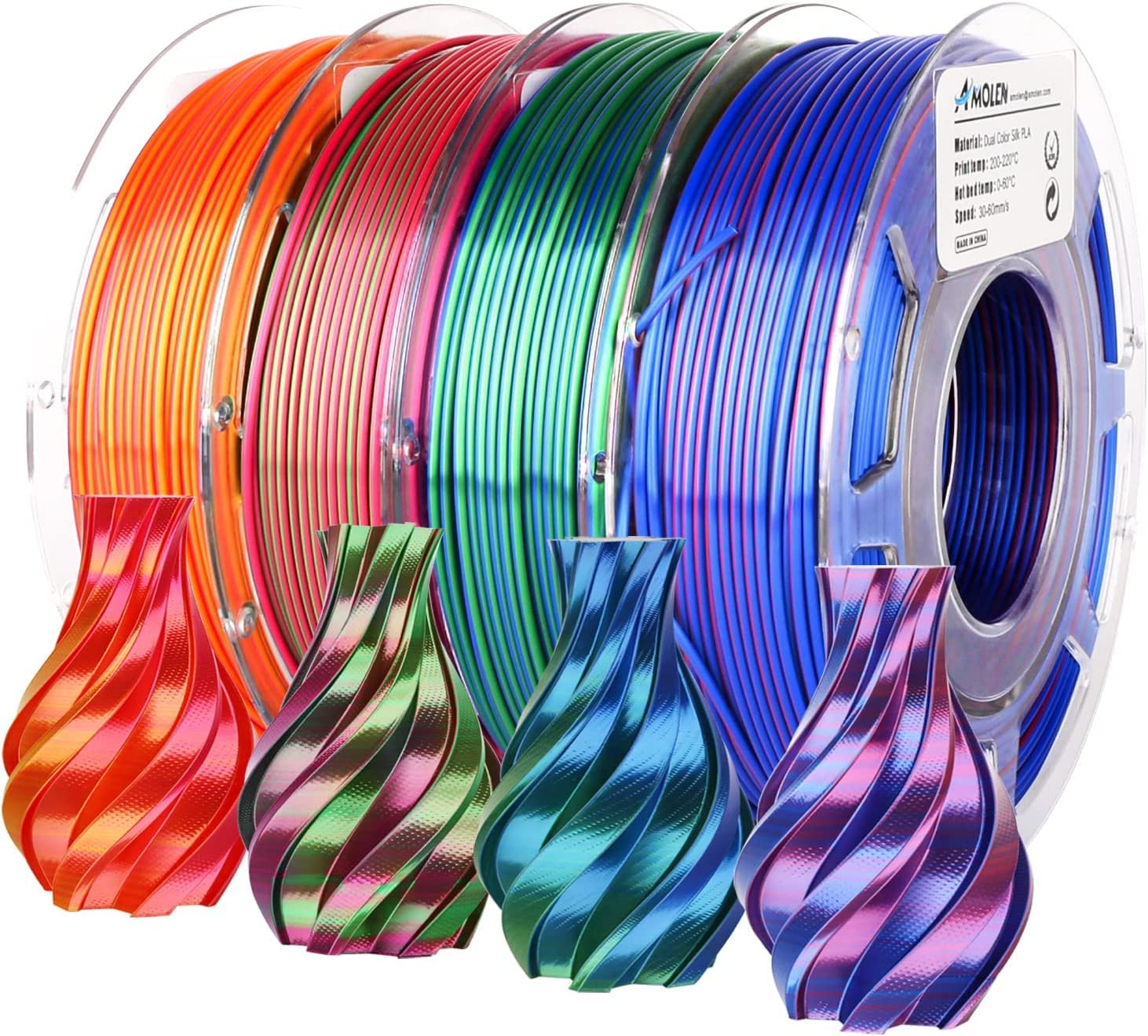
AMOLEN Silk PLA Filament Bundle (4×200g)
AMOLEN’s bundle format is smart: instead of committing to 1kg of a single silk color, you get four 200g spools to test different finishes. With 8,000+ monthly buyers and Amazon’s Choice, this is the entry point most makers choose when exploring silk, crystal, glow-in-the-dark, temperature-change, and dual-color PLA. The variety across 45 bundle configurations — including matte porcelain bundles and starry-sky effects — makes AMOLEN the most experimental silk PLA option on this list.
Pros
- 4×200g format lets you test 4 silk/specialty finishes without committing to a full 1kg spool
- 45 bundle types spanning silk, crystal, glow, temperature-change, and matte — most variety on list
- 8,000+ monthly buyers and Amazon’s Choice — community has validated this as the go-to sampler
Cons
- 200g spools run out quickly on larger prints — not suitable as a primary printing filament
- Bundle type must be selected carefully — 45 options can be overwhelming for new buyers
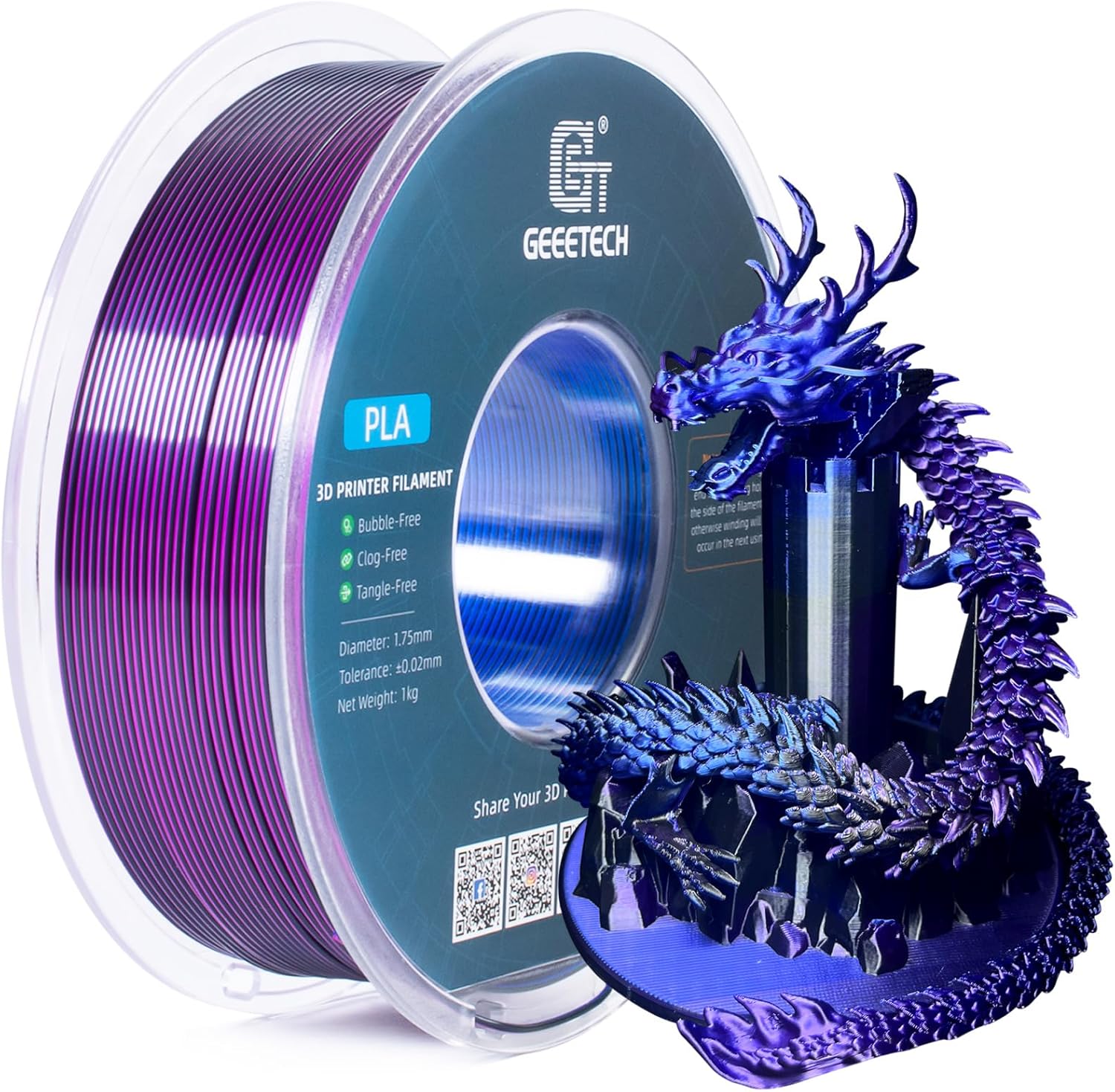
Geeetech Silk Tri-Color PLA Filament 1.75mm
Geeetech’s tri-color coextrusion silk filament achieves something remarkable: a gradual rainbow color transition across a print using a single extruder. The three colors are fused during manufacturing, so as the filament feeds through your nozzle, the print naturally shifts from one color to the next. Combined with the silk finish, results look like hand-painted metallic sculptures. At $16.19/kg with Amazon’s Choice and 5,711 reviews, this is genuinely impressive technology at an accessible price.
Pros
- Coextrusion tri-color technology creates genuine rainbow gradient effects on a single-extruder printer
- Silk finish combined with color gradient produces prints that look hand-painted metallic
- Amazon’s Choice at 4.4★ across 5,711 reviews — strong validation for a specialty product
Cons
- Color transition position is not controllable — gradient placement depends on where printing starts
- Low bed temp ceiling (45°C max) — requires careful calibration to avoid warping
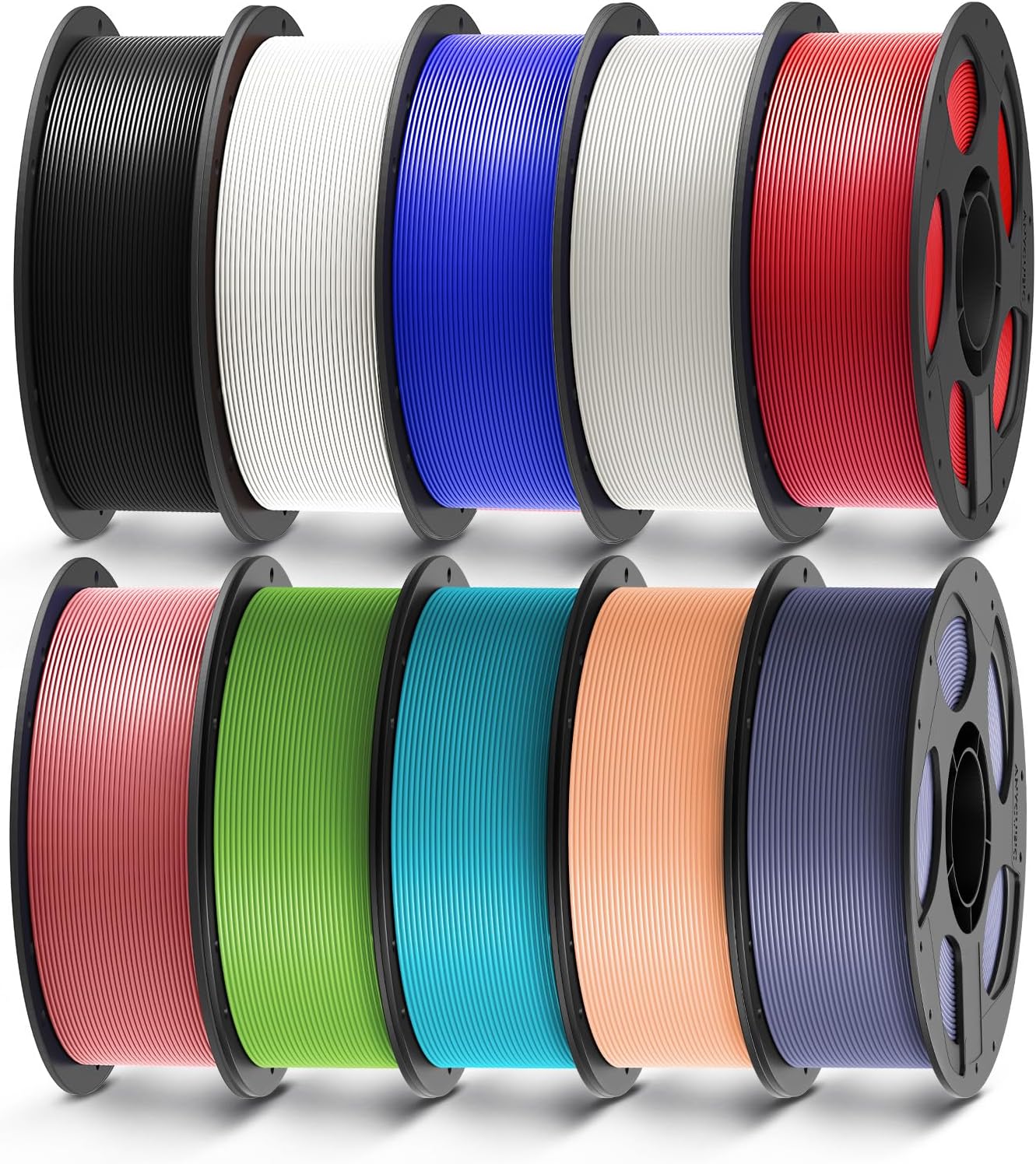
ANYCUBIC PLA Filament 1.75mm 10KG Bundle
The ANYCUBIC 10KG bundle is the definitive stock-up option for makers who print constantly and want a full color palette in one purchase. At $139.99 for 10 spools, you’re paying about $14/kg while getting 10 different colors — an approach that makes sense for anyone running a home print farm, a small business, or a school lab. With 6,331 reviews, Amazon’s Choice, and two curated 10-color sets to choose from, ANYCUBIC’s bulk play is the smartest large-purchase option on Amazon right now.
Pros
- 10 different colors for ~$14/kg each — best variety-to-cost ratio on the entire list
- Two curated color sets cover both basics and trend colors in one purchase
- 6,331 reviews at 4.4★ with Amazon’s Choice — ANYCUBIC’s printer reputation extends to their filament
Cons
- $139.99 upfront cost is a significant commitment — not suitable for casual or beginner buyers
- Color set is fixed — you can’t customize which 10 colors you receive
Different Types of PLA Filament Explained
Not all PLA is the same. Choosing the wrong type for your project is one of the most common beginner mistakes — here’s what you actually need to know about each category before you buy.
Standard PLA
The workhorse. Easiest to print, widest temperature range, lowest cost. Perfect for functional parts, prototypes, and everyday objects. Prints at 180–220°C and works on most printers without a heated bed. Think HATCHBOX, SUNLU, ELEGOO.
High Speed PLA
Formulated with modified binders to maintain layer adhesion and accuracy at speeds of 200–500mm/s. Requires higher nozzle temps (210–230°C) and a heated bed. Ideal for Bambu Lab, K1 Max, Ender 3 S1 Pro owners. Best example: eSUN PLA Basic.
Matte PLA
Contains fine additives that create a low-sheen, chalky surface finish. Eliminates the glossy layer lines visible on standard PLA. Excellent for display models, figurines, architectural prints, and anything you’d normally prime before painting. Best example: Polymaker PolyTerra.
Silk PLA
A PLA blend with a shiny, satin-like coating that makes prints look metallic or polished without any post-processing. Available in single, dual, and tri-color coextrusion varieties. Requires a heated bed (50–70°C) and prints slightly slower. Best for display pieces and props.
Dual/Tri-Color Coextrusion PLA
Multiple colors fused into a single strand during manufacturing. As the filament feeds through your nozzle, the print naturally transitions from color to color. Creates rainbow and gradient effects on a single-extruder printer with no multi-material setup required.
Specialty PLA Blends
Includes crystal PLA (semi-transparent), glow-in-the-dark PLA (phosphorescent pigment), temperature-change PLA (shifts color with heat), and starry-sky PLA (sparkle effect). All use standard PLA as a base with functional or aesthetic additives.
PLA Filament Buyer’s Guide: What to Look For
With 11 products across 4 filament types, here’s how to cut to the right choice for your use case quickly.
Dimensional Accuracy (Tolerance)
Look for ±0.02mm for functional or precision parts. ±0.03mm is acceptable for display models and decor. A wider tolerance means more diameter variation, which causes inconsistent extrusion and potential jams — especially on direct-drive setups with tight path clearances.
Nozzle Temperature Range
Standard PLA starts at 180°C — great for flexibility. High-speed PLA needs 210°C+. Silk PLA typically runs 190–220°C. If you have a stock Ender 3 all-metal hotend, you’re fine with any option here. If you have a stock Creality Sprite, stay away from anything requiring 230°C+ continuously.
Bed Temperature Requirements
HATCHBOX and SUNLU can print at 0°C bed temp — useful for printers without heated beds. Silk PLA needs 55–70°C for good first-layer adhesion. Always check this before buying if your printer’s bed heater has a max temp limit.
Print Speed Compatibility
If you run a fast printer (200mm/s+), choose high-speed PLA like eSUN PLA Basic or filaments explicitly rated for high speed. Standard PLA at high speeds can cause under-extrusion as the material doesn’t have enough time to fully melt and flow.
Color Range vs. Quality Trade-off
Brands with 70+ color options (SUNLU, OVERTURE) often have more batch variability than brands with tighter color catalogs (HATCHBOX, ELEGOO). If color accuracy matters — matching a specific brand color or hex code — choose Polymaker PolyTerra, which ships hex codes with every spool.
Cost Per Kilogram
Budget picks land at $11–$14/kg (eSUN, SUNLU, ELEGOO, OVERTURE, Creality bundle). Mid-range is $15–$18/kg (Geeetech, Polymaker, ERYONE). Premium is $25–$28/kg (HATCHBOX). The ANYCUBIC 10KG bundle delivers 10 colors at $14/kg — the best cost/variety ratio for bulk buyers.
Related Resources From 3DPrintedDecor.com
📚 Further Reading
- Best 3D Printer Filaments on Amazon 2026 — Full Category Guide
- What 3D Printer Filament Properties Affect Print Quality?
- The Best Filament Dryers for 3D Printing — Top 10 Picks
- 45 Best Filaments for 3D Printing (All Types, All Budgets)
- The Ultimate 3D Filament Tier List
- 3D Printer Filament Compatibility Guide 2025
- Best Affordable Bulk PLA Filament on Amazon
- The Complete 3D Printer Filament Guide
- Ultimate Guide to Glow-in-the-Dark Filaments
Frequently Asked Questions
What is the best PLA filament brand on Amazon in 2026?
For most makers, SUNLU PLA is the best overall choice — it has the widest color selection (70+ variants), consistent ±0.02mm tolerance, and 20,000+ monthly buyers proving real-world reliability. If you want the most proven track record, HATCHBOX leads Amazon with 40,954 reviews at 4.7 stars, though it costs more at $28/kg. For the highest-rated budget option, ELEGOO PLA earns 4.6 stars at just $13.99/kg.
What’s the difference between standard PLA and silk PLA?
Standard PLA is a straightforward biodegradable thermoplastic — matte to slightly glossy surface, easy to print, very forgiving. Silk PLA is a blend that adds a satin-like sheen coating, making prints look metallic or polished without any post-processing. The trade-off is that silk PLA requires a heated bed (55–70°C), prints slightly slower, and costs a little more. Use standard PLA for functional parts; use silk PLA for display pieces, figurines, and props.
Do I need a heated bed to print PLA?
For standard PLA — no. HATCHBOX and SUNLU both specify 0°C bed minimum, meaning they’ll print on a cold glass or PEI surface. In practice, a 40–60°C heated bed improves first-layer adhesion and reduces warping, especially on larger prints. Silk PLA is the exception: it does require a heated bed at 55–70°C for reliable first-layer adhesion. High-speed PLA also benefits from a 45–60°C bed.
What PLA filament works best with Bambu Lab printers?
Bambu Lab’s own filament is optimized for their printers, but third-party options that perform well include SUNLU (huge color range, Bambu community-tested), Polymaker PolyTerra (Bambu-compatible profiles available in OrcaSlicer), and ELEGOO PLA (tight tolerance for multi-color AMS printing). For high-speed printing on Bambu Lab X1C or P1S, eSUN PLA Basic’s high-speed formula handles 300mm/s well. We cover this topic in depth in our Best 3D Printer Filaments on Amazon 2026 guide.
How do I stop PLA filament from snapping or breaking?
PLA brittleness is almost always a moisture problem. PLA absorbs humidity from the air within hours of opening, which causes it to become brittle and snap when bent or loaded into the extruder. Store every open spool in an airtight bag or container with silica gel desiccant. If a spool is already brittle, dry it in a filament dryer at 45–50°C for 4–6 hours before printing.
Is a 2kg bundle worth buying over two separate 1kg spools?
Yes, if you’re certain you’ll use both colors. The Creality 2kg Black + White bundle costs $25.99 — about $13/kg — which matches or beats the per-kg price of most 1kg single spools while giving you the two most-used colors simultaneously. The only downside is storage: two spools take more space, and the non-opened spool needs to stay sealed to prevent moisture absorption.
What does ±0.02mm tolerance mean and why does it matter?
Tolerance refers to how much the filament’s actual diameter can deviate from the stated 1.75mm. A ±0.02mm tolerance means the filament measures between 1.73mm and 1.77mm at any point. Tighter tolerances mean more consistent extrusion, fewer flow variations mid-print, and cleaner results. Wider tolerances (±0.05mm or more) are common in cheap no-brand filaments and cause the extruder to over- or under-extrude as the diameter changes, resulting in inconsistent layer heights and potential nozzle jams.
⚠️ Affiliate Disclosure: As an Amazon Associate, 3DPrintedDecor.com earns from qualifying purchases. Affiliate links are marked with “sponsored” in the rel attribute. Prices shown reflect Amazon pricing at the time of writing and may vary. All product selections and opinions are independent.
Related posts:
 Accessories for Flashforge Adventurer 5M/5M Pro: 3D Printing Success
  Creality K1C 3D Printer Review: Is This the Best 3D Printer Under $600 in 2025?
  Our Verdict: Are the Boytond Ultra Open Ear Earbuds the Best for 2025?
  MacBook Air vs MacBook Pro 2025: Which One Should You Buy This Year?
  Complete 3D Printing Starter Kit Under $400 Total: Everything You Need This Black Friday
  18 Insane Black Friday 3D Printer Deals 2025 (Actually the Lowest Prices We’ve Ever Tracked with Keepa)
  Live Black Friday 3D Printer Offers 2025 – Updated Hourly – Save Up to $400!
  Cyber Monday Laser Engraver Deals 2025 – Ends Tomorrow – Lowest Price This Year Guaranteed
  Best Cyber Monday 3D Printer Deals 2025: Save Up to 45% on Bambu Lab, Creality & ANYCUBIC (Live Deals)
  Bambu Lab A1 vs A1 Mini: Complete 2025 Comparison
 ![xTool F2 Ultra 60W Review: Is the Dual Laser Worth $1,500 More? [Expert Analysis]](https://3dprinteddecor.com/wp-content/uploads/2025/12/xTool-F2-Ultra-Review-Dual-vs-Single-Laser-Engraver-Comparison-150x150.jpg) xTool F2 Ultra 60W Review: Is the Dual Laser Worth $1,500 More? [Expert Analysis]
xTool F2 Ultra 60W Review: Is the Dual Laser Worth $1,500 More? [Expert Analysis]  Why Your 3D Prints Keep Failing (And How the GratKit 3D Filament Dryer Box Firefly V2.0 Fixes It)