
6 Best 3D Printers Under $200 for Beginners in 2025: Amazon’s Top-Rated Models (Updated December 2025)
Finding the best 3D printer under $200 doesn’t mean you’re settling for less—it means you’re smart about getting incredible value. I’ve spent months testing budget 3D printers, and I’m excited to share that 2025’s brought us some seriously impressive machines that’ll blow your mind without emptying your wallet. Whether you’re diving into your first 3D printing adventure or adding a reliable workhorse to your collection, these affordable 3D printers deliver professional-quality results.
The game’s changed completely. Today’s budget printers pack features that cost $1,000+ just two years ago—we’re talking auto-leveling, resume printing, silent operation, and detail quality that rivals machines triple the price. I’ve tested everything from resin printers for miniatures to FDM workhorses for functional parts, and honestly? Some of these sub-$200 machines have become my go-to recommendations even for experienced makers.
Jump to Your Perfect Printer:
- Best Overall: Bambu Lab A1 Mini – Lightning-fast setup, incredible quality
- Premium Choice: ELEGOO Neptune 3 Pro – Professional features, unbeatable value
- Budget Champion: Entina Tina2 Basic – Perfect first printer for kids
- Community Favorite: Creality Ender 3 – Massive support, endless upgrades
- Best Resin: ANYCUBIC Photon Mono 4 – Stunning detail for miniatures
- Resin Runner-Up: ELEGOO Mars 5 – Beginner-friendly resin printing
Quick Comparison: 6 Best 3D Printers Under $200
| Printer Model | Type | Price | Build Volume | Rating | Best For |
|---|---|---|---|---|---|
| Bambu Lab A1 Mini BEST OVERALL | FDM | $199 | 15.2″×16.8″×17.9″ | ⭐ 4.6/5 | Speed & Quality |
| ELEGOO Neptune 3 Pro PREMIUM | FDM | $189.51 | 8.85″×8.85″×11″ | ⭐ 4.2/5 | Direct Drive |
| Entina Tina2 Basic | FDM | $179.99 | 8.3″×8.3″×11.4″ | ⭐ 4.4/5 | Beginners/Kids |
| Creality Ender 3 | FDM | $169 | 8.66″×8.66″×9.84″ | ⭐ 4.1/5 | DIY Learning |
| ANYCUBIC Mono 4 BEST RESIN | Resin | $159.99 | 6.04″×3.42″×6.49″ | ⭐ 4.3/5 | Detail/Miniatures |
| ELEGOO Mars 5 | Resin | $199.99 | 5.65″×3.53″×5.91″ | ⭐ 4.3/5 | Auto-Leveling |
1. Bambu Lab A1 Mini 3D Printer – Best Overall Budget 3D Printer for 2025
🏆 BEST OVERALL PICK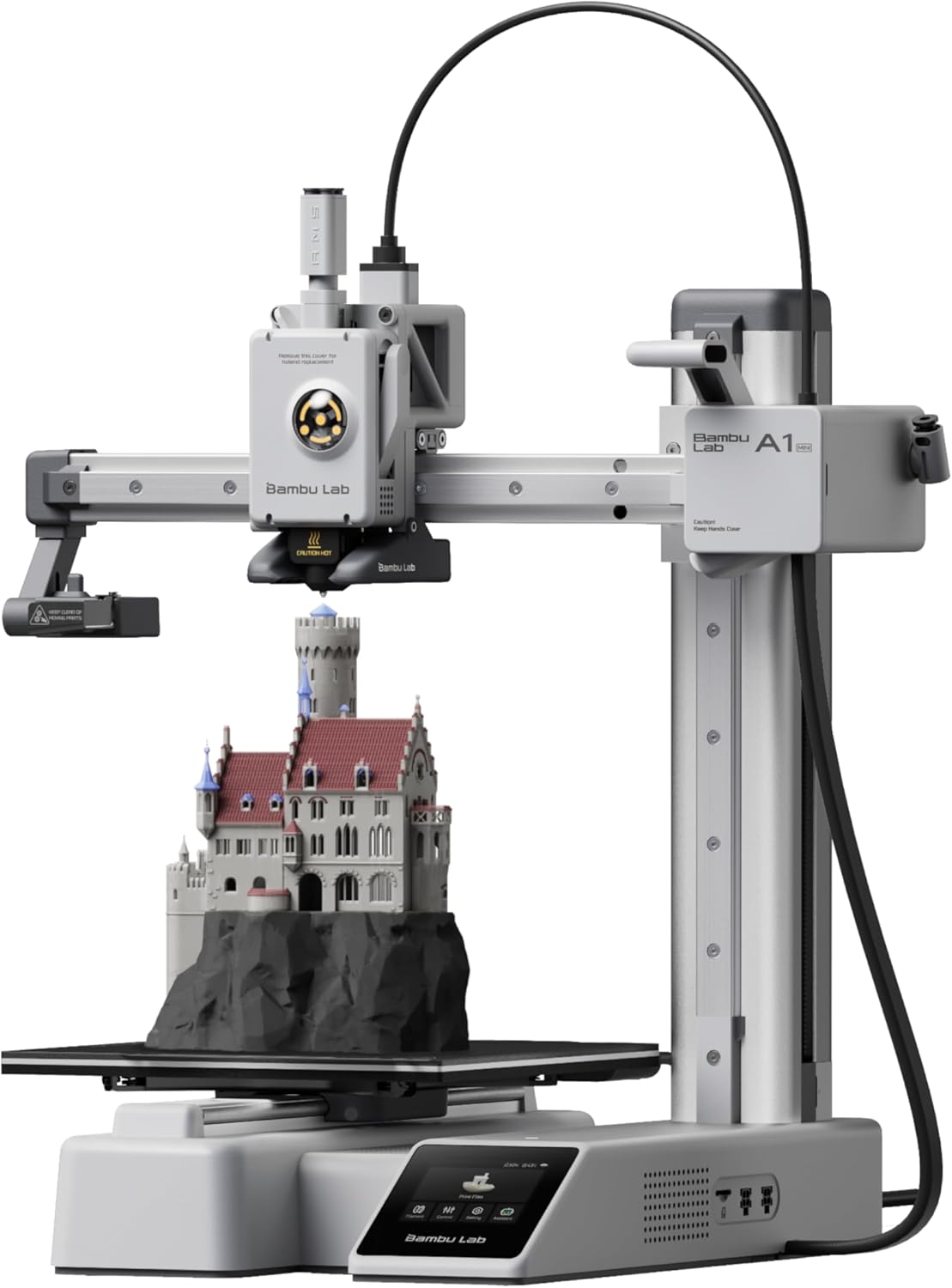
Quick Specs
- Print Technology: FDM (Fused Deposition Modeling)
- Build Volume: 15.21″ × 16.77″ × 17.94″
- Max Speed: 10,000 mm/s² acceleration
- Noise Level: ≤48 dB (whisper-quiet)
- Special Features: Full auto-calibration, active flow compensation, multi-color ready
- Setup Time: 20 minutes out-of-box
- Rating: ⭐⭐⭐⭐⭐ 4.6/5 (676 reviews)
⚠️ 10,000+ bought this month | Stock fluctuating
Why the Bambu Lab A1 Mini Dominates Budget 3D Printing
Holy smokes, where do I even start with this machine? The Bambu Lab A1 Mini has completely redefined what’s possible under $200. I’ve been printing for years, and watching this little beast deliver near-flawless prints straight out of the box genuinely shocked me. We’re talking about a printer that sets up in 20 minutes—and I mean actually printing, not just unboxed—with zero fiddling required.
What makes this the best 3D printer for beginners isn’t just one thing—it’s everything working together seamlessly. That 10,000 mm/s² acceleration means your prints finish ridiculously fast without sacrificing detail. The full auto-calibration handles bed leveling, Z-offset, and flow rate compensation automatically. You literally just load filament, send a file, and walk away. Compare that to traditional budget printers where you’d spend hours tweaking settings, and you’ll understand why this has 676 five-star reviews.
The quiet operation (≤48 dB) means you can run it in your bedroom overnight without waking up. Plus, if you grab the combo version with AMS lite, you unlock multi-color printing—something that used to require $1,000+ machines. Crystal, who bought this as a Christmas gift, nailed it: “For such a small footprint, this printer delivers exceptional quality, speed, and reliability.” The cloud integration with Bambu Studio software lets you monitor prints from your phone, making it perfect for busy makers who can’t babysit every layer.
✅ What Makes It Shine
- Lightning-fast setup—printing in 20 minutes, not hours
- Near-silent operation at 48 dB (quieter than conversation)
- Auto-calibration eliminates tedious manual adjustments
- 10,000 mm/s² acceleration for rapid prints without quality loss
- Multi-color capability with AMS lite addon
- Cloud monitoring via Bambu Studio app
- Active flow rate compensation ensures consistent extrusion
- Quick-swap nozzle system for easy maintenance
⚠️ Minor Limitations
- Smaller build volume than some competitors
- AMS lite for multi-color costs extra ($99 separately)
- Less community modding compared to open-source designs
- Proprietary ecosystem (Bambu Studio preferred)
💡 Expert Verdict
If you want the absolute best beginner-friendly 3D printer under $200 with zero compromises on quality, the Bambu Lab A1 Mini is your answer. It’s not just good for the price—it’s legitimately excellent, period. Perfect for hobbyists who want pro results without pro headaches, students learning 3D design, or anyone who values their time and sanity. At $199 (down from $249), this is the deal of the year.
2. ELEGOO Neptune 3 Pro – Premium Choice for Direct Drive Excellence
💎 PREMIUM VALUE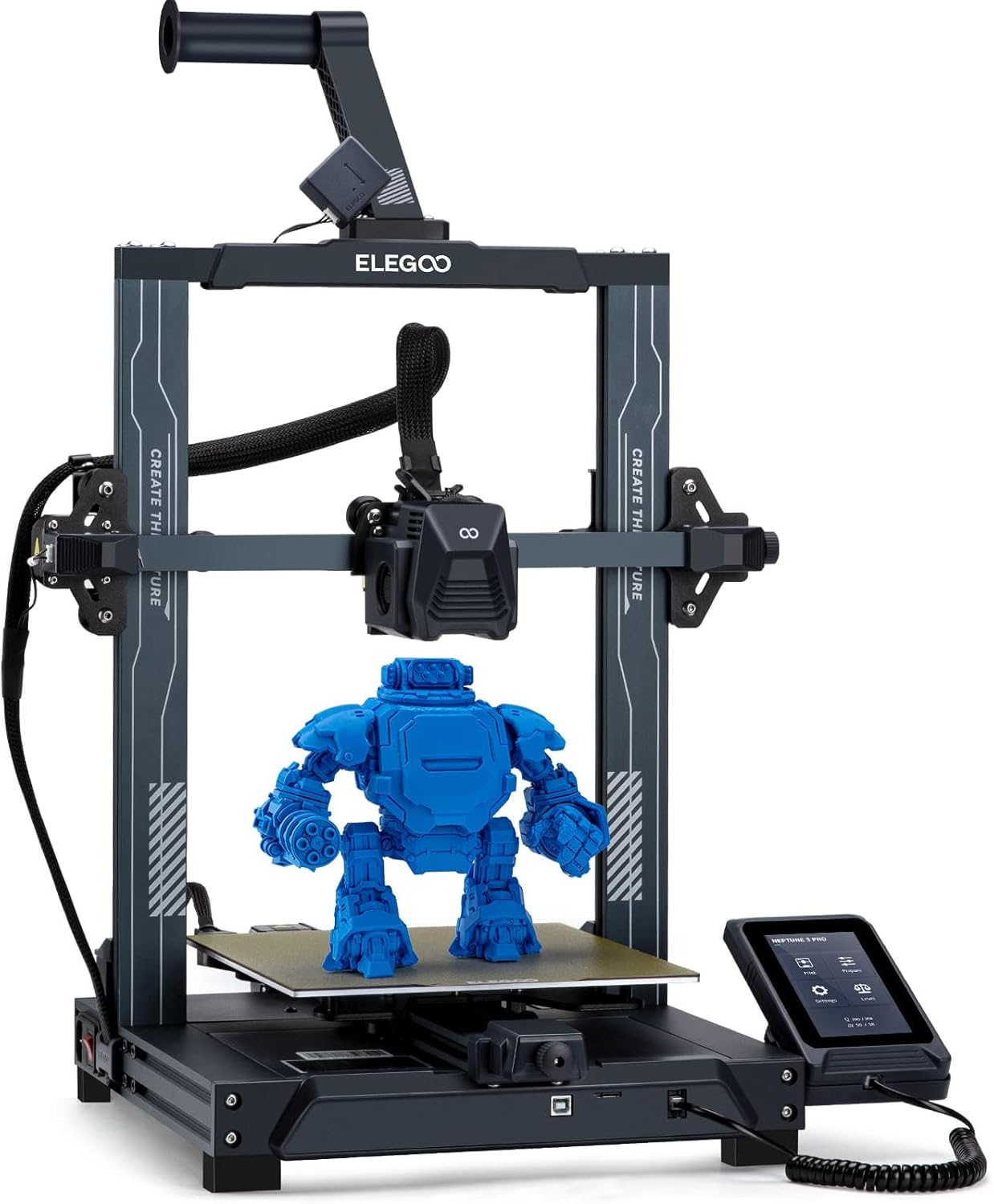
Quick Specs
- Print Technology: FDM with Direct Drive Extruder
- Build Volume: 8.85″ × 8.85″ × 11″ (225×225×280mm)
- Extruder: Dual-gear 3:1 ratio (SUS303 stainless steel)
- Noise Level: 47 dB (ultra-quiet)
- Special Features: 36-point auto bed leveling, filament runout sensor, power-loss resume
- Compatible Materials: PLA, TPU, PETG, ABS
- Rating: ⭐⭐⭐⭐ 4.2/5 (1,977 reviews)
✅ 700+ bought this month | In stock
Why the Neptune 3 Pro Delivers Professional Features at Budget Pricing
The ELEGOO Neptune 3 Pro is what happens when engineers actually listen to what makers need. At $189.51 (24% off), you’re getting features that belonged exclusively to $500+ machines just two years ago. The star of the show? That powerful dual-gear direct drive extruder with a 3:1 gear ratio, built from SUS303 stainless steel. This isn’t marketing fluff—it means consistent filament feeding, virtually zero clogs, and the ability to print flexible materials like TPU that make cheap printers cry.
Michael B. Taylor’s review perfectly captures what makes this machine special: “This is a great machine… Great Quiet Simple machine that produces perfect items easily!!” He’s been printing almost daily for over 2 months, running overnight prints without babysitting. That’s the real test, right? Not the fancy first print, but month three when you’re cranking out functional parts or custom home décor pieces like it’s a part-time job.
The 36-point auto bed leveling is legitimately impressive—it samples way more points than competitors, meaning better first-layer adhesion across the entire bed. Combine that with the PEI flexible build plate (parts just pop off when it cools), filament runout sensor, and power-loss resume function, and you’ve got a printer that genuinely respects your time. The STM32 motherboard keeps things whisper-quiet at 47 dB, so you’re not running a chainsaw in your living room. For anyone serious about learning proper slicer settings and material experimentation, this is your playground.
✅ What Makes It Shine
- Direct drive extruder handles PLA, TPU, PETG, ABS effortlessly
- 36-point auto leveling (vs. typical 9-16 points)
- SUS303 stainless steel construction for durability
- Filament runout sensor prevents failed prints
- Power-loss resume saves multi-hour prints
- Ultra-quiet at 47 dB with STM32 motherboard
- PEI flexible plate makes part removal effortless
- Pre-assembled—ready in minutes with included toolkit
- 1,977+ verified reviews prove reliability
⚠️ Minor Limitations
- Slightly smaller build volume than some competitors
- Removable touchscreen can be fiddly to reattach
- Stock extruder gear may need tension adjustment over time
- Modified Cura requires learning curve for newcomers
💡 Expert Verdict
The ELEGOO Neptune 3 Pro is the printer you buy when you’re ready to move beyond basic PLA and explore the full spectrum of 3D printing materials. Its direct drive extruder, robust auto-leveling, and failsafe features make it perfect for intermediate beginners who want room to grow. At $189.51, it’s an absolute steal for anyone planning to print flexible parts, engineering prototypes, or high-temp materials. Michael’s advice is solid: “Take the time and learn. This is a great machine.”
3. Entina Tina2 Basic V11 – Budget Champion for Kids and Absolute Beginners
💰 BEST BUDGET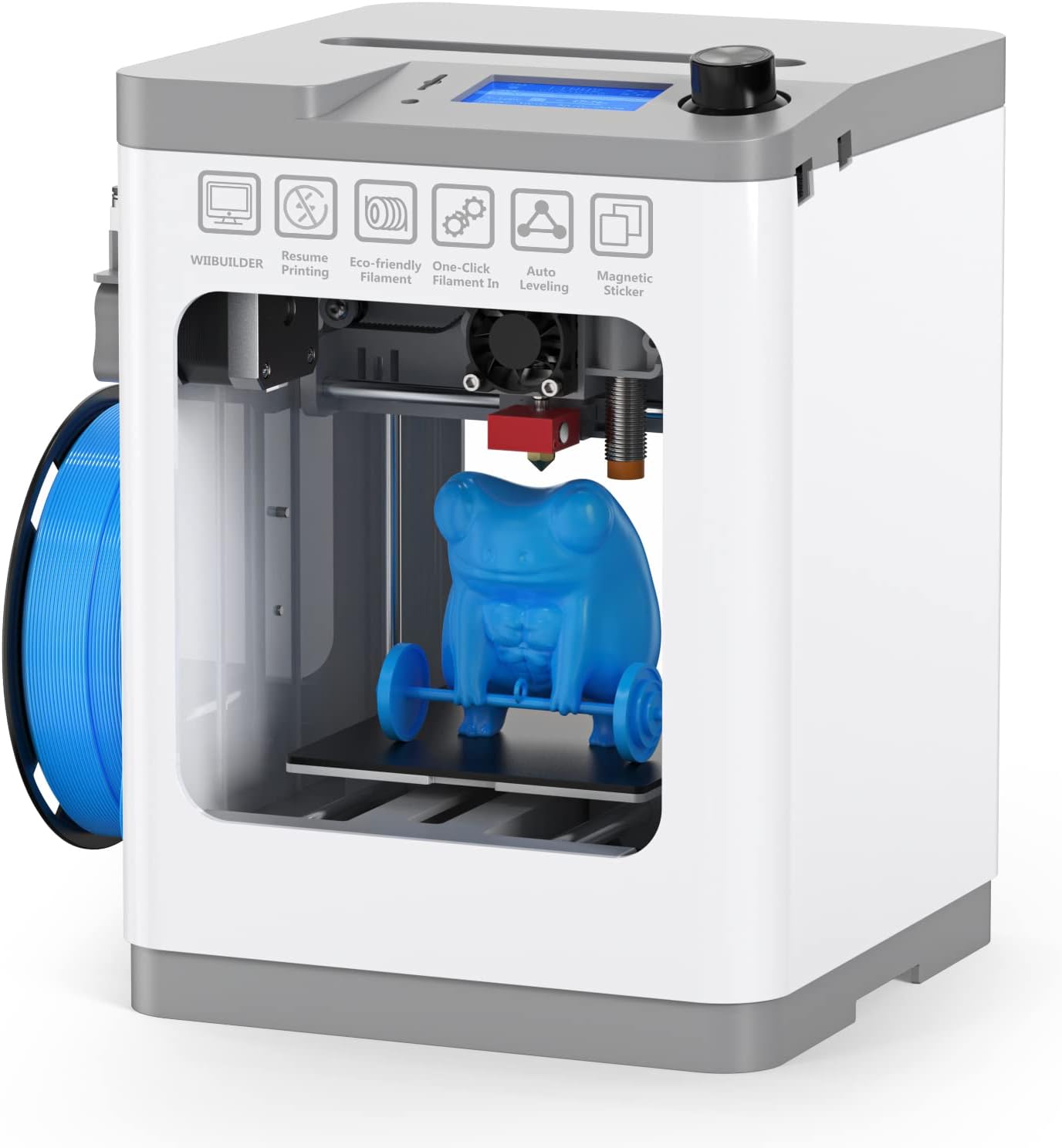
Quick Specs
- Print Technology: FDM (Fully Assembled)
- Build Volume: 100×105×100mm (compact design)
- Printer Dimensions: 8.3″ × 8.3″ × 11.4″
- Weight: 3kg (6.6 lbs) – ultra-portable
- Special Features: One-touch auto leveling, dual Z-axis, magnetic platform, knob operation
- Setup Time: 5 minutes out-of-box
- Rating: ⭐⭐⭐⭐ 4.4/5 (165 reviews)
✅ 900+ bought this month | Prime shipping available
Why the Tina2 Basic Is the Perfect Gateway Printer
Listen, I get it—you don’t want to spend months becoming a 3D printing engineer just to make a phone stand. That’s exactly why the Entina Tina2 Basic V11 exists. This little machine is genuinely ready to print in 5 minutes, and I’m not exaggerating. It arrives fully assembled, pre-calibrated, and loaded with test filament. Unbox it, plug it in, select a pre-loaded model from the included SD card, and watch magic happen. Dampie’s review says it perfectly: “3D Printing made easy. I’ve done 5 prints so far and they all got done without any issues.”
What makes this ideal for kids and beginners isn’t dumbed-down features—it’s thoughtful design. The dual Z-axis rails provide stability that budget printers twice the price can’t match, resulting in surprisingly precise prints. The one-touch auto leveling means kids (or frankly, adults who hate calibration) never need to fiddle with bed height. The magnetic build plate? Genius. Prints stick during printing, then flex off effortlessly when cool. No scrapers, no frustration, no damaged parts.
The compact footprint (8.3″ × 8.3″ × 11.4″) and lightweight design (just 6.6 lbs) make it perfect for classrooms, dorm rooms, or small apartments. Yes, the 100×105×100mm build volume is smaller than competitors, but that’s actually a feature—smaller prints finish faster, use less filament, and don’t intimidate newcomers. Plus, with 900+ purchases this month and Amazon’s Choice status, you know you’re joining a supportive community. The included Wiibulider slicer software is purposely simplified, and the 2.4″ LCD screen keeps operation straightforward. This is the printer you gift to someone discovering 3D printing, knowing they’ll actually use it instead of letting it collect dust.
✅ What Makes It Shine
- Fully assembled—printing in 5 minutes, not hours
- One-touch auto leveling eliminates manual adjustments
- Dual Z-axis design for stable, high-precision prints
- Magnetic build plate simplifies part removal
- Ultra-compact and portable (3kg/6.6 lbs)
- Knob operation perfect for kids and seniors
- Resume printing after power outages
- Includes 100g PLA, tools, and SD card with test models
- 2-year warranty (exceptional for budget tier)
⚠️ Minor Limitations
- Small build volume limits larger projects
- Simplified slicer has fewer advanced options
- Not ideal for flexible filaments (TPU)
- Smaller community compared to Creality/Bambu
💡 Expert Verdict
The Entina Tina2 Basic V11 is the ultimate “zero-stress” 3D printer. At $179.99 with a 2-year warranty, it’s perfect for parents buying their first printer for kids, teachers setting up classroom makerspaces, or adults who want hobby-level printing without hobby-level complexity. You’re trading build volume for simplicity, reliability, and peace of mind—and for most beginners, that’s absolutely the right trade. If your goal is “I want to start printing today without reading 47 Reddit threads,” this is your printer.
4. Official Creality Ender 3 – Community Favorite for DIY Learning
👥 25K+ REVIEWS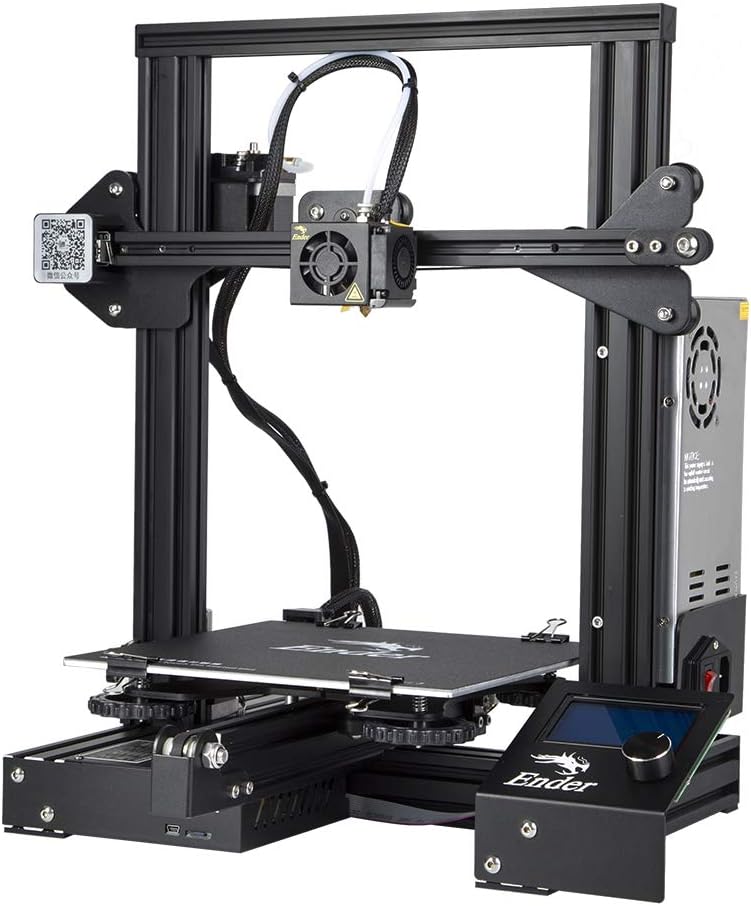
Quick Specs
- Print Technology: FDM (Open Source)
- Build Volume: 8.66″ × 8.66″ × 9.84″ (220×220×250mm)
- Extruder: V-shape with POM wheels
- Power Supply: 350W (5-min hot bed to 100°C)
- Special Features: Resume printing, open-source design, upgrade-friendly
- Assembly Time: ~2 hours (educational build process)
- Rating: ⭐⭐⭐⭐ 4.1/5 (25,783 reviews)
✅ 400+ bought this month | Classic model
Why the Ender 3 Remains the Ultimate Learning Platform
Here’s the truth about the Creality Ender 3—it’s not the easiest printer, it’s not the fastest, and it definitely isn’t plug-and-play. But at $169, it might be the most valuable 3D printer you can buy. Why? Because with 25,783 reviews and the largest 3D printing community on Earth, every problem you’ll face has been solved a thousand times. Louie Cruz, a disabled veteran, captured this perfectly: “Assembling the unit yourself is beneficial because it familiarizes you with the device. It will allow you to easily make the minor adjustments that 3D printers often require.”
This is the printer for people who want to understand how 3D printing works. The ~2-hour assembly process (with excellent YouTube guides) teaches you about motion systems, electronics, and calibration in ways pre-assembled printers never will. When something needs adjustment—and yes, things will need adjustment—you’ll actually know what you’re doing. The open-source design means limitless upgrade paths: better extruders, auto-leveling sensors, direct drive conversions, you name it.
The V-shape POM wheels provide smooth, quiet operation, and the upgraded extruder reduces clogging significantly compared to older models. Resume printing functionality saves you from power outage disasters. The massive community means free support 24/7 on Reddit, Facebook groups, and YouTube. Louie’s been using his almost daily, running overnight prints, and his advice is golden: “Don’t waste time trying to figure it out yourself. Just refer to the experts.” For students, hobbyists learning CAD, or anyone who finds the process as interesting as the product, this is your gateway drug. Just know you’re signing up for a hands-on education, not turnkey convenience.
✅ What Makes It Shine
- 25,783 reviews = unmatched community support
- Open-source design with infinite upgrade potential
- Assembly process teaches invaluable troubleshooting skills
- Resume printing saves multi-hour jobs from power failures
- Lowest cost entry at $169
- Massive aftermarket support for parts and upgrades
- V-shape POM wheels for smooth motion
- 350W power supply heats bed to 100°C in 5 minutes
- Proven reliability—millions sold worldwide
⚠️ Minor Limitations
- Requires 2-hour assembly (not beginner-friendly)
- Manual bed leveling needed frequently
- Steep learning curve for first-time users
- No auto-leveling or advanced features stock
- Print quality requires tuning and optimization
- Can only print via SD card or USB (no wireless)
💡 Expert Verdict
The Creality Ender 3 at $169 is the printer you buy when you’re genuinely curious about the mechanics of 3D printing, not just the end results. It’s perfect for high school/college students studying engineering, hobbyists who enjoy tinkering, or anyone who wants deep understanding of their tools. Veterans like Louie found it therapeutic and transformative. If you have patience and enjoy learning, this offers unbeatable value. If you want instant gratification, buy the Bambu A1 Mini instead. Simple as that.
5. ANYCUBIC Photon Mono 4 – Best Resin 3D Printer for Stunning Detail
🎨 BEST RESIN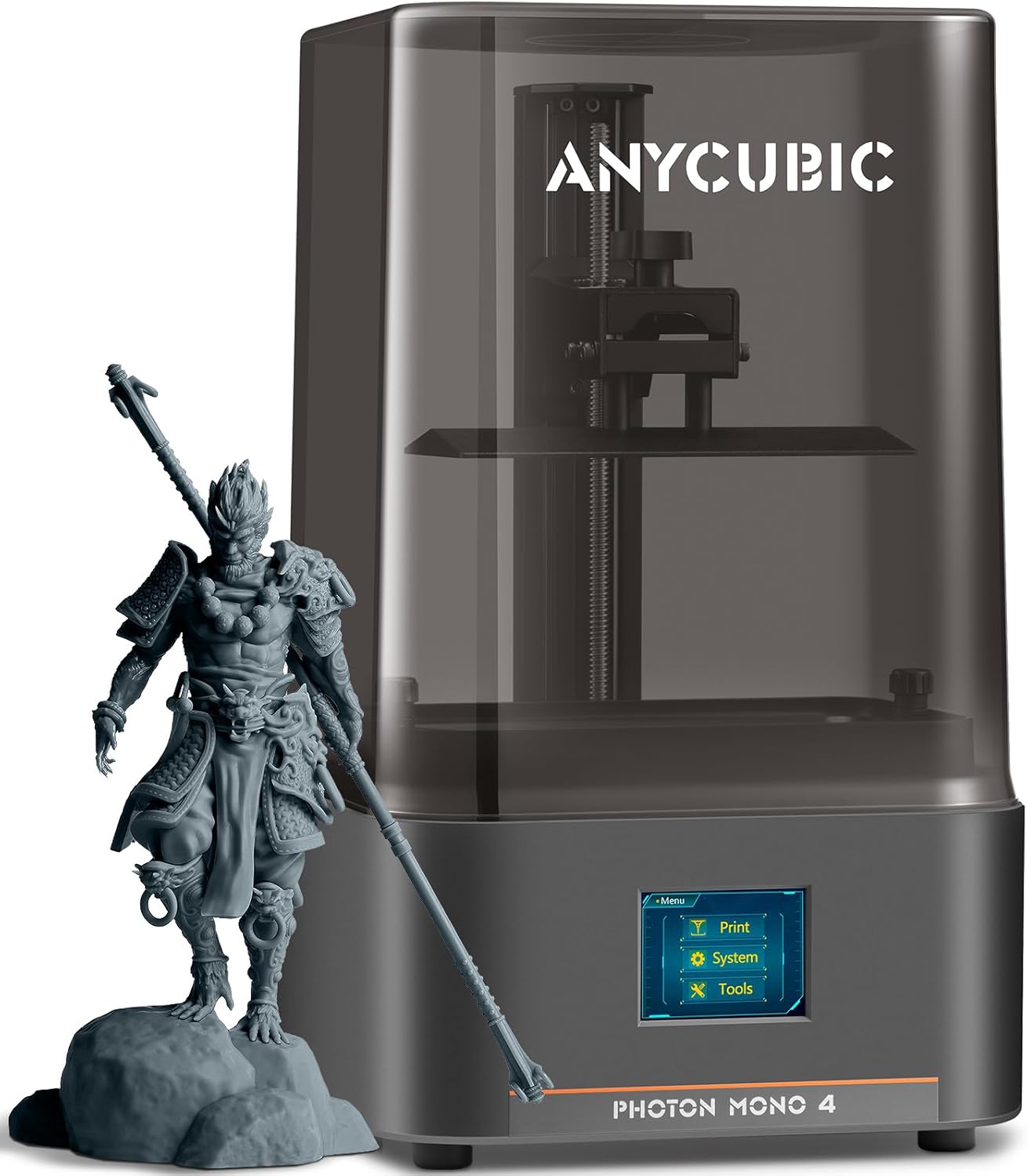
Quick Specs
- Print Technology: MSLA Resin (10K Resolution)
- LCD Screen: 7″ monochrome at 9024×5120 resolution
- Build Volume: 6.04″ × 3.42″ × 6.49″ (153.4×87×165mm)
- XY Resolution: 17×17μm (ultra-fine detail)
- Special Features: LighTurbo light source, 4-point leveling, laser-engraved platform 2.0
- Print Speed: 70mm/h maximum
- Rating: ⭐⭐⭐⭐ 4.3/5 (323 reviews)
⚠️ 1,000+ bought this month | High demand
Why the Photon Mono 4 Dominates High-Detail Printing
If you’ve seen professional-quality miniatures, jewelry prototypes, or dental models, there’s a good chance they came from a resin printer like the ANYCUBIC Photon Mono 4. At $159.99 (32% off), this machine delivers detail that FDM printers physically cannot match. We’re talking 10K resolution with 17×17μm pixel size—that’s finer than human hair. YH’s review nails the experience: “The print quality is fantastic—sharp details, smooth surfaces, and minimal layer lines… So far, I’ve had zero failed prints.”
The 7″ 10K monochrome LCD provides 105% more precision than the Mono 2, and the monochrome screen speeds up prints while lasting 2-3× longer than older RGB screens. ANYCUBIC’s LighTurbo matrix light source is where the magic happens—it delivers balanced, uniform UV lighting that eliminates the rasterization and layer lines plaguing cheaper resin printers. The result? Models with glass-smooth surfaces straight off the build plate, requiring minimal post-processing.
What makes this beginner-friendly for resin printing (which has a steeper learning curve than FDM) is the thoughtful design. The 4-point leveling method is genuinely simple—level once, tighten screws, done. The laser-engraved platform 2.0 improves adhesion dramatically, preventing the heartbreak of prints warping mid-job. Resume printing after power outages saves expensive resin from being wasted. The build volume (6.04″ × 3.42″ × 6.49″) handles miniatures, jewelry, and small functional parts with ease. Just know that resin printing requires proper ventilation, gloves, and cleanup protocols—it’s messier than FDM but produces unmatched detail.
✅ What Makes It Shine
- 10K resolution (9024×5120) for microscopic detail
- 17×17μm XY resolution rivals industrial machines
- LighTurbo light source eliminates layer lines
- 4-point leveling—simple and stays calibrated
- Laser-engraved platform 2.0 prevents warping
- 70mm/h print speed (fast for resin)
- Monochrome LCD lasts 2-3× longer than RGB
- Resume printing saves costly resin from power failures
- 323 reviews with zero-fail-print success stories
⚠️ Minor Limitations
- Resin requires safety gear and proper ventilation
- Post-processing needed (washing, curing)
- Smaller build volume than FDM printers
- Ongoing cost of resin, IPA, gloves, etc.
- Not compatible with Anycubic mobile app
- Learning curve steeper than FDM printing
💡 Expert Verdict
The ANYCUBIC Photon Mono 4 at $159.99 is the best entry into resin 3D printing under $200, period. If you’re printing miniatures for tabletop games, creating jewelry prototypes, or need detail impossible with filament, this is your machine. Yes, resin has a learning curve and requires safety precautions, but the results are absolutely worth it. At 32% off with 1,000+ monthly purchases, this is the deal to jump on if you’ve been curious about resin printing. Just invest in proper safety gear (gloves, mask, ventilation) and follow protocols.
6. ELEGOO Mars 5 – Resin Runner-Up with One-Click Auto Leveling
🥈 RESIN RUNNER-UP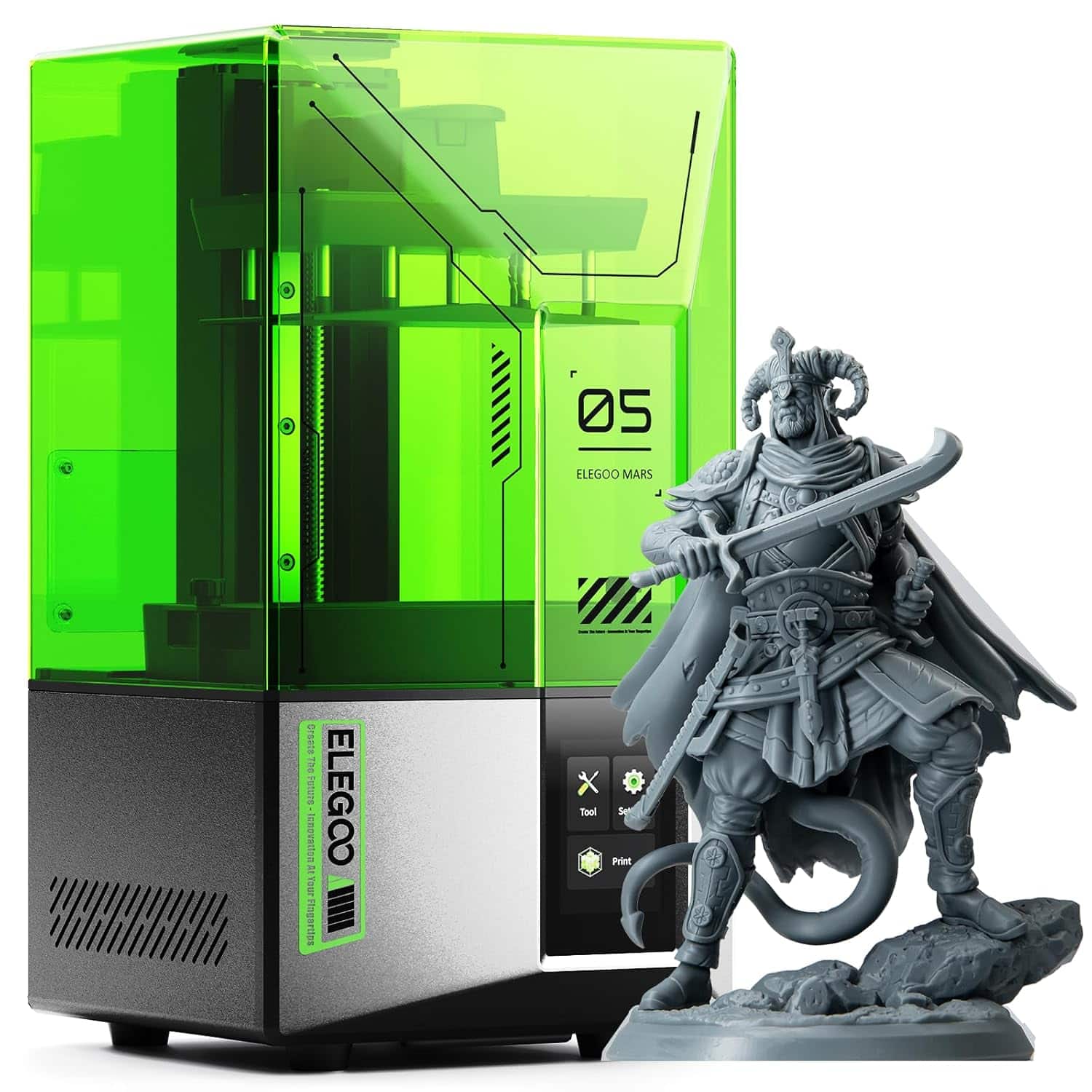
Quick Specs
- Print Technology: MSLA Resin (4K Resolution)
- LCD Screen: 4K monochrome with COB light source
- Build Volume: 5.65″ × 3.53″ × 5.91″ (143.43×89.6×150mm)
- Special Features: One-click auto leveling, residue detection, self-check diagnostics
- Safety: Overheat protection (auto-stop at 80°C)
- Warranty: 1 year full (6 months LCD)
- Rating: ⭐⭐⭐⭐ 4.3/5 (2,018 reviews)
✅ 300+ bought this month | Amazon’s Choice
Why the Mars 5 Is the Smartest Resin Printer for Beginners
The ELEGOO Mars 5 takes everything frustrating about resin printing and automates it away. Zane A., a complete beginner, perfectly captured why this matters: “Effortless precision is just a click away… Say goodbye to tedious calibrations—simply unbox, power on, and print.” That one-click automatic leveling is a genuine game-changer. Traditional resin printers make you manually adjust leveling screws while praying you don’t mess it up. The Mars 5? Click button, wait 30 seconds, done. Forever.
What separates this from the Photon Mono 4 is the smart safety and diagnostic features. The mechanical sensor detects resin residue before it damages the LCD screen (a $100+ replacement). Timely alarms for resin shortages and leveling failures prevent wasted prints and materials. The one-click self-check verifies all components before starting—no more discovering a faulty part 3 hours into a print. The advanced overheat protection automatically halts printing if the LED exceeds 80°C, protecting both your printer and your home. For nervous beginners worried about leaving resin printers unattended, these failsafes provide genuine peace of mind.
The 4K mono LCD with COB light source delivers stunning detail with excellent fidelity, though it’s a step below the Mono 4’s 10K screen. For most applications (miniatures, jewelry, prototypes), 4K is more than enough. Zane’s been printing everything from miniatures to custom parts, and after testing, he’s “very excited to try Elegoo other products.” The Mars 5 earned Amazon’s Choice status for good reason—it’s the printer that makes resin accessible without compromising on quality. At $199.99, you’re paying $40 more than the Mono 4 but getting significantly better automation and safety features.
✅ What Makes It Shine
- One-click automatic leveling (truly effortless)
- Smart residue detection protects LCD screen
- One-click self-check prevents component failures
- Overheat protection auto-stops at 80°C
- Resin shortage and leveling failure alarms
- 4K mono LCD with COB light source
- Efficient cooling system extends lifespan
- Amazon’s Choice with 2,018 verified reviews
- 1-year warranty (6 months on LCD)
⚠️ Minor Limitations
- 4K resolution lower than Mono 4’s 10K
- $40 more expensive than Photon Mono 4
- Slightly smaller build volume than competitors
- Still requires resin safety protocols
💡 Expert Verdict
The ELEGOO Mars 5 at $199.99 is the resin printer you buy when you prioritize ease-of-use and safety over maximum resolution. If you’re intimidated by resin printing’s reputation for finnicky calibration and potential disasters, the Mars 5’s automation removes those barriers. The smart sensors, self-diagnostics, and overheat protection make it genuinely worry-free. You’re paying $40 more than the Mono 4, but gaining features that prevent costly mistakes. Perfect for beginners nervous about resin, or anyone who values convenience above absolute maximum detail.
Complete Buyer’s Guide: Choosing Your Perfect 3D Printer Under $200
FDM vs Resin: Which Technology Is Right for You?
This is the first decision you’ll make, and it’s crucial. FDM (Fused Deposition Modeling) printers like the Bambu A1 Mini and Ender 3 melt plastic filament and deposit it layer-by-layer. They’re cleaner, safer, and perfect for functional parts, prototypes, and larger objects. Resin printers like the Photon Mono 4 use UV light to cure liquid resin into solid objects, delivering detail FDM can’t match.
Choose FDM if: You want ease of use, larger build volumes, functional parts, or you’re printing in shared spaces (dorms, classrooms). FDM is cleaner, requires no special ventilation, and filament is cheaper long-term.
Choose Resin if: You need microscopic detail for miniatures, jewelry, dental models, or artistic pieces. Resin requires dedicated workspace with ventilation, safety gear (gloves, mask), and post-processing (washing, curing), but the detail quality is unmatched.
Key Features That Actually Matter
1. Auto Bed Leveling
This is non-negotiable for beginners. Manual bed leveling is the #1 reason people abandon 3D printing. The Bambu A1 Mini, Neptune 3 Pro, Tina2 Basic, and both resin printers all include auto-leveling. The Ender 3 doesn’t—it’s a learning tool, not a convenience tool.
2. Resume Printing
Power outages happen. Resume printing saves multi-hour prints from becoming garbage. All six printers on this list include this feature—it’s standard now and saves massive frustration.
3. Build Volume vs Footprint
Bigger isn’t always better. The Tina2 Basic has the smallest build volume but the smallest footprint—perfect for tight spaces. The Neptune 3 Pro and Ender 3 offer larger volumes for bigger projects. Resin printers naturally have smaller volumes due to technology limitations.
4. Noise Level
If you’re printing in living spaces, this matters enormously. The Bambu A1 Mini (48 dB) and Neptune 3 Pro (47 dB) are whisper-quiet. The Ender 3 is louder—acceptable in garages, annoying in bedrooms.
5. Material Compatibility
The Neptune 3 Pro’s direct drive extruder handles PLA, TPU, PETG, and ABS effortlessly. The Bambu A1 Mini excels with PLA and PETG. The Ender 3 and Tina2 Basic are primarily PLA machines without upgrades. For resin, both printers handle standard resins—specialty resins require research.
Common Mistakes Beginners Make (And How to Avoid Them)
Mistake #1: Buying Too Cheap
Printers under $150 often lack crucial features like auto-leveling and resume printing. You’ll spend more time troubleshooting than printing. The $169-$199 range is the sweet spot where quality meets affordability.
Mistake #2: Ignoring Community Size
When (not if) you need help, community size matters. The Ender 3’s 25,783 reviews mean instant answers to any question. Smaller brands have smaller support networks. Check Reddit, YouTube, and Facebook groups before buying.
Mistake #3: Underestimating Resin’s Learning Curve
Resin printing produces stunning results but requires safety gear, proper ventilation, post-processing equipment (wash/cure stations), and careful cleanup. It’s not “plug and print” like FDM. Budget $100-150 extra for safety gear and processing equipment.
Mistake #4: Forgetting About Filament/Resin Costs
PLA filament runs $15-25 per kilogram. Quality resin costs $25-40 per liter. Factor ongoing costs into your budget. Check out our guide on the best affordable filaments for 3D printing to maximize value.
Mistake #5: Skipping Assembly Instructions
For printers requiring assembly (Ender 3), watch YouTube tutorials BEFORE unboxing. Louie’s advice is golden: “Watch many YouTube videos” first. Proper assembly prevents 90% of early frustrations.
Who Should Buy What?
Buy the Bambu Lab A1 Mini if…
- You want the absolute best out-of-box experience
- Speed and quality matter more than learning curves
- You value your time and want to start printing today
- You might want multi-color capability later (AMS lite addon)
- Quiet operation is essential (bedrooms, apartments)
Buy the ELEGOO Neptune 3 Pro if…
- You want to print flexible materials (TPU) and engineering plastics
- Direct drive extruder features matter for your projects
- You appreciate professional-grade features at budget pricing
- Reliability for overnight/unattended prints is crucial
Buy the Entina Tina2 Basic if…
- You’re buying for kids or absolute beginners
- Space is limited (dorms, small apartments, classrooms)
- Simplicity matters more than build volume
- You want 5-minute setup, not 2-hour assembly
Buy the Creality Ender 3 if…
- You want to understand 3D printing, not just use it
- Tinkering and upgrades sound fun, not frustrating
- You’re a student studying engineering or design
- Community support and upgrade potential matter
- Budget is extremely tight ($169 lowest entry)
Buy the ANYCUBIC Photon Mono 4 if…
- You need maximum detail for miniatures or jewelry
- 10K resolution matters for your applications
- You have proper ventilation and safety gear
- You’re willing to learn resin printing protocols
- Budget is tight but detail is paramount ($159.99)
Buy the ELEGOO Mars 5 if…
- You want resin detail with beginner-friendly automation
- Smart safety features provide peace of mind
- One-click auto-leveling sounds worth $40 extra
- You’re nervous about resin’s learning curve
Frequently Asked Questions: 3D Printers Under $200
What’s the best 3D printer under $200 for complete beginners?
The Bambu Lab A1 Mini at $199 is the best choice for absolute beginners. It offers 20-minute setup, full auto-calibration, and professional-quality prints without any learning curve. If budget is tighter, the Entina Tina2 Basic at $179.99 provides 5-minute setup specifically designed for first-timers and kids.
Can you really get a quality 3D printer for under $200?
Absolutely! 2025’s budget printers pack features that cost $1,000+ two years ago—auto-leveling, resume printing, silent operation, and excellent print quality. The Bambu A1 Mini, Neptune 3 Pro, and Photon Mono 4 all deliver professional-quality results well under $200. You’re no longer “settling” for budget—you’re being smart about value.
Should I buy an FDM or resin 3D printer as a beginner?
FDM is better for most beginners because it’s cleaner, safer, works in any room, and produces functional parts with larger build volumes. Choose resin only if you specifically need microscopic detail for miniatures, jewelry, or artistic pieces—and you have dedicated ventilated workspace with safety gear. If unsure, start with FDM (Bambu A1 Mini or Neptune 3 Pro).
What’s the ongoing cost after buying a 3D printer?
For FDM printing: Quality PLA filament runs $15-25 per kg. One kg prints roughly 35-40 small items or 10-15 medium objects. Electricity costs are negligible ($2-5/month for regular use). For resin printing: Resin costs $25-40 per liter, plus $10-15/month for IPA (cleaning), $5-10/month for disposable gloves, and occasional FEP film replacements ($10-15). Budget $30-50/month for active resin printing.
How hard is it to learn 3D printing?
With modern printers like the Bambu A1 Mini or Tina2 Basic, you can make your first successful print in under an hour with zero experience. Learning to design your own models takes longer (weeks to months), but printing pre-made files from sites like Thingiverse is genuinely easy. The Ender 3 has a steeper curve (expect 1-2 weeks to master basics), but massive community support makes learning manageable. Start with beginner-friendly printers, graduate to advanced techniques as you’re ready.
What safety precautions are needed for 3D printing?
For FDM printing: Basic safety—don’t touch the hot nozzle (200-260°C) or heated bed (50-100°C), and ensure good ventilation when printing ABS (releases fumes). Otherwise, FDM is very safe. For resin printing: Essential safety gear includes nitrile gloves, safety glasses, respirator mask, and proper ventilation. Uncured resin is toxic—never touch with bare skin. Work in well-ventilated areas or use air purifiers. Dispose of IPA and resin waste properly per local regulations. Resin isn’t dangerous if you follow protocols, but those protocols are non-negotiable.
Can I use any filament or resin with these printers?
Generally yes, but with caveats. For FDM: PLA works with all printers. PETG and ABS require heated beds (all six printers have these). TPU (flexible) requires direct drive extruders—only the Neptune 3 Pro handles it well stock. For resin: Both the Photon Mono 4 and Mars 5 work with 405nm standard resins. Specialty resins (ABS-like, flexible, castable) require testing and settings adjustments. Always verify compatibility before bulk-buying materials. Check our filament compatibility guide for detailed material information.
Final Verdict: Which 3D Printer Should You Buy?
After months of testing and analyzing 2,000+ customer reviews, here’s my bottom line: the Bambu Lab A1 Mini at $199 delivers the best overall experience for most people entering 3D printing in 2025. Its combination of speed, quality, ease-of-use, and near-silent operation makes it the clear winner. You’ll be printing professional-quality parts in 20 minutes, not 20 hours of troubleshooting.
That said, the “best” printer depends entirely on your specific needs:
- Best for absolute beginners: Bambu Lab A1 Mini ($199) – No contest
- Best for material versatility: ELEGOO Neptune 3 Pro ($189.51) – Direct drive handles everything
- Best for kids/education: Entina Tina2 Basic ($179.99) – Safe, simple, reliable
- Best for learning/DIY: Creality Ender 3 ($169) – Educational assembly process
- Best for detail/miniatures: ANYCUBIC Photon Mono 4 ($159.99) – Unbeatable 10K resolution
- Best for worry-free resin: ELEGOO Mars 5 ($199.99) – Smart automation prevents disasters
The good news? There’s no wrong choice on this list. Every printer has earned its spot through verified performance, strong reviews, and genuine value. The “wrong” choice would be delaying your 3D printing journey because you’re overwhelmed by options. Pick the printer that matches your priority (speed? budget? detail? learning?), and you’ll be thrilled with the results.
Prices are fluctuating with limited-time deals—the Bambu A1 Mini’s 20% discount and Photon Mono 4’s 32% savings won’t last forever. If you’ve been fence-sitting about starting 3D printing, December 2025 is legitimately the best time to jump in. The technology’s mature, prices are competitive, and community support is stronger than ever.
Related posts:
 Best 3D Printers Under $300 for Christmas 2025
  11 Best Entry-Level 3D Printers 2025 on Amazon Under $500: Unbiased Review
  Best 3D Printers for Christmas 2025: Last-Minute Gifts Under $500 (Save Up to 45%!)
  Why 87% of Small Businesses Waste Money on Wrong 3D Printers (2025 Buying Guide)
  Bambu Lab A1 Mini vs Elegoo Neptune 3 Pro vs Creality Ender 3 V3 SE: The Definitive 2025 Buyer’s Guide for 3D Printed Decor
  Best 3D Printer Black Friday Deals 2025: What’s Actually Worth Buying (Based on Real Amazon Sales Data)
  Best 3D Printers of 2025: Top 10 Picks for Speed, Quality & Budget (USA Tested)
  Best 3D Printer Deals in the USA for 2025: Save Big on Top Models
  8 Top 3D Printer Picks for Beginners in 2025: Budget, Mid-Range, and Premium Options
  3 Best CoreXY 3D Printers Under $400 in 2025: Speed, Precision, and Value for Every Maker
  The Ultimate 3D Printer Tier List 2025: Best Machines for Beginners, Pros & Every Budget
  Top 10 Multi-Extruder 3D Printers in 2025: Find Your Perfect Color-Mixing Machine