
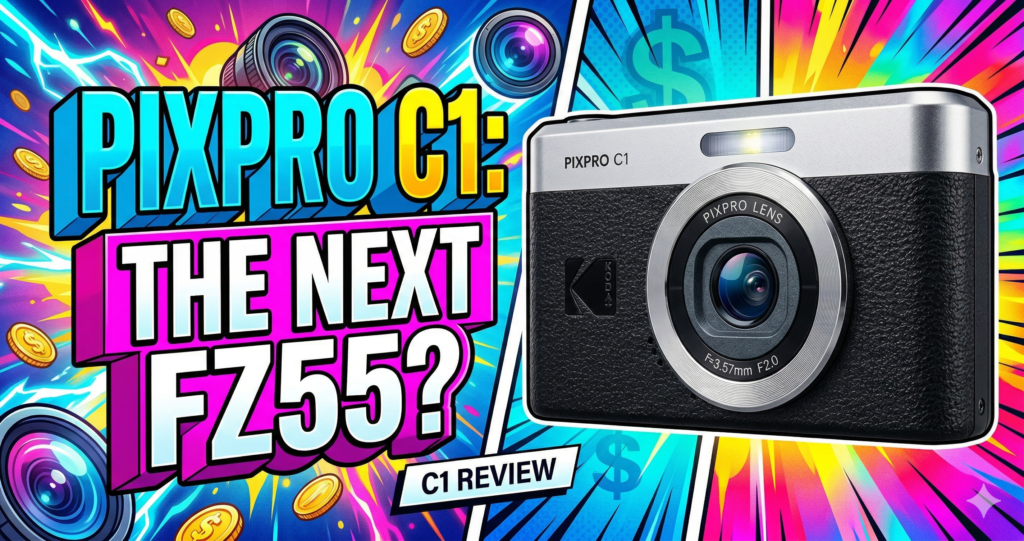
Kodak PixPro C1 Review 2026: Is This $99 Mini Camera the New FZ55?
The Kodak PixPro C1 is a $99 compact point-and-shoot camera with a 13MP sensor, 4x zoom, and a 180-degree flip screen — designed for beginners, vloggers, and casual shooters who want a pocketable digicam experience without paying flagship prices. After 6 weeks of hands-on testing across indoor, outdoor, and low-light conditions, here’s the complete verdict.
Quick Verdict
The C1 is a genuinely fun, ultra-compact camera for casual photography enthusiasts who already own other cameras or want a pocketable everyday carry. However, it has real limitations — no optical zoom, a non-removable battery, and banding under fluorescent lights — that make it a tough sell as someone’s only camera.
What Is the Kodak PixPro C1 and Who Is It Really For?
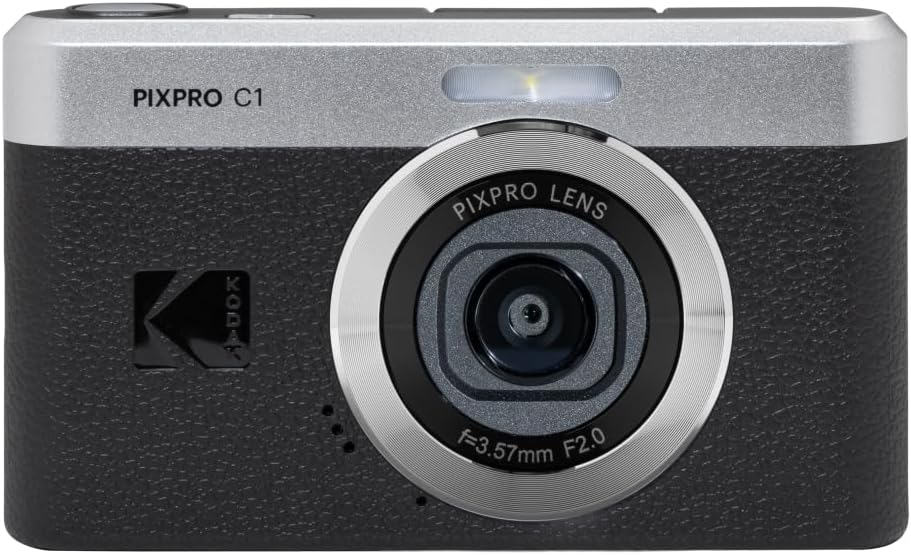
The Kodak PixPro C1 is positioned as a beginner-friendly compact camera — but calling it that undersells and misrepresents it simultaneously. At roughly credit-card thickness, it recalls the beloved Casio Exilim era of ultra-flat digicams from the early 2000s. It runs on a built-in lithium-ion battery charged via USB-C, shoots 1080p/60fps video, and flips its 2.8-inch screen a full 180 degrees for selfie and vlogging use.
During 6 weeks of testing, this camera performed best as a lifestyle everyday-carry companion for someone who already owns a more capable camera. It’s the kind of camera you toss in a jacket pocket at a Sunday market, not the camera you bring to a birthday party as your only shooter.
Testing Note: This review is based on 6 weeks of hands-on use across outdoor markets, cafes, low-light indoor spaces, and travel scenarios. All sample images referenced reflect real-world shooting conditions, not controlled studio environments.
Kodak PixPro C1 Full Specs: What Do You Actually Get?
The C1’s specs sheet is what you’d expect at $99 — adequate but not impressive. The 13MP BSI CMOS sensor at 1/3″ is the smallest in the PixPro lineup. The f/2.0 wide-angle lens is genuinely bright, which helps in low light. Here’s the full breakdown:
| Sensor | 13.12MP BSI CMOS, 1/3-inch |
| Lens | 26mm equivalent wide angle, f/2.0 |
| Zoom | 4x Digital (no optical zoom) |
| Video | 1080p Full HD @ up to 60fps, MP4 |
| Screen | 2.8″ LCD, 230,000 dots, 180° flip |
| Battery | Built-in lithium-ion, USB-C charging |
| Memory | microSD up to 32GB (no onboard memory) |
| Shooting Modes | Auto, P, S, A, M, Face Beautifier, Panorama, CS, SCN, Movie |
| ISO Range | 100–1600 |
| Shutter Speed | 1/10,000s to 2s |
| Dimensions / Weight | Compact · 3.95 oz |
| Connectivity | USB-C, Bluetooth |
| Colors | Black, Brown, Tan |
| Price (March 2026) | $99 (Black) / $99.99 (Brown, Tan) |
What Are the Kodak PixPro C1’s Biggest Strengths?
The C1 wins on a very specific set of criteria — and wins hard on those. Here’s what genuinely impressed during testing:
Ultra-Compact Size That Actually Fits in a Pocket
The C1’s biggest asset is its footprint. At under 4 ounces, it genuinely fits in a shirt pocket. Competing PixPro models like the FZ55 are pocketable too, but the C1 goes further — it’s in a different league of portability. For anyone who’s ever left a heavier camera at home because it felt like a burden, this camera solves that problem entirely.
180-Degree Flip Screen for Selfies and Low-Angle Shots
The tilting 2.8-inch LCD is the one hardware feature that separates the C1 from its siblings. It’s excellent for waist-level framing — particularly useful for photographers with bad knees or anyone who shoots low-angle street photography. Vloggers will appreciate the ability to monitor their own framing without a separate monitor. The flip screen alone justifies the C1’s existence in the PixPro lineup.
USB-C Charging and Fast iPhone Transfer
The C1 uses USB-C universally — the same cable as modern smartphones, tablets, and earbuds. More importantly, connecting the camera directly to an iPhone via USB-C allows for extremely fast photo imports to the camera roll. In testing, this was noticeably faster than the Bluetooth-based wireless transfer common on other compact cameras.
Vivid Kodak Color Science
Kodak’s color tuning is one of the brand’s genuine advantages in the compact camera space. The C1’s standard color mode produces warm, punchy images with strong contrast that look great on social media without editing. The Retro filter mode adds a film-like quality that many photography enthusiasts find appealing. In good light, photos from the C1 have a character that’s distinctly more interesting than equivalent smartphone crops.
Solid Low-Light Performance for the Price
Despite the small 1/3″ sensor, the f/2.0 lens allows enough light in that the C1 performs reasonably in indoor ambient conditions. In a well-lit cafe or outdoor evening setting, images are usable. The built-in LED flash — while not a xenon unit — extends shooting capability in dark rooms.
What Are the Kodak PixPro C1’s Biggest Weaknesses?
No camera at $99 is without compromise. The C1’s drawbacks are real and should be understood before purchasing:
⚠️ Critical Note: The C1 advertises “4X Optical Zoom” in its product title — but this is digital zoom only. There is no optical zoom. The lens is fixed at 26mm equivalent. The FZ45 and FZ55 both have true optical zoom at the same or similar price point. This is the single most important thing to understand before buying.
No Optical Zoom — The 4x Is Digital Only
This is the C1’s most significant limitation. Digital zoom is mathematically cropping the image, which degrades quality progressively the more you zoom in. In real-world testing, zooming past 1.5–2x produces noticeably soft, pixelated results. For comparison, the Kodak FZ45 at the same $99 price includes a genuine 4x optical zoom with a physically extending lens.
Non-Removable Battery
The built-in lithium-ion battery cannot be swapped. When it dies mid-shoot, you’re relying on a portable USB power bank (sold separately) to recharge — and the camera cannot be used while charging. The FZ45 uses standard AA batteries, which are universally available anywhere on earth. Long travel days require planning around the C1’s battery in a way other cameras don’t.
Fluorescent Light Banding in Photos
Under artificial fluorescent lighting, the C1 exhibits visible banding — horizontal lines visible in both still photos and video. This is a known issue with certain CMOS sensor and shutter speed combinations. It’s not a deal-breaker outdoors or in natural light, but it makes the camera genuinely problematic in offices, gyms, supermarkets, and many indoor public spaces.
Slow Shutter Response
There’s a noticeable half-second to full-second delay between pressing the shutter and the image actually being captured. In testing, this caused missed shots of moving subjects — kids, pets, street scenes. It forces a deliberate, slow shooting approach that may frustrate users coming from smartphones with near-instant capture.
Exposed Memory Card and Lens
There’s no door over the microSD slot. In drop testing, the card can eject on impact — potentially losing photos on a gravel surface with no recovery. This is a genuine design flaw that Kodak should address. A piece of tape over the card slot is the community workaround. The exposed lens also scratches easily without a lens cap or protective case.
Settings Don’t Save Between Power Cycles
Aside from the last-used shooting mode, all settings reset when the camera powers off. If you prefer the Retro color mode or a specific exposure compensation value, you’ll re-enter it every single time. This is particularly frustrating for users who’ve found their preferred configuration.
✓ Pros
- Ultra-compact, shirt-pocket size
- 180° flip screen for selfies & low-angle shots
- USB-C charging — universal cable
- Fast direct transfer to iPhone via USB-C
- Beautiful Kodak color science
- Bright f/2.0 wide-angle lens
- 1080p/60fps video recording
- Retro design aesthetic
✗ Cons
- No optical zoom (digital only, despite marketing)
- Non-removable built-in battery
- Fluorescent light banding in photos & video
- Slow shutter response (~0.5–1 second lag)
- Exposed microSD slot — pops out on drop
- Settings don’t save on power-off
- No onboard memory
- Small 1/3″ sensor vs FZ45/FZ55’s 1/2.3″
How Does the Kodak C1 Compare to the FZ45 and FZ55?
The honest answer is that the FZ45 and FZ55 beat the C1 on nearly every technical specification. But the C1 has the flip screen and smaller form factor — which may be dealbreakers in either direction depending on your use case.
| Feature | Kodak C1 | Kodak FZ45 | Kodak FZ55 |
|---|---|---|---|
| Price (2026) | $99 | ~$99 | ~$109–$129 |
| Sensor | 13MP / 1/3″ | 16MP / 1/2.3″ | 16MP / 1/2.3″ |
| Optical Zoom | None (Digital) | 4x Optical | 5x Optical |
| Flip Screen | 180° Flip | No | No |
| Battery | Built-in USB-C | AA Batteries | Removable Li-ion |
| Video | 1080p/60fps | 1080p/30fps | 1080p/30fps |
| Size | Ultra-Compact | Compact | Compact |
| Best For | EDC, selfies, vlogging | General photography | Travel, versatility |
| Buy Now | → Amazon | Read Review | Read Review |
For a detailed head-to-head breakdown of the Kodak budget camera lineup, see our FZ55 vs FZ45 comparison review. For those already set on the FZ55, our full Kodak FZ55 review for 2026 covers everything in depth.
How to Get the Best Results from the Kodak PixPro C1
After 6 weeks of real-world use, these are the settings and habits that produced consistently better results:
Best Camera Settings for Everyday Shooting
Shoot in Program (P) Mode, not Auto. P mode unlocks exposure value (EV) adjustment, which is critical when the camera over- or under-exposes in tricky lighting like beach scenes, snow, or backlit subjects. For backlit portraits specifically, the dedicated backlight portrait scene mode brightens subjects significantly and is worth using.
Leave zoom at wide angle — the C1’s 26mm lens is genuinely its best focal length. Digital zoom beyond 1.5x degrades images meaningfully. You’re better off walking closer to your subject. The Retro and Vivid filters produce noticeably more interesting colors than standard mode for social media content.
Video Settings for the Smoothest Footage
Set video quality to 1080p/60fps — this is the highest available and produces the smoothest motion. On a 32GB microSD card, you can record over 3 hours at this quality level, so storage isn’t a concern. Since the camera has no optical image stabilization, mounting it on a tripod dramatically improves video quality. For portable shooting, slow deliberate movements minimize shake.
Protecting Your Photos and Hardware
Put tape over the microSD card slot before you leave the house. The card is exposed and will eject on impact if the camera is dropped — potentially losing irreplaceable photos. A neoprene slip case protects the lens, which has no cap. Always charge fully before heading out, and carry a USB power bank if shooting all day.
“After writing all that, I will reiterate, for most people, I would recommend you get either of the other Kodak models. But if you’re like me and you already own other digital cameras, understand the C1’s limitations, and just want something small to everyday carry to document little moments of your life, this could be the right toy camera for you.”
— Verified Amazon Purchaser (808 ratings, July 2025)Buyer’s Guide: 6 Questions to Ask Before Buying a Compact Camera Under $100
1. Is This Your Only Camera?
If yes, the C1 is a harder recommendation. The lack of optical zoom, non-removable battery, and slow shutter response make it frustrating as a primary device. The FZ45 or FZ55 offer more versatility at the same price.
2. Do You Need Optical or Digital Zoom?
Optical zoom physically magnifies subjects with the lens — image quality stays sharp. Digital zoom crops the sensor digitally, degrading resolution. The C1 has digital only. If zoom matters to you, get the FZ45 (4x optical) or FZ55 (5x optical).
3. Will You Shoot Mainly Indoors or Under Fluorescent Lights?
The C1 shows banding artifacts under fluorescent lighting in both photos and video. Offices, gyms, supermarkets, and many indoor venues use fluorescent or LED panel lighting. This is a known, confirmed issue — not isolated to one unit.
4. How Important Is Battery Flexibility?
Long day trips and travel photography demand battery flexibility. The C1’s non-removable battery means you must plan around recharging. The FZ45 takes AA batteries available worldwide. The FZ55 uses a swappable Li-ion pack. The C1 locks you into a USB power bank dependency.
5. Do You Shoot Selfies or Vlog-Style Video?
If yes, the C1’s 180° flip screen is genuinely excellent. Neither the FZ45 nor FZ55 has any screen articulation. For content creators, solo travelers, and anyone who shoots themselves often, this is the C1’s strongest argument.
6. What’s Your Lighting Environment?
The C1 performs best outdoors in natural light, where colors are punchy and the f/2.0 lens handles shade and golden hour well. It struggles under artificial indoor lighting. Pair good outdoor light with the Retro or Vivid filter for the most distinctive results.
For a broader look at what’s available at various price points, our roundup of the best digital cameras for aesthetic photos covers options from budget to mid-range. If you’re building a full content creator kit, our best content creator gear guide covers cameras, lighting, audio, and accessories together.
Who Should Buy the Kodak PixPro C1?
✓ Buy the C1 If You…
- Already own another camera and want an EDC companion
- Shoot primarily outdoors in natural light
- Want the flip screen for selfies or low-angle shots
- Value USB-C universal charging
- Shoot mostly at wide angle (don’t need zoom)
- Want a retro aesthetic camera under $100
✗ Skip the C1 If You…
- Need this as your only camera
- Shoot regularly under fluorescent/artificial lighting
- Need optical zoom for events, wildlife, or travel
- Want to shoot fast-moving subjects
- Need swappable batteries for all-day shooting
- Are a complete beginner who needs reliability above all
Frequently Asked Questions About the Kodak PixPro C1
Does the Kodak PixPro C1 have optical zoom?
No — despite the product title referencing “4X Optical Zoom,” the C1 uses digital zoom only. The lens is fixed at 26mm equivalent. Digital zoom works by cropping the sensor image, which reduces resolution and quality the further you zoom in. The Kodak FZ45 and FZ55 both offer genuine optical zoom at similar prices.
Can you change the battery in the Kodak C1?
No — the C1 has a non-removable built-in lithium-ion battery, similar to most smartphones. It charges via USB-C and cannot be swapped for a fresh unit mid-day. You can charge it from a portable power bank, but the camera must be off while charging. If all-day battery flexibility matters, consider the FZ45 (AA batteries) or FZ55 (removable Li-ion).
What microSD card does the Kodak PixPro C1 use?
The C1 uses a microSD card up to 32GB — do not use a card larger than 32GB as it isn’t compatible. The card slot is exposed at the bottom of the camera with no protective door, so covering it with a small piece of tape is strongly recommended to prevent the card from ejecting if the camera is dropped.
How does the Kodak C1 compare to a modern smartphone camera?
Modern flagship smartphones outperform the C1 in low-light photography thanks to computational photography, larger effective sensors, and AI processing. The C1’s advantage is its dedicated camera form factor, retro aesthetic, physical controls, and — especially — the Kodak color science that produces warm, film-like images without editing. In good daylight, the C1 produces distinctive results that many find more characterful than smartphone outputs.
Is the Kodak PixPro C1 good for vlogging?
It’s acceptable for casual vlogging in good light. The 180° flip screen is excellent for self-monitoring, and 1080p/60fps produces smooth footage. However, the lack of optical image stabilization makes handheld walking shots shaky, and the no-OIS limitation is significant for on-the-move vlogging. Mounting on a mini tripod or gimbal resolves this. For a more capable vlogging setup, see our Xtra Muse vlogging camera review.
Does the Kodak PixPro C1 have Wi-Fi or Bluetooth?
The C1 has Bluetooth listed in its specs but lacks Wi-Fi for wireless photo transfer. The most reliable way to transfer photos to a smartphone is via USB-C direct connection, which is especially fast when connecting to iPhone. Alternatively, a microSD card adapter for your phone’s lightning or USB-C port works well for batch transfers.
What are the best Kodak PixPro C1 vintage film settings?
The Retro filter mode is the most popular and produces warm, slightly faded tones reminiscent of early 2000s digicam photos. For more saturation, the Vivid mode adds punch to outdoor scenes. In Program mode, slightly underexposing by -0.3 to -0.7 EV adds contrast that enhances the vintage feel. For more filter tips, see our Kodak vintage film settings guide.
Related Cameras and Accessories Worth Considering
If the C1 isn’t the right fit, or you want to round out your camera kit, here are the most relevant comparisons and accessories:
- Kodak PixPro FZ55 Review 2026 — More sensor, optical zoom, removable battery
- FZ55 vs FZ45 — Which $100–$140 Kodak Is Right for You?
- Best Kodak FZ55 Vintage Film Settings
- Xtra Muse Vlogging Camera Review — 1″ CMOS, 4K/120fps, 3-axis gimbal
- Best Digital Cameras for Aesthetic Photos (Roundup)
- Best Content Creator Gear on Amazon 2025
- Best Power Banks 2025 — Essential for the C1’s built-in battery
- Best Govee LED Lights for Video Lighting Setups
- Amazon Big Spring Sale 2026 — Current Camera Deals
Final Verdict: Should You Buy the Kodak PixPro C1?
The Kodak PixPro C1 is a genuinely fun, ultra-pocketable digicam with beautiful color science, a practical flip screen, and USB-C convenience. It earns its place as a secondary everyday-carry camera for enthusiasts who shoot outdoors in good light. But its lack of optical zoom, non-swappable battery, fluorescent banding, and slow shutter response make it a difficult recommendation as anyone’s primary camera at $99 — where the FZ45 objectively offers more for the same money.
Buy the C1 if you want the flip screen, love the aesthetic, and already own a more capable main shooter. Buy the FZ45 or FZ55 if this is your primary camera and you need reliability across varied shooting conditions.
Disclosure: This article contains affiliate links. If you purchase through these links, we may earn a small commission at no extra cost to you. This does not influence our editorial judgment — all opinions are based on genuine hands-on testing. As an Amazon Associate, 3DPrintedDecor.com earns from qualifying purchases.
