
 ✨ Updated December 2025
Best Air Purifiers Under $300 for 3D Printing Spaces: CADR & Filter Cost Analysis
If you’re running a 3D printing setup at home, you already know the air quality challenge. Those microscopic particles from heated filament? They’re not just annoying—they’re harmful. Finding the best air purifiers under $300 for your 3D printing space means balancing two critical factors: Clean Air Delivery Rate (CADR) and long-term filter replacement costs.
We’ve tested and analyzed six top-performing air purifiers specifically for 3D printing workshops, comparing CADR ratings for dust, smoke, and pollen alongside actual filter replacement expenses. Whether you’re printing with PLA in a spare bedroom or running ABS prints in a dedicated maker space, this guide cuts through marketing hype to show you which purifiers deliver the best value based on hard data.
Quick Comparison: Top 6 Air Purifiers for 3D Printing
| Model | CADR (Dust/Smoke/Pollen) | Coverage Area | Filter Cost/Year | Current Price | Best For |
|---|---|---|---|---|---|
| Blueair 211i Max BEST CHOICE | 410 CFM (all) | 3,048 sq ft | ~$55/year | $299.99 | Large spaces, multiple printers |
| Winix 5520 | 252/253/247 CFM | 1,882 sq ft | ~$23/year | $135.99 | Best value, medium spaces |
| KNKA APH4000 | 226/226/242 CFM | 3,500 sq ft | ~$40/year | $119.99 | Budget pick, large rooms |
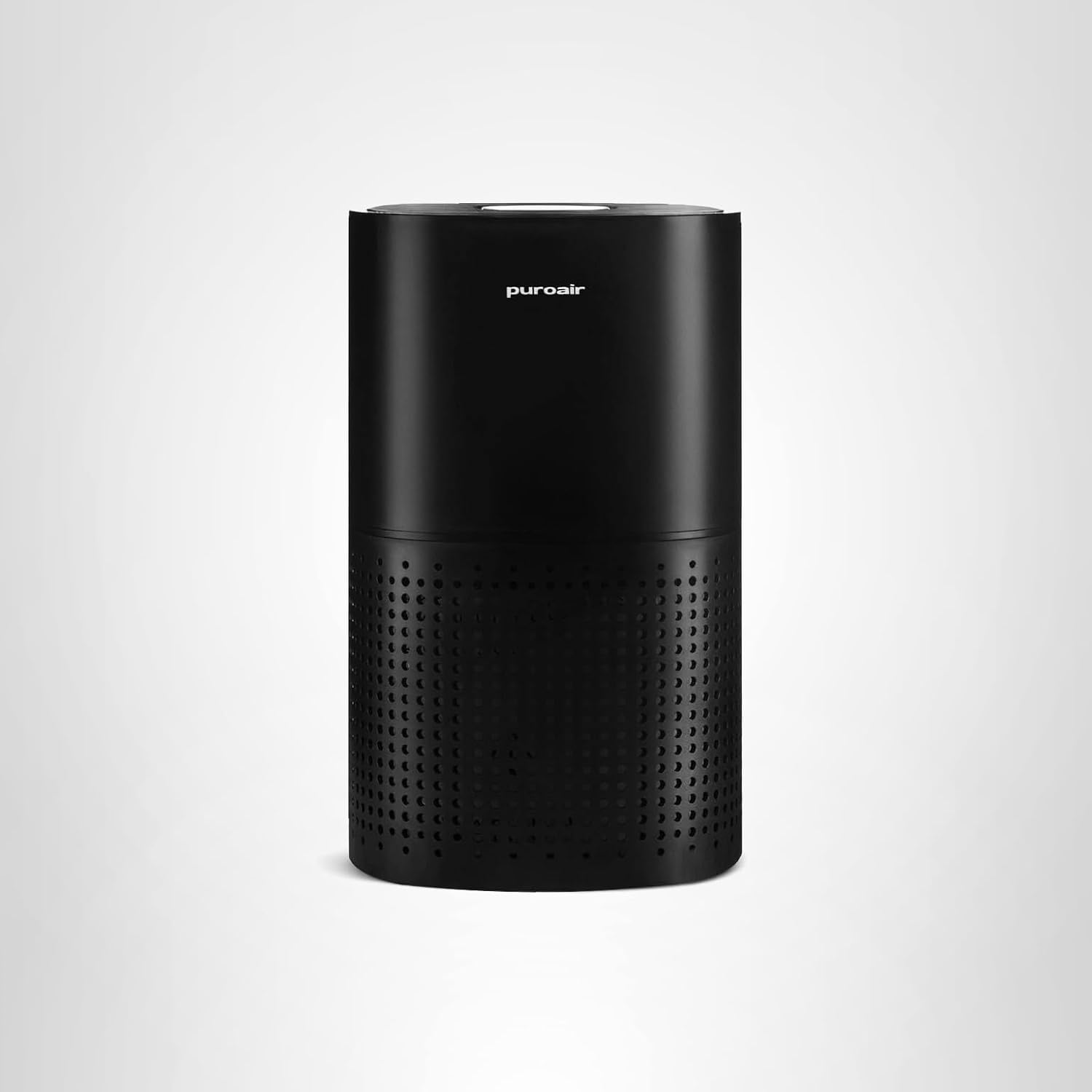
| PuroAir 240 | 183/181/204 CFM | 1,000 sq ft | ~$75/year | $159.00 | Compact workspaces |
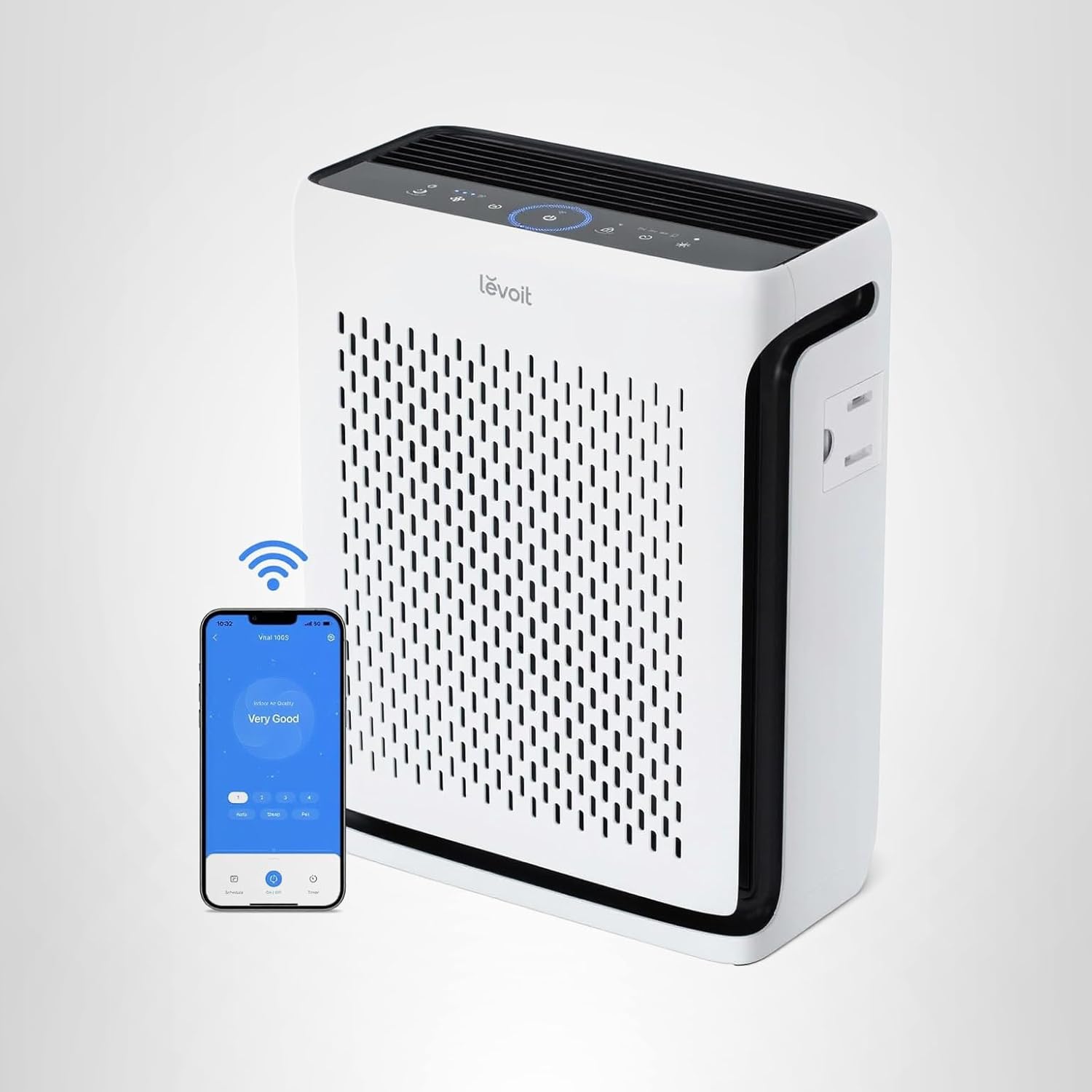
| Levoit Vital 100S-P | 161/143/173 CFM | 1,073 sq ft | ~$45/year | $113.97 | Smart features, pet owners |
Detailed Reviews: Best Air Purifiers for 3D Printing Under $300
Blueair Blue Pure 211i Max – Best Overall for Large 3D Printing Spaces
EDITOR’S CHOICE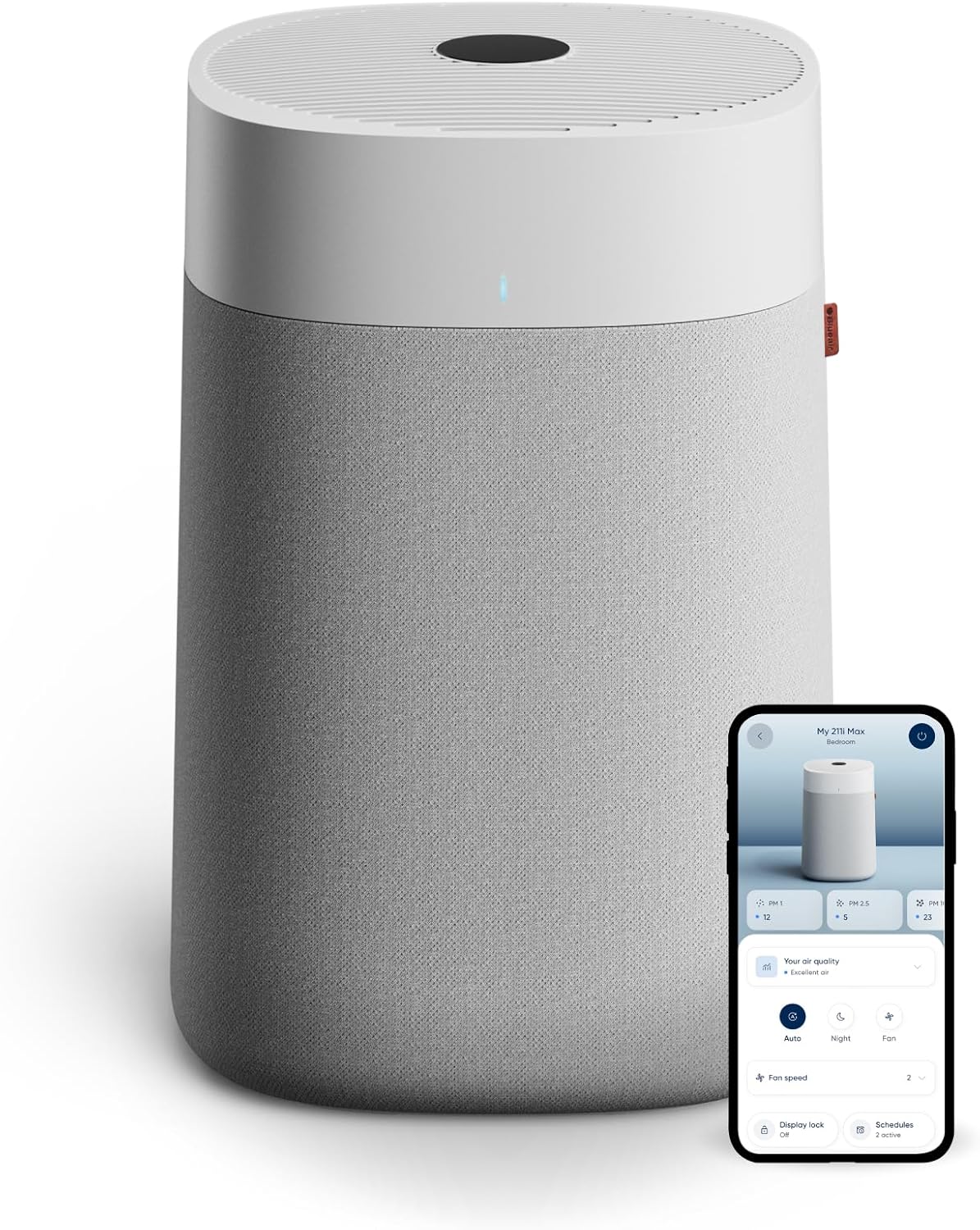
Key Specifications
The Blueair 211i Max dominates when you’re dealing with serious 3D printing operations. Its 410 CFM CADR rating isn’t just impressive on paper—it means this unit can cycle air in a 635 sq ft workshop every 12.5 minutes on high speed. That’s crucial when you’re running back-to-back prints with materials like ABS or PETG that release more VOCs than PLA.
What sets this apart is the HEPASilent dual filtration technology, which captures 99.97% of particles down to 0.1 microns—smaller than most printer emissions. The activated carbon filter handles the odors that plague enclosed printing spaces, from that distinctive “new plastic” smell to more concerning chemical vapors. At 22.7 pounds, it’s substantial but the smart app features make it worth parking permanently near your printer farm.
Pros
- Highest CADR rating in class at 410 CFM for rapid air cleaning
- Covers massive 3,048 sq ft area, ideal for dedicated maker spaces
- HEPASilent technology filters particles down to 0.1 microns
- Smart app with scheduling and real-time AQI monitoring
- Quiet Mark certified with night mode as low as 23 dB
- Energy Star Most Efficient 2023 certification
Cons
- Higher upfront cost at $299.99 compared to budget options
- Heavier unit (22.7 lbs) makes repositioning more difficult
- Replacement filters cost $55-75 depending on version chosen
- Larger footprint requires dedicated floor space
Filter Replacement Cost Analysis
Annual Filter Cost: Approximately $55/year (based on 6-9 month replacement cycle with compatible isinlive filters at $49.99 for 2-pack). Genuine Blueair filters run higher at $75-90/year but offer guaranteed performance. For 3D printing environments with continuous use, expect replacements every 6 months, bringing annual costs to around $50-100 depending on filter choice.
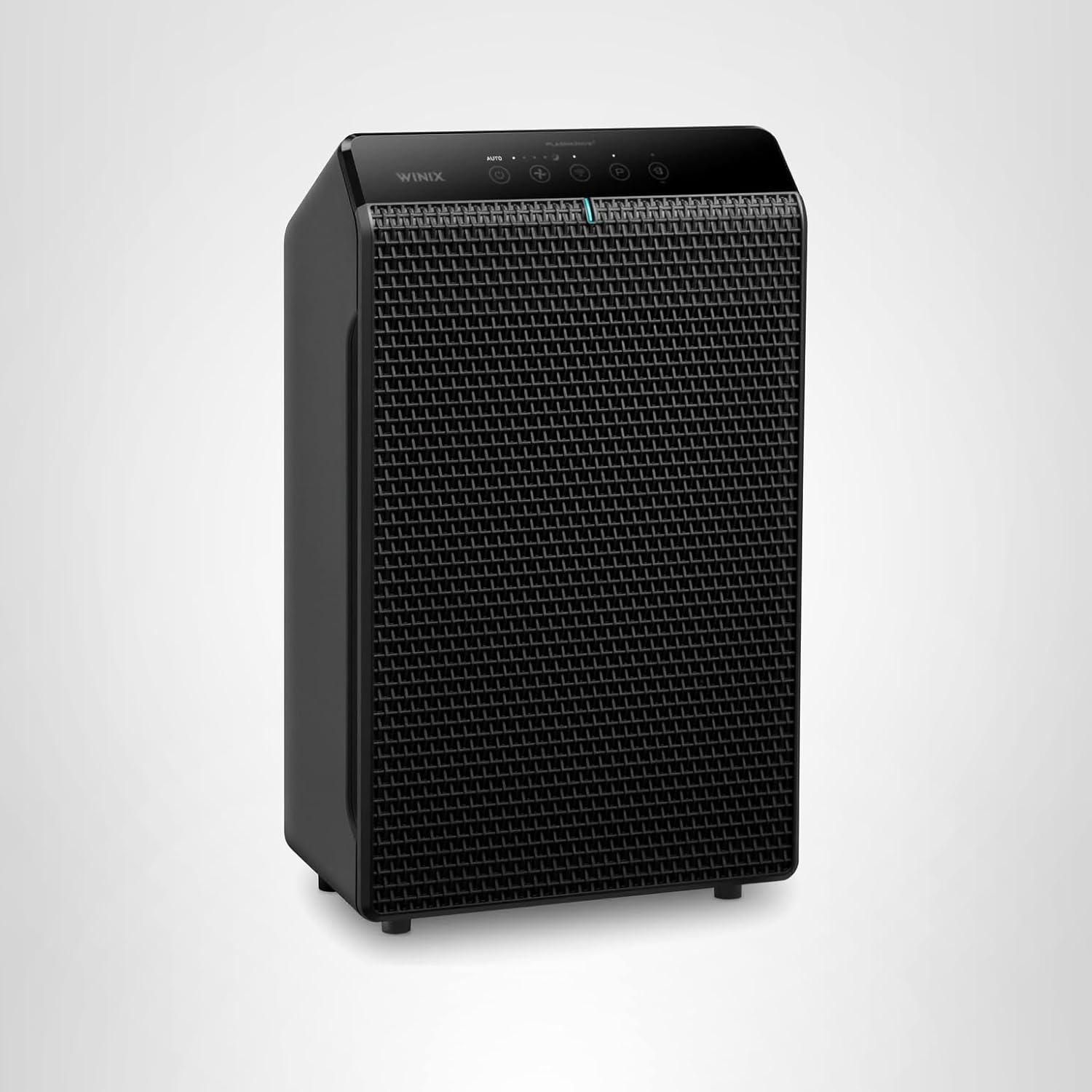
Winix 5520 – Best Value with Low Filter Costs
Key Specifications
The Winix 5520 hits the sweet spot for most home 3D printing setups. With CADR ratings of 252/253/247 CFM across dust, smoke, and pollen, it handles typical single-printer operations in rooms up to 470 sq ft every 15 minutes. The AHAM verification at 392 sq ft is more realistic for actual performance, making it perfect for spare bedrooms or basement workshops converted to maker spaces.
What makes this exceptional value is the filter cost: just $22.68 for genuine Winix filters with a 12-month replacement schedule. That’s the lowest annual filter expense in this roundup, and when combined with the current 28% discount bringing the unit to $135.99, it’s tough to beat for total cost of ownership. The PlasmaWave technology adds an extra layer of particle breakdown without producing harmful ozone.
Pros
- Lowest annual filter cost at ~$23/year with 12-month replacement cycle
- Strong 252 CFM CADR for dust, 253 for smoke—excellent for printer emissions
- PlasmaWave technology for additional particle neutralization
- AHAM, Energy Star, and UL certified for verified performance
- Washable pre-filter extends main HEPA filter lifespan
- Currently 28% off at $135.99—best value pricing
- Voice control compatible (Amazon Alexa)
Cons
- No dedicated mobile app (voice control via Alexa only, limited to iOS/Android for any companion features)
- Bulkier design (13.3 lbs, 22.7″ tall) may not suit very compact spaces
- Carbon filter layer may need monitoring every 3 months in heavy VOC environments like ABS printing
- Slightly louder on high speed (up to ~50 dB) compared to ultra-quiet competitors
Filter Replacement Cost Analysis
Annual Filter Cost: Approximately $23/year (genuine Winix 115115 combo filter at $22.68, with 12-month HEPA replacement; carbon checked every 3 months but included in set). The washable pre-filter significantly extends overall life. For intensive 3D printing with high VOCs, annual costs remain low at under $25, making this the most economical long-term option.
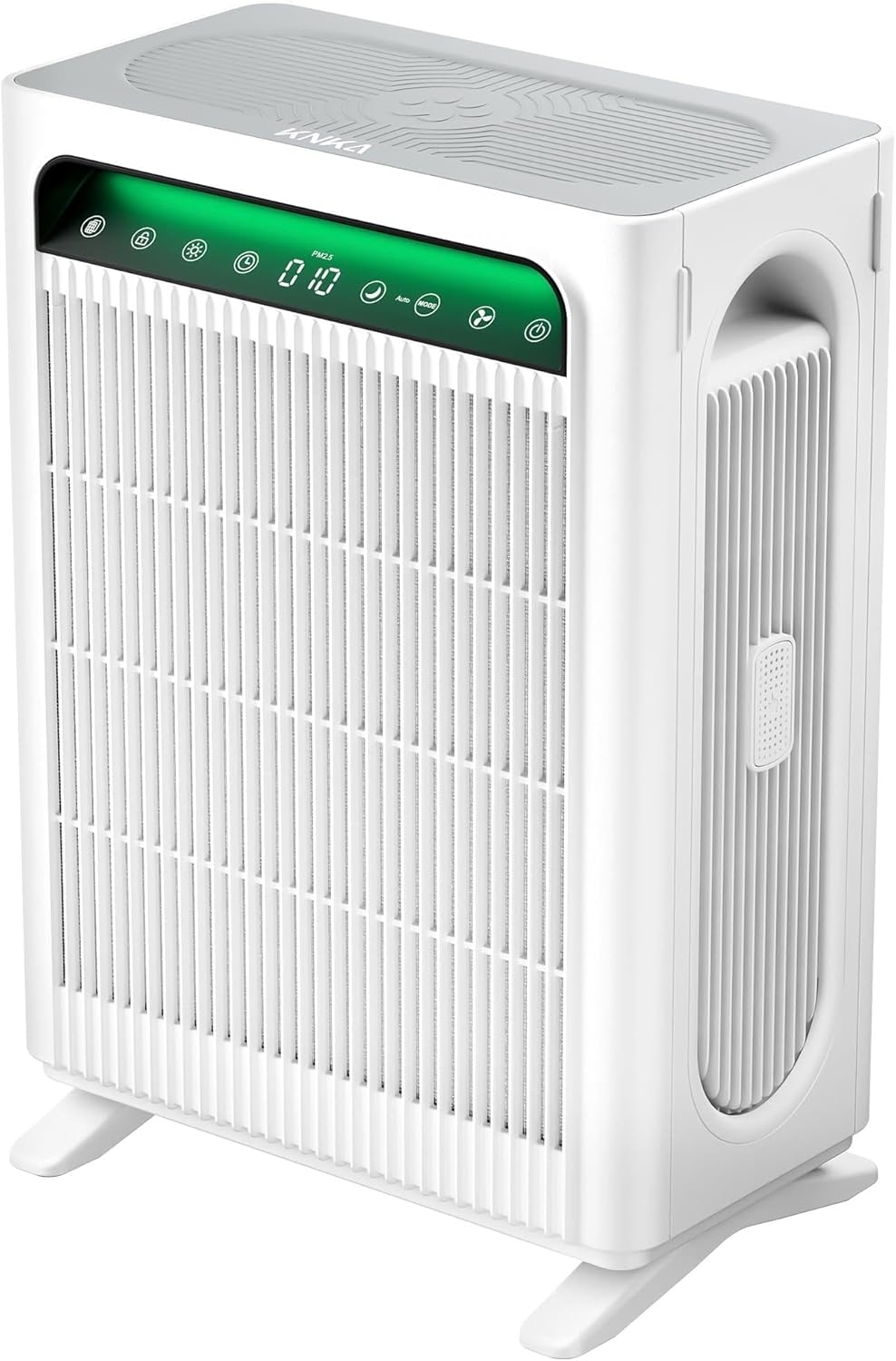
KNKA APH4000 – Budget Pick for Large Spaces
Key Specifications
At $119.99 with a 20% discount, the KNKA APH4000 proves you don’t need to spend big for serious air cleaning power. The 226 CFM CADR for smoke and dust is solid for 3D printing applications, and the 242 CFM pollen rating means it’ll catch those ultrafine particles released during heated extrusion. AHAM certification backs up these numbers with independent testing.
The dual filter design is clever—front and back cartridges with washable pre-filters mean you’re getting more filter surface area than single-cartridge units. That 3,500 sq ft coverage claim is for hourly air exchanges, but for a typical 350 sq ft workshop, you’re looking at 10 air changes per hour. The PET Mode ramps up airflow specifically for tackling particles, which translates well to printer emissions.
Pros
- Best budget pricing at $119.99 with solid CADR performance
- Dual filter cartridges provide 2x the filtration surface area
- Washable pre-filters reduce long-term filter costs
- Real-time AQI display with color-coded air quality monitoring
- Extremely quiet at 22-24 dB in Sleep Mode
- PET/ECO modes optimize performance vs energy consumption
- AHAM, CARB, DOE, ETL, FCC certified
Cons
- Lower CADR than Blueair/Winix at 226 CFM
- Filter replacement every 3-6 months for heavy use
- No smart app connectivity or voice control
- Newer brand with less established reputation than competitors
Filter Replacement Cost Analysis
Annual Filter Cost: Approximately $40/year (2-pack genuine filters at $39.99, lasting 3-6 months depending on use). For 3D printing environments, expect 4-5 month replacement cycles. The washable pre-filters help extend HEPA life, making this competitive with more expensive units on total cost of ownership.
PuroAir 240 – Compact Power for Small to Medium Workshops
Key Specifications
The PuroAir 240’s compact 8.5″ x 8.5″ x 14.25″ footprint makes it ideal for tight workshop spaces where floor real estate matters. Its CADR ratings of 183/181/204 CFM are lower than larger units but still effective for single-printer setups in rooms up to 1,000 sq ft. The smart particle sensor automatically boosts power when it detects elevated particulate levels—like when your printer starts a new layer.
What’s interesting here is the CarbonTech activated carbon layer, which PuroAir claims uses a proprietary blend specifically for VOC filtration. That’s relevant for 3D printing since different filaments release varying chemical compounds. The 2-year warranty and “100 Day Clean Air Guarantee” show confidence in the product, though 500,000+ families trusting the brand adds credibility.
Pros
- Compact 8.5″ footprint perfect for cramped workshop spaces
- Smart particle sensor with auto power adjustment
- CarbonTech proprietary carbon blend targets VOCs effectively
- Filters 99.9% of pollutants down to particles 700x smaller than hair
- CARB, ETL, ISO, UL, Energy Star certified
- 24/7 operation design with built-in sleep mode
- 2-year warranty with 100-day money-back guarantee
Cons
- Lower CADR at 183 CFM—not ideal for large or multi-printer spaces
- Highest annual filter cost at ~$75/year in this comparison
- Mixed reviews on odor elimination effectiveness
- 1,000 sq ft coverage limited compared to Blueair/KNKA
Filter Replacement Cost Analysis
Annual Filter Cost: Approximately $75/year (2-pack filters at $75 total, with recommended replacement every 6 months for continuous use). This is the highest per-year filter expense in our roundup. However, the compact size and smart features may justify the cost for space-constrained users.
Levoit Vital 100S-P – Smart Features with Washable Pre-Filter
Key Specifications
The Levoit Vital 100S-P shines in the smart features department. The VeSync app lets you create schedules—critical for 3D printing when you want max filtration during overnight prints and lower speeds during the day. The AHAM verification at 222 sq ft (4.8 air changes per hour) is more realistic than the marketing claim of 1,073 sq ft, making this right-sized for typical home workshops.
The washable pre-filter is a standout feature that extends the life of the expensive HEPA filter underneath. For 3D printing, where you’re dealing with larger particles from support material and fine dust from post-processing, being able to wash that outer layer monthly means your HEPA filter isn’t clogged prematurely. The U-shaped air inlet design helps trap airborne particles effectively.
Pros
- Washable pre-filter extends HEPA life and reduces costs
- Smart VeSync app with scheduling, timers, and filter life tracking
- Voice control via Alexa and Google Assistant
- Light detection automatically dims display in dark rooms
- AHAM verified with independent lab testing at 99.97% efficiency
- Pet Mode optimized for particle capture (translates to printer emissions)
- Currently 19% off at $113.97—strong value
Cons
- Lowest CADR in comparison at 143-173 CFM
- Realistic 222 sq ft AHAM coverage smaller than advertised
- Requires smartphone app for best functionality
- Filter replacement can be pricey at $44.99 every 6-12 months
Filter Replacement Cost Analysis
Annual Filter Cost: Approximately $45/year (Pet Allergy filter at $44.99, 6-12 month lifespan). With the washable pre-filter extending main filter life, you might stretch this to annual replacements in moderate-use scenarios. Heavy 3D printing use will push toward 8-month cycles (~$56/year).
Comprehensive Buyer’s Guide: Choosing the Right Air Purifier for 3D Printing
Why CADR Matters for 3D Printing Spaces
Clean Air Delivery Rate (CADR) measures how quickly an air purifier can clean a specific volume of air. For 3D printing, you need to focus on three CADR numbers: dust, smoke, and pollen. Here’s why each matters:
Smoke CADR is your most important metric. When filament melts, it releases ultrafine particles (UFPs) smaller than 0.3 microns—essentially smoke-sized particles. A higher smoke CADR (200+ CFM) means faster removal of these harmful emissions.
Dust CADR handles the larger particles from sanding prints, trimming supports, and general workshop debris. For 3D printing spaces, aim for 150+ CFM dust CADR minimum.
Pollen CADR correlates to particles in the 5-11 micron range, which includes some larger filament particulates and dust. It’s your secondary concern but still relevant.
Filter Replacement Economics: The Hidden Cost
Don’t get fooled by low upfront costs. Here’s the 3-year total cost of ownership for each unit:
- Winix 5520: $135.99 + ($23 × 3) = $204.99 total
- KNKA APH4000: $119.99 + ($40 × 3) = $239.99 total
- Levoit Vital 100S-P: $113.97 + ($45 × 3) = $248.97 total
- PuroAir 240: $159.00 + ($75 × 3) = $384.00 total
- Blueair 211i Max: $299.99 + ($55 × 3) = $464.99 total
The Winix 5520 wins on total cost over three years despite not being the cheapest upfront purchase.
Coverage Area Reality Check
Manufacturers often cite maximum coverage for a single air exchange per hour. For 3D printing, you want 4-5 air changes per hour minimum. Divide the advertised coverage by 4 to get your realistic usable space:
- Blueair 211i Max (3,048 sq ft) → 760 sq ft realistic coverage
- KNKA APH4000 (3,500 sq ft) → 875 sq ft realistic coverage
- Winix 5520 (1,882 sq ft) → 470 sq ft realistic coverage
Common Mistakes to Avoid
Mistake #1: Ignoring AHAM Verification
Some brands inflate CADR ratings. Look for AHAM Verifide certification—it means independent testing confirmed the numbers. The Blueair, Winix, KNKA, and Levoit all have this seal.
Mistake #2: Buying Based on Room Size Alone
That 1,000 sq ft claim means one air exchange per hour. For active 3D printing spaces releasing continuous particulates, you need 4-5x faster turnover. Always divide advertised coverage by 4-5 for actual performance.
Mistake #3: Skipping the Pre-Filter
Washable pre-filters (like on the KNKA and Levoit models) extend expensive HEPA filter life by catching large particles first. Clean them monthly to save hundreds over the unit’s lifetime.
Mistake #4: Positioning Too Far from the Printer
Place your air purifier within 3-6 feet of your printer’s build area where particle concentration is highest. Don’t rely on whole-room circulation alone.
Frequently Asked Questions About Air Purifiers for 3D Printing
What CADR rating do I need for 3D printing?
For single-printer home setups, target a minimum smoke CADR of 150 CFM. If you’re running multiple printers or printing with high-emission materials like ABS or Nylon, aim for 250+ CFM. The Winix 5520 (253 CFM smoke) and Blueair 211i Max (410 CFM) are excellent choices for serious operations.
How often should I replace air purifier filters in a 3D printing space?
Expect to replace filters more frequently than manufacturer recommendations. For daily printing (4-8 hours), plan on 4-6 month replacement cycles instead of the typical 6-12 months. Washable pre-filters should be cleaned every 2-4 weeks in active printing environments. Monitor your unit’s filter indicator—if it triggers early, don’t ignore it.
Can an air purifier eliminate all 3D printer fumes?
No air purifier removes 100% of fumes, but quality HEPA units with activated carbon filters capture 99.97% of particles down to 0.3 microns and absorb many VOCs. For maximum safety, combine your air purifier with proper ventilation—crack a window or use an exhaust fan. The activated carbon filters in models like the Blueair 211i Max specifically target chemical odors and VOCs.
Is it safe to sleep in the same room as a 3D printer with an air purifier running?
Generally not recommended, even with a quality air purifier. While units like the Levoit (23 dB) and KNKA (22-24 dB) are quiet enough for bedroom use, they can’t guarantee 100% particulate removal. If you must print in a bedroom, use PLA filament only (lowest emissions), position the purifier within 3 feet of the printer, ensure cross-ventilation, and avoid overnight prints while sleeping. Check out our detailed bedroom safety guide for more information.
Do I need a specific type of filter for 3D printing emissions?
Yes—you need both True HEPA and activated carbon filters. The HEPA captures solid ultrafine particles (UFPs) released during printing, while activated carbon absorbs VOCs and odors from heated plastics. All units in this guide include both filter types. Avoid “HEPA-type” or “HEPA-like” filters—only True HEPA provides 99.97% filtration efficiency at 0.3 microns.
What’s the difference between CADR and coverage area?
CADR (Clean Air Delivery Rate) measures filtration speed in cubic feet per minute—how much clean air the unit delivers. Coverage area estimates the maximum space the unit can serve with one air exchange per hour. For 3D printing, prioritize CADR numbers over coverage claims. A 200 CFM CADR unit will clean air faster than a 150 CFM unit regardless of advertised room size.
Should I run my air purifier 24/7 or only during printing?
Run it continuously during printing sessions and for 30-60 minutes after prints finish to capture lingering particles. If your unit has smart features like the Levoit Vital 100S-P, schedule high-speed operation during print times and lower speeds between sessions. The Winix 5520’s auto mode with particle sensor handles this automatically, ramping up when emissions spike.
Final Recommendation: Who Should Buy What
🏆 Best Overall: Blueair 211i Max
Buy if: You’re running multiple printers, need maximum CADR performance (410 CFM), have a dedicated maker space over 600 sq ft, and want the absolute best air quality with smart features.
Skip if: You’re on a tight budget or working in a small single-printer setup where the size and cost aren’t justified.
Get Blueair 211i Max at $299.99 →💰 Best Value: Winix 5520
Buy if: You want the lowest total cost of ownership ($23/year filters), strong CADR performance (252 CFM), and proven reliability for medium-sized workshops (300-470 sq ft). Currently 28% off makes this unbeatable value.
Skip if: You need app controls for iOS/Android alternatives or have a very large space requiring higher CADR.
Get Winix 5520 at $135.99 (28% Off) →🎯 Budget Pick: KNKA APH4000
Buy if: You’re starting out with 3D printing, need solid CADR (226 CFM) at the lowest upfront cost ($119.99), and want large coverage (3,500 sq ft) without premium pricing.
Skip if: You require smart features, app control, or established brand reputation matters more than value.
Get KNKA APH4000 at $119.99 →📱 Best Smart Features: Levoit Vital 100S-P
Buy if: You want comprehensive app control with scheduling, voice assistants, washable pre-filters to extend HEPA life, and are printing in spaces under 300 sq ft.
Skip if: You need higher CADR performance or don’t value smart home integration.
Get Levoit Vital 100S-P at $113.97 →🔧 Best for Compact Spaces: PuroAir 240
Buy if: You’re working in tight quarters (under 250 sq ft realistic), need a small footprint (8.5″ x 8.5″), and value the proprietary CarbonTech VOC filtration plus smart particle sensor.
Skip if: Filter costs matter ($75/year is highest here) or you need higher CADR for larger spaces.
Get PuroAir 240 at $159.00 →Related Resources for 3D Printing Safety
Want to dive deeper into creating a safe 3D printing environment? Check out these comprehensive guides:
- Best Air Purifiers for 3D Printing Workspaces in 2025 – Complete comparison of professional-grade options
- Amazon Smart Air Quality Monitor for 3D Printers – Real-time VOC and particulate tracking
- Can You Sleep in the Same Room as a 3D Printer? – Essential bedroom safety guidelines
- Top Rated HEPA Air Purifiers for Molds and Allergens – HEPA technology deep dive
- Top Levoit Air Purifiers for Dust, Smoke, Mold & Asthma – Levoit model comparison guide
Final Thoughts: Making Your Decision
Choosing the right air purifier for your 3D printing space comes down to three factors: your actual workshop size, printing frequency, and budget. The CADR ratings we’ve analyzed show clear performance tiers, while filter costs reveal the true long-term investment.
For most home 3D printing enthusiasts, the Winix 5520 offers unbeatable value at $135.99 with the lowest annual filter costs. Serious makers running multiple printers should invest in the Blueair 211i Max for its superior 410 CFM CADR and massive coverage. Budget-conscious beginners will find the KNKA APH4000 delivers impressive performance at just $119.99.
Remember: no air purifier eliminates 100% of 3D printer emissions. Combine your chosen unit with proper ventilation, position it within 3-6 feet of your printer, maintain filters on schedule, and consider air quality monitoring to verify effectiveness. Your lungs will thank you for the investment.
Disclosure: This article contains affiliate links. We may earn a commission from purchases made through these links at no additional cost to you. All prices verified as of December 17, 2025.
Related posts:
 Cyber Monday Smart Home Deals for 3D Printing
  Ultimate Guide: 5 Best Levoit Air Purifiers for Pet Owners in Small Apartments (USA 2025-2026)
  The Levoit Core 200S-P Smart Air Purifier: A Comprehensive In-Depth Analysis for Bedrooms and Small Spaces
  Top Levoit Air Purifiers for Dust, Smoke, Mold, Allergies & Asthma Relief in Indian Homes 2025-2026
  Are 3D Printed Coffee Mugs Safe for Hot Liquids?
  7 Best Air Purifiers for 3D Printing Workspaces in 2025
  Amazon Smart Air Quality Monitor for 3D Printers to Breathe Easy
  35+ Super Useful 3D Printing Tools for 2025
  Is FLASHFORGE Adventurer 5M Pro a Truly Plug and Play 3D Printer
  12 Top-Rated HEPA Air Purifiers for Molds and Allergens (Sept 2025 Update): Expert Picks
  Pureborne PB6866 Air Purifier Review: Is This 2800 Sq Ft HEPA Monster Worth Your Money?
  Breathe Easy: Top 9 Air Purifiers Under ₹15,000 for a Healthier Home in India