

The Valerion VisionMaster lineup spans $1,999 to $3,999 — and the differences between models matter a lot more than Valerion’s marketing makes it seem. After deep-diving specs, owner reviews, and real-world use cases, here’s exactly which model is worth your money in 2026.
Valerion VisionMaster Pro vs Pro2 vs Max: Which 4K Laser Projector Should You Buy in 2026?
The Valerion VisionMaster lineup covers three tiers of 4K laser projection — and each one targets a genuinely different buyer. The Pro starts at $1,999, the Pro2 at $2,699 (currently discounted from $2,999), and the Max at $3,999 (down from $4,999). These aren’t just brightness bumps between models. The display technology, contrast systems, and feature sets change meaningfully as you move up the range.
All three share the same MT9618 AI-SoC chipset with 4GB RAM and 128GB storage, the same OpticFlex 0.9–1.5x optical zoom lens system, the same 240Hz/4ms gaming specs, and Google TV built-in with Netflix, Disney+, Amazon Prime, and YouTube. But the way they produce light — and manage black levels — is where the real differences live.
The Pro uses a standard DLP laser light engine. The Pro2 and Max use RGB Triple Laser — three separate red, green, and blue lasers — which produces wider color gamut, higher peak brightness, and significantly less color-wheel rainbow effect. This single difference justifies most of the price gap between Pro and Pro2.
Side-by-Side Spec Comparison: VisionMaster Pro vs Pro2 vs Max
The table below covers every spec that actually affects picture quality, usability, and value. Use it alongside the individual reviews below to make your call.
| Specification | VisionMaster Pro | VisionMaster Pro2 | VisionMaster Max |
|---|---|---|---|
| Price (as of March 2026) | $1,999 | $2,699 (-10%) | $3,999 (-20%) |
| Native Resolution | 4K UHD (3840×2160) | 4K UHD (3840×2160) | 4K UHD (3840×2160) |
| Display Technology | DLP Laser | RGB Triple Laser | RGB Triple Laser |
| Brightness | 2,500 ISO Lumens | 3,000 ISO Lumens | 3,500 ISO Lumens |
| Contrast Ratio | 15,000:1 (EBL) | 15,000:1 (EBL) | 50,000:1 (EBL+Iris) |
| Anti-Rainbow (Anti-RBE) | Standard | ✓ Anti-RBE | ✓ Anti-RBE 99.99% |
| Laser Speckle Reduction | ✕ | ✕ | ✓ Yes |
| Iris Aperture Control | ✕ | ✕ | ✓ Yes |
| Vertical Lens Shift | ✕ | ✕ | ±105% Optical |
| HDR Support | Dolby Vision, HDR10+ | Dolby Vision, HDR10 | Dolby Vision, HDR10+ |
| Filmmaker Mode | ✕ | ✓ | ✓ |
| 3D Support | ✓ Active | ✓ Active | ✓ Active |
| Gaming (Lag/Hz) | 4ms / 240Hz | 4ms / 240Hz | 4ms / 240Hz + Gigabit |
| Wi-Fi | Wi-Fi 6E | Wi-Fi (unspecified) | Wi-Fi 6E |
| Ethernet | ✓ | ✕ | ✓ |
| Throw Ratio | 0.9–1.5x (OpticFlex) | 0.9–1.5x (OpticFlex) | 0.9–1.5x (OpticFlex) |
| Max Screen Size | 300″ | 300″ | 300″ |
| RAM / Storage | 4GB / 128GB | 4GB / 128GB | 4GB / 128GB |
| Lamp Life | N/A (laser) | 25,000 hours | N/A (laser) |
| Smart OS | Google TV | Google TV | Google TV |
| Voice Assistants | Alexa / Google / HomeKit | Alexa / Google / HomeKit | Alexa / Google / HomeKit + Control4 |
| Weight | 15.4 lbs | 15.4 lbs | 7.5 kg (16.5 lbs) |
| Warranty | 1+1 Year | 1+1 Year | 1+1 Year |
| Amazon Rating | 4.5/5 (437 reviews) | 4.5/5 (437 reviews) | 4.5/5 (437 reviews) |
The Pro2 product listing mentions HDR10+ in the features bullet points, but real-world owner Shadow Phantom confirmed in a verified December 2025 purchase review that the Pro2 “does not play HDR 10+.” Verified customer reviews consistently indicate HDR10 (not HDR10+) on the Pro2. The Pro and Max listings both credibly support HDR10+. Factor this in if HDR10+ content from your disc player or streaming source matters to you.
VisionMaster Pro 4K Laser Projector Review: Best for Dedicated Dark Rooms
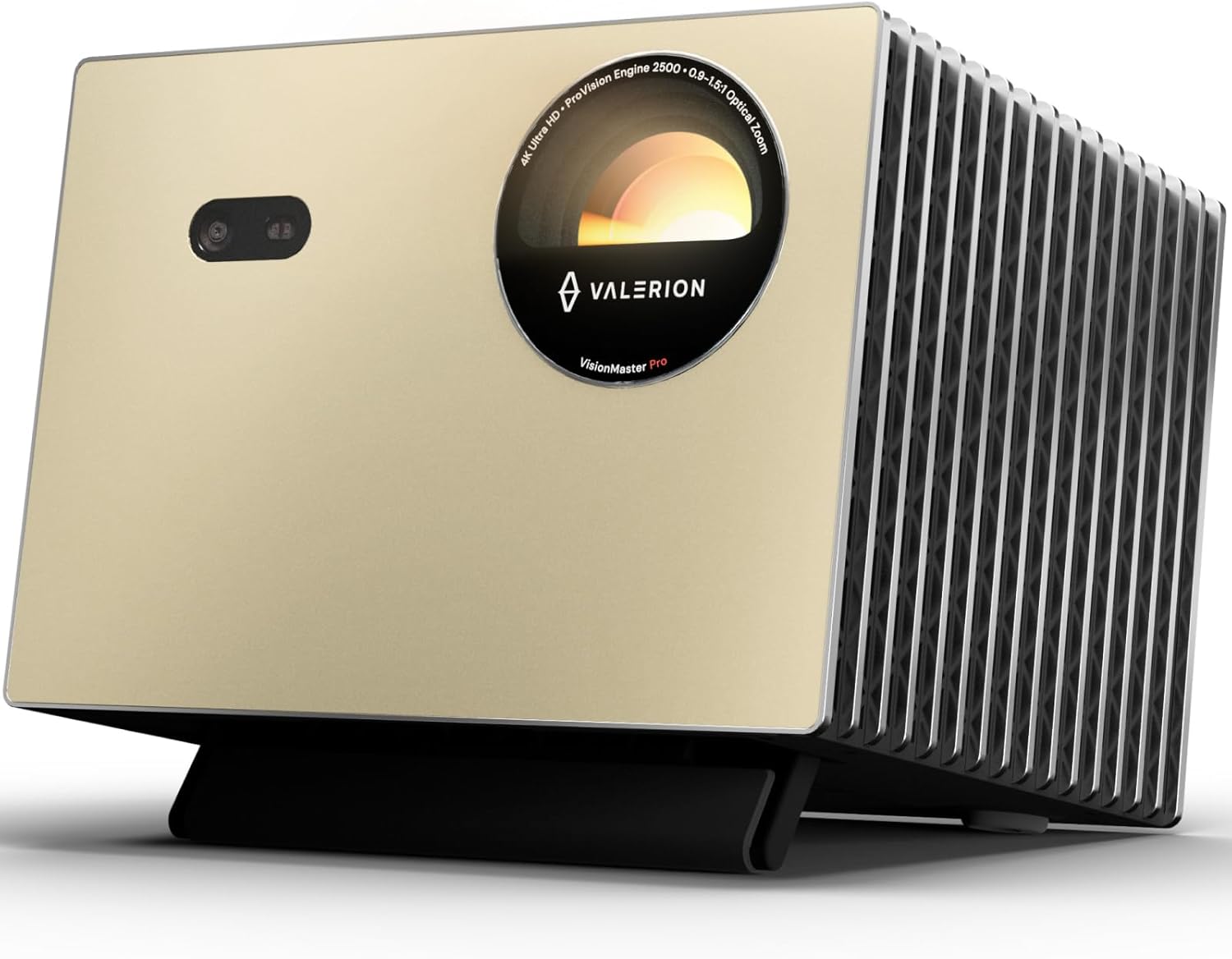
The VisionMaster Pro is the entry point into Valerion’s lineup — and at $1,999, it earns its Amazon’s Choice badge by delivering genuine 4K laser performance at a price that used to buy 1080p LED projectors. The headline difference from the Pro2 and Max is the light engine: this uses a standard DLP laser rather than RGB triple laser. That means the 110% Rec.2020 color gamut figure is achievable, but real-world colors tend to be slightly less saturated than the upper models.
The 2,500 ISO Lumens rating is honest and bright enough for a room with full blackout curtains — verified owner ARUN BB confirmed that even with some ambient ceiling light, the Pro performed better than expected. But bump that ambient light up significantly and you’ll notice wash-out on darker scenes. This projector rewards a dedicated setup: dark walls, blackout curtains, and a proper projection screen.
The 15,000:1 contrast ratio with Enhanced Black Level (EBL) produces genuinely impressive dark scenes. The EBL feature does come with a known limitation: subtitle brightness fluctuates during scene transitions, appearing brighter in light scenes and dimmer in dark scenes. Fan noise is also audible during these transitions — not an issue for most viewers, but worth noting for critical listening setups.
If you run a 5.1 or higher audio system in the same room, the Pro’s fan noise becomes more noticeable during quiet scenes. The Pro2 and Max reportedly have similar fan profiles, so this is a characteristic of the lineup rather than a flaw unique to the entry model.
- Genuine 4K laser at the most accessible price in the lineup
- 2,500 ISO Lumens — honest, usable brightness for dark rooms
- 240Hz/4ms gaming with RPG, FPS, RCG modes and FPS crosshair overlay
- OpticFlex 0.9–1.5x zoom handles varied room depths without lens swap
- 4GB/128GB chipset — massively faster than older 2GB/32GB projectors
- Google TV + Dolby Vision + HDR10+ full certification chain
- Standard DLP laser (not RGB triple) — color depth below Pro2/Max
- 2,500 lumens struggles with any meaningful ambient light
- EBL subtitle brightness fluctuation is a known, unfixed issue
- Fan noise noticeable during quiet scene transitions
- No vertical lens shift — ceiling mount placement is less flexible
- No Filmmaker Mode (available on Pro2 and Max)
The VisionMaster Pro is a strong buy only if you have a genuinely dark, light-controlled room. In that setup, the 4K laser image and gaming performance punch well above its $1,999 price point. If your room has any consistent ambient light, spend the extra $700 on the Pro2 and get 500 more lumens plus RGB triple laser.
VisionMaster Pro2 4K Laser Projector Review: The Sweet Spot for Home Theater Buyers
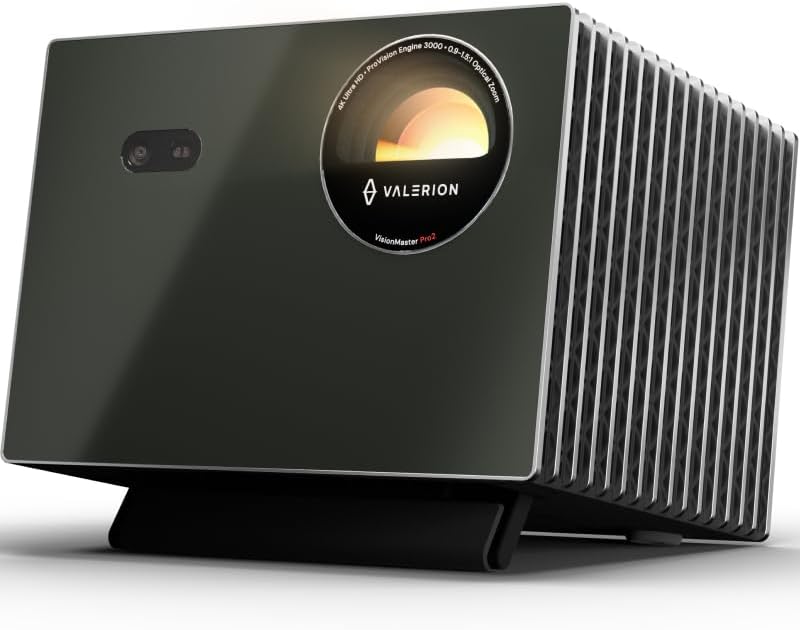
The VisionMaster Pro2 is the model that makes the most sense for the widest range of buyers — and the “50+ bought in past month” Amazon badge backs that up. The jump from the Pro to the Pro2 isn’t incremental. The switch to RGB Triple Laser changes the entire character of the image: deeper saturation, less perceptible rainbow effect, and an extra 500 ISO lumens (3,000 total) that meaningfully opens up your room placement options.
Filmmaker Mode arrives on the Pro2 — absent from the entry Pro. This preserves the director’s intended frame rate, color grading, and tone mapping without processing enhancement. For film enthusiasts who want to watch movies the way they were color-graded, Filmmaker Mode is a significant practical upgrade, not just a bullet point.
The Pro2 also carries the portable form factor with a carrying bag included — it’s designed to work both as a permanent ceiling mount and as a portable projector for backyard movie nights. The tripod mount compatibility (not on the Pro) makes this flexibility real, not theoretical.
One honest note: as verified buyer Shadow Phantom confirmed in a December 2025 review, the Pro2 does not support HDR10+ despite it appearing in some marketing copy — HDR10 (not HDR10+) is the actual ceiling for HDR on this model. For most streaming content, this won’t matter. For 4K Blu-ray collectors who specifically want HDR10+ disc playback, factor this in.
- RGB Triple Laser — significantly better color vs standard DLP laser
- 3,000 ISO Lumens handles light-controlled living rooms, not just black boxes
- Filmmaker Mode for authentic, unprocessed cinema viewing
- Portable + ceiling mount — genuine dual-use flexibility
- Currently $300 off list price — best value in the lineup right now
- 25,000-hour lamp life rating published (rare transparency from Valerion)
- HDR10+ not actually supported despite some listing mentions
- No vertical lens shift — still requires level ceiling mount placement
- No iris aperture control (contrast ceiling below the Max)
- Wi-Fi spec less clear than Pro/Max (not confirmed Wi-Fi 6E)
- No Ethernet port — relies on Wi-Fi for network connectivity
The Pro2 is the right call for 90% of buyers reading this article. The RGB Triple Laser upgrade from the Pro is real and visible. The $300 current discount makes the $700 gap from the Pro feel more like $400 in practice. Unless you specifically need the Max’s iris control, lens shift, or 3,500 lumen peak, the Pro2 delivers exceptional cinema quality without the Max’s price — or its reliability risks.
VisionMaster Max 4K Laser Projector Review: Flagship Performance, Real-World Caveats
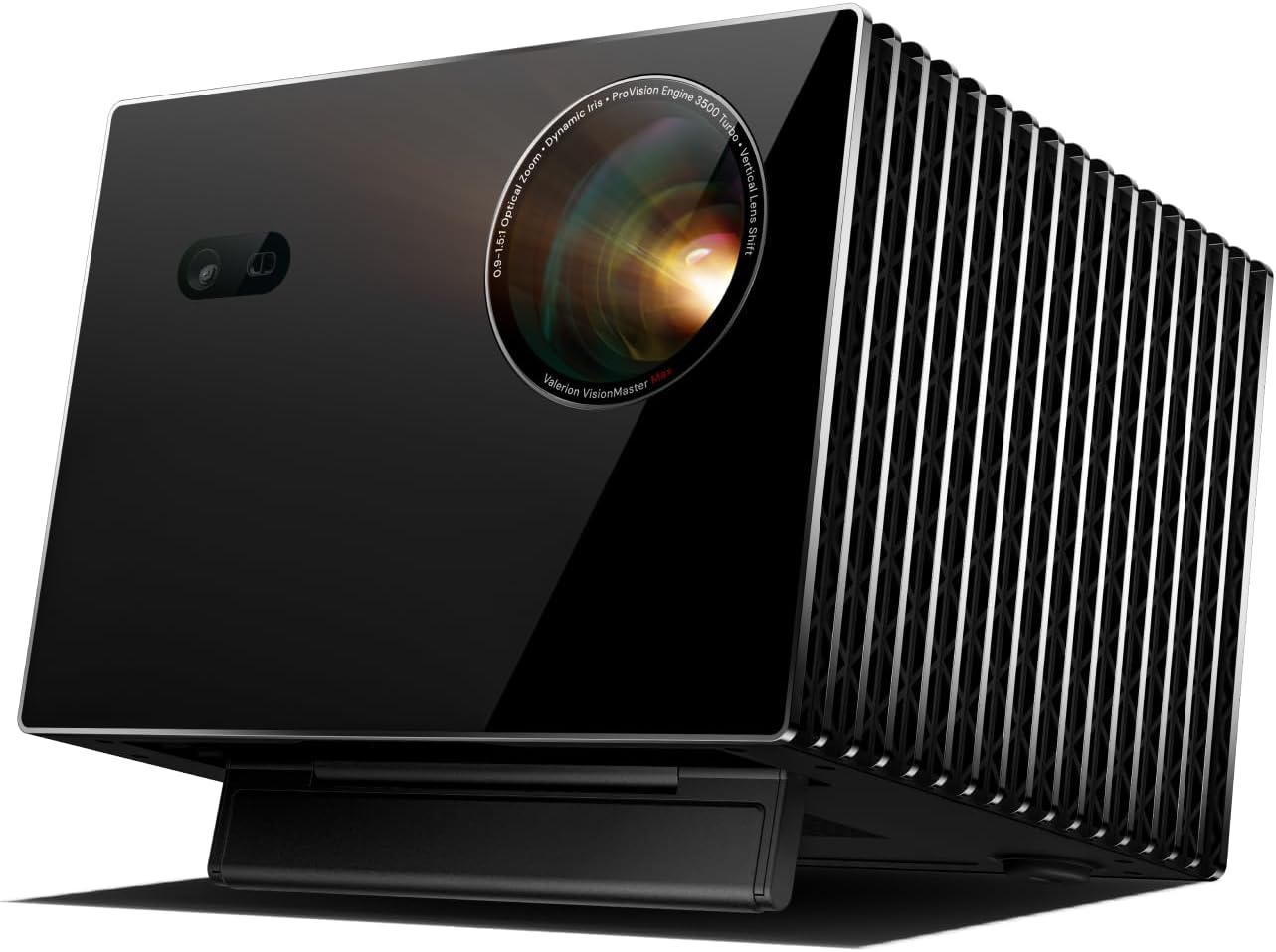
The VisionMaster Max is unambiguously Valerion’s best projector on paper — and in a properly set up, calibrated home theater, it delivers stunning results. The NoirScene Dark Field Engine (combining EBL algorithm + precision IRIS aperture + stray light shield) achieves a verified 50,000:1 contrast ratio, which is a genuine step above the 15,000:1 ceiling shared by the Pro and Pro2. When this projector works, multiple owners have described black levels as “almost OLED-like.”
The ±105% vertical optical lens shift is a meaningful practical upgrade that neither cheaper model has. This lets you mount the projector off-center vertically without geometric distortion — critical for ceiling mounts in rooms where the projector can’t be placed perfectly level with the screen center. For custom installs and serious home theaters, this alone can justify part of the price premium.
But the Max has a shadow over it in early 2026 owner reviews that’s worth being direct about: thermal management issues. Multiple verified purchasers report the unit shutting down after 2–3 hours of continuous use due to overheating, particularly during extended sports or TV series sessions. One reviewer found the “high altitude” fan setting helped extend runtime. Another reported a physical image distortion issue (brownish haze in the top-right corner) that appeared after one month of ceiling-mounted use. Amazon’s return policy is your safety net here.
The eARC implementation is also currently glitchy — no sound on YouTube, YouTube TV, Starz, or Peacock when eARC is set to Auto. Workaround: set eARC to Off and route audio through an external AVR. The software navigation UI also stutters during app browsing (though it’s smooth once content is playing). These are firmware-solvable issues, but as of early 2026 reviews, they remain unresolved.
The Max has a higher rate of negative reviews citing overheating and hardware defects compared to the Pro and Pro2. If you buy through Amazon, the 30-day return window protects you. Multiple reviewers who experienced issues did successfully exchange units. Consider this when comparing the Max at $3,999 vs. the Pro2 at $2,699 — the $1,300 gap partly reflects the risk premium of a first-generation flagship.
- 50,000:1 contrast with NoirScene (EBL + Iris + stray light shield) — best black levels in lineup
- 3,500 ISO Lumens — works in rooms with moderate ambient light
- ±105% vertical optical lens shift — proper custom install flexibility
- Laser speckle reduction — smoother gradients and skin tones on big screens
- Anti-RBE 99.99% reduction — virtually eliminates rainbow effect
- Control4 integration + Gigabit Ethernet for whole-home AV systems
- Thermal shutdowns reported after 2–3 hours continuous use
- eARC glitchy — no audio on several apps when set to Auto
- Occasional image distortion reports (top-right corner on some units)
- Navigation UI stutters during app browsing
- $3,999 — $1,300 more than the Pro2 for incremental (not transformative) gains
- First-generation flagship — firmware issues may take time to resolve
The Max delivers the best picture Valerion makes — when it’s working correctly. The issue is early-batch reliability. If you’re buying in March 2026, you’re accepting some first-gen risk. If you watch mostly single movies or 2-hour sessions (not extended TV marathons), and you have Amazon’s return window as a fallback, the Max’s image quality at $3,999 represents real value against $8,000–$15,000 alternatives. If you watch TV series daily, the overheating reports are a genuine concern.
Valerion 4K Laser Projector Buyer’s Guide: 6 Factors That Actually Matter
Before you commit to any of the three models, these six factors will determine which one is right for your specific room and use case — and they’re not the same factors Valerion leads with in its marketing.
Room Brightness Control
This is the single most important factor. Blackout room? The Pro’s 2,500 lumens is fine. Light-controlled living room? You need the Pro2’s 3,000 lumens minimum. Mixed-use room with windows? Consider the Max at 3,500 lumens — or add blackout shades before spending $4,000 on a projector.
Laser Technology (Single vs RGB Triple)
The Pro uses a single-source DLP laser. The Pro2 and Max use RGB triple laser (three separate lasers). RGB triple produces wider color gamut, better saturation, and less rainbow effect. If color accuracy matters to you, the minimum is the Pro2.
Placement Flexibility
All three have the same 0.9–1.5x zoom. But only the Max has ±105% vertical lens shift — meaning you can mount it above or below the screen centerline without keystone distortion loss. If your room requires an off-center ceiling mount, only the Max handles it optically correctly.
Primary Use Case
Gaming: All three are identical at 4ms/240Hz. Films: Pro2 gets Filmmaker Mode; Max adds iris + speckle reduction. Sports/TV marathons: The Max’s overheating reports make the Pro2 the safer 2026 choice for extended continuous viewing.
Existing AV System
If you have an external AVR, the eARC issues on the Max are a workaround, not a dealbreaker. If you’re relying on the projector’s built-in audio and smart TV apps, the Pro2’s cleaner software experience is more day-to-day usable as of early 2026 firmware.
Common Mistake: Focusing Only on Lumens
More lumens doesn’t always mean better picture. A bright projector in a dark room with no screen can look worse than a moderate-lumen projector on a proper gain screen. Invest in your room first — a $200 screen upgrade often beats spending $700 more on the next projector tier.
Frequently Asked Questions: Valerion VisionMaster Pro vs Pro2 vs Max
Final Verdict: Which Valerion VisionMaster Should You Buy?
After comparing specs, pricing, and 20+ real owner reviews across all three models, here’s the straightforward breakdown:
Dedicated dark room with full blackout setup. First-time 4K laser buyer upgrading from 1080p LED. Pure gaming at 4K/240Hz on a controlled budget.
Check Price — $1,999Living room home theater with some ambient light. Buyers who want the best image quality without the Max’s reliability uncertainty. Currently $300 off list.
Check Price — $2,699Dedicated home theater, custom AV install, or buyers who watch single films (not marathons) and want Valerion’s best picture. Buy with Amazon return window open.
Check Price — $3,999Whichever model you choose, pair it with a proper ambient light rejecting (ALR) or gain screen rather than a plain white wall. A $300–500 screen upgrade will visibly improve black levels, brightness uniformity, and color accuracy more than spending an extra $700 on the next projector tier. The projector is only half the equation.
Related posts:
 HAPPRUN C58 PRO Netflix 4K Smart Projector Review 2026: Tested & Rated (Worth $400?)
  I Tested the HAPPRUN 1500 ANSI Google TV Smart Projector — Here’s the Truth (2026)
  Best 8 Streaming Devices for Smart TVs in 2025: Which One Suits Your Needs?
  Roku Express 4K Plus Streaming Player in 2025: Cord-Cutter’s Choice
  Best Amazon Fire TV Stick for 2025: Comparing HD, 4K, 4K Max, and Cube
  The Best Amazon Early Prime Day 2025 Deals Under $99! (Plus a Premium Pick)
  Black Friday Tech Deals 2025: Grab Them Now or Wait for Black Friday 2026