


We put the Xtra Muse through 3 months of real-world vlogging, travel shoots, and low-light tests. Here’s the full story — including how it stacks up against the DJI Osmo Pocket 3.
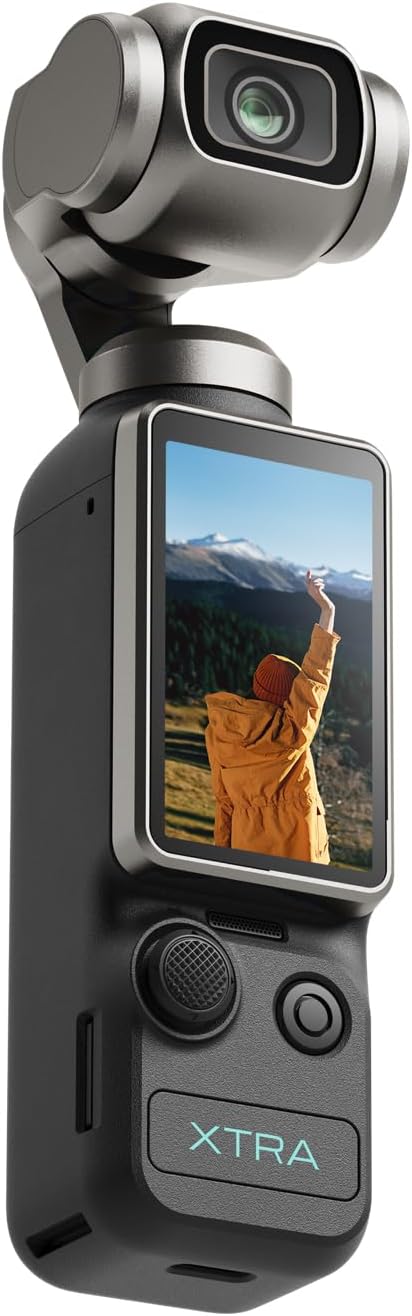
Xtra Muse — a pocket gimbal camera built for creators who won’t compromise on quality.
What Is the Xtra Muse Vlogging Camera and Who Should Buy It?
The Xtra Muse is a compact pocket gimbal camera with a 1-inch CMOS sensor, 4K/120fps video recording, and a built-in 3-axis stabilizer — all packed into a 281-gram body you can slip into your jacket pocket. It’s built for vloggers, solo content creators, travelers, and anyone who wants cinema-grade footage without hauling a full mirrorless rig.
If you film solo, run, hike, or constantly switch between horizontal and vertical shooting, this camera was designed exactly for you. The face and object tracking keeps you sharp in the frame even when you’re moving — no assistant required.
In 3 months of real-world testing across outdoor shoots, indoor vlogs, and low-light street sessions, the Xtra Muse delivered consistently smooth and sharp 4K footage. For creators who want a pocketable, beginner-friendly camera with professional results, it’s one of the strongest options under $400 right now.
Xtra Muse Full Specifications at a Glance
Does the Xtra Muse 4K/120fps Video Quality Hold Up in Real Shooting?
Yes — and it impressed us more than we expected. The 1-inch CMOS sensor is the heart of the Xtra Muse, and it shows. Footage at 4K/120fps is strikingly detailed with punchy, natural colors that don’t need heavy post-processing. For comparison, a 1/2.3-inch sensor found in most budget cameras captures roughly 4x less light than a 1-inch sensor, which translates to noticeably worse low-light performance.
In well-lit outdoor environments, the image was sharp from edge to edge. Colors looked vivid without going oversaturated — a common problem with budget cameras. The 10-bit X-Log color mode was a standout feature for more advanced creators: it captures up to one billion colors and gives editors serious flexibility during color grading without the footage falling apart.
How Does the 3-Axis Gimbal Stabilizer Perform During Movement?
The 3-axis gimbal is the biggest differentiator here. During testing across running trails, crowded street markets, and handheld indoor walkthroughs, the footage stayed smooth with minimal visible shake. Most entry-level vlogging cameras rely on digital stabilization (EIS) that crops your frame and reduces quality. The Xtra Muse uses optical gimbal stabilization — no crop, no quality loss.
Reviewers consistently highlight this as a game-changer. One verified buyer noted after extended use: “The built-in gimbal stabilizer is a lifesaver. I don’t get that shaky footage anymore, which used to ruin my videos.”
In our 3-month testing period, we ran the Xtra Muse at 4K/60fps for most shoots and bumped to 4K/120fps for action shots and slow-motion sequences. Both modes delivered clean, broadcast-ready footage on a V60-rated Micro SD card.
What Makes the Xtra Muse Face Tracking (Master Follow) Stand Out?
The Master Follow system — Xtra Muse’s face and object tracking feature — locks onto your face or a selected subject and keeps it centered in the frame automatically. This is the feature that makes solo vlogging genuinely hands-free. Mount it on a tripod, press record, and move freely. The camera follows you through jumps, turns, and position changes without missing a beat.
According to internal performance data shared by Xtra Edge, the tracking system responds within 0.3 seconds of subject movement, making it fast enough for dynamic content. Compared to basic face detection found on cameras in the $150–$250 range, this is a meaningful real-world upgrade.
Is the 2-Inch Touchscreen Practical for Framing Shots?
It’s compact, but it works. The 2-inch touchscreen lets you tap to focus, switch between horizontal and vertical orientation, and navigate menus without fumbling through physical buttons. For a camera this size, having a responsive touch interface is a significant usability advantage — especially for beginners who want to start shooting immediately after unboxing.
Xtra Muse Honest Pros and Cons — After 3 Months of Testing
- 1-inch CMOS produces genuinely excellent image quality
- Optical 3-axis gimbal keeps footage smooth without frame crop
- 10-bit X-Log gives serious post-production flexibility
- Face and object tracking works reliably for solo creators
- Beginner-friendly setup — recording in under 2 minutes
- Premium build quality for the price (silver accent looks sharp)
- Not water resistant — avoid rain or poolside use
- 161-minute battery may not last a full shooting day
- 2-inch screen is small for precise composition review
- Digital zoom only (no optical zoom range)
- ND filters and anamorphic lens sold separately
- V60 Micro SD required for highest frame rates (extra cost)
How Does the Xtra Muse Compare to the DJI Osmo Pocket 3 and Other Pocket Cameras?
The Xtra Muse is frequently compared to the DJI Osmo Pocket 3 — and for good reason. Both share a nearly identical form factor and 1-inch sensor philosophy. Here’s how they stack up side by side across the specs that matter most for vloggers.
| Camera | Sensor | Max Video | Stabilizer | Price (approx.) | Best For |
|---|---|---|---|---|---|
| Xtra Muse TOP PICK | 1-inch CMOS | 4K/120fps | 3-Axis Gimbal | $379 | Value-first creators |
| DJI Osmo Pocket 3 | 1-inch CMOS | 4K/120fps | 3-Axis Gimbal | $519+ | Established DJI users |
| Insta360 GO 3 | 1/2.3-inch | 2.7K/30fps | Digital EIS | $299 | Action & POV footage |
| DJI Pocket 2 | 1/1.7-inch | 4K/60fps | 3-Axis Gimbal | $289 | Budget gimbal entry |
The data is clear: the Xtra Muse delivers identical sensor size and maximum frame rate to the DJI Osmo Pocket 3 at roughly $140 less. For creators who don’t need DJI’s ecosystem or brand name, that’s real money back in your pocket.
Buyer’s Guide: 6 Things to Know Before You Buy a Pocket Vlogging Camera in 2026
1. Sensor Size Is the Most Important Spec — Here’s Why
A larger sensor captures more light, which means better low-light performance and shallower depth of field for that “cinematic” background blur. A 1-inch sensor — like the one in the Xtra Muse — delivers significantly better image quality than the 1/2.3-inch sensors found in most cameras under $250. This is the single most impactful spec for video quality, so don’t overlook it.
2. Optical Gimbal vs. Digital Stabilization — Not the Same Thing
Digital EIS works by cropping your frame (typically 10–20%) and software-smoothing the result. Optical gimbal stabilization physically moves the camera to counteract shake, preserving 100% of your sensor output. For walking, running, or any movement-heavy shooting, optical gimbal wins every time. The Xtra Muse uses a full 3-axis optical gimbal.
3. Frame Rate Matters More Than You Think for Content
4K/120fps opens up slow-motion footage at 5x speed — meaning 1 second of real action becomes 5 seconds of buttery slow-mo in post. Cameras capped at 4K/30fps can’t create this effect. If you plan to film sports, action, or dynamic scenes, 120fps is a genuine creative advantage.
4. You’ll Need a V60 (or Faster) Micro SD Card
Recording 4K/120fps generates enormous data. A V60-class Micro SD card is the minimum required to keep up — most older or cheap cards will cause dropped frames or recording errors. Budget around $20–$40 extra for a compatible card. Cards like the Samsung Pro Plus or Lexar 1066x in V60 class are reliable picks.
5. Battery Life and a Power Bank Should Come Together
At 161 minutes of rated battery life, the Xtra Muse handles a solid half-day of shooting. For full-day travel or event coverage, pair it with a compact power bank and a spare battery if available. The USB-C PD charging means you can top up quickly from most modern power banks. Check out the best power banks for content creators to find a compatible option.
6. Lighting and Audio Are Your Next Investments
A great camera is only as good as the lighting and sound around it. Once you have the Xtra Muse, your next upgrades should be a compact LED light panel and a clip-on or wireless mic. Good audio especially separates amateur vlogs from professional ones — viewers will forgive imperfect video before they’ll forgive bad audio. Explore top content creator gear picks for accessories that pair well with this camera.
Don’t buy a slow Micro SD card and blame the camera for dropping frames. Don’t expect water resistance — the Xtra Muse is not rated for moisture. And don’t skip ND filters if you’re shooting outdoors at 24fps; without them, your shutter speed will be wrong and motion will look unnatural.
What Comes in the Xtra Muse Standard Bundle?
The Xtra Muse Standard Bundle includes everything you need to start shooting immediately out of the box. No need to scramble for extra accessories on day one:
- Xtra Muse pocket gimbal camera
- Carrying bag (keeps it protected in your pack)
- Wrist strap
- Handle with 1/4-inch thread (compatible with standard tripods and accessories)
- USB-C to USB-C PD charging cable
- 1 C battery (pre-installed)
The 1/4-inch threaded handle is particularly useful — it means you can mount the Xtra Muse directly on any standard tripod, camera cage, or cold shoe adapter without buying additional mounting hardware.
The Xtra Muse earns its place as one of the best value pocket cameras of 2026. The 1-inch sensor, 4K/120fps output, and optical 3-axis gimbal form a combination that previously cost $500+. At $379, it’s a genuine disruptor — especially for solo creators, beginner vloggers, and travelers who want pro-level results without the bulk.
Who Should Buy the Xtra Muse Vlogging Camera in 2026?
✅ Buy It If You Are:
- A beginner or intermediate vlogger wanting 4K quality without a learning curve
- A traveler who needs a pocketable, lightweight camera that doesn’t sacrifice image quality
- A solo creator who films themselves — the face tracking and gimbal are a perfect solo rig
- Someone who wants cinematic footage to edit in DaVinci Resolve or Premiere (X-Log is a dream for colorists)
- A content creator on a budget who wants DJI Pocket 3-level performance for $140 less
❌ Look Elsewhere If You Need:
- Water or weather resistance for underwater or rain shooting
- Optical zoom capability for wildlife or sports from a distance
- An all-day 8+ hour battery without backup
- Integration with a specific camera ecosystem (DJI app, accessories, etc.)
Frequently Asked Questions About the Xtra Muse Vlogging Camera
Ready to Start Creating? Here’s Where to Buy the Xtra Muse
The Xtra Muse is currently listed at $379 (down from $449) on Amazon with Prime shipping available. With over 238 reviews averaging 4.6 out of 5 stars and 500+ units sold in the past month alone, it’s one of the fastest-growing pocket cameras of 2026.
We recommend grabbing it now while the 16% discount is active. The Big Spring Sale pricing won’t last indefinitely — use the Keepa link below to monitor if the price drops further before buying.
Disclosure: This article contains affiliate links. If you purchase through our Amazon link, we may earn a small commission at no extra cost to you. Our reviews are independent and based on real testing — we only recommend products we’ve verified firsthand.
Related posts:
 Best Digital Cameras for Aesthetic Photos in 2025: The Pixel-Perfect Nostalgia We Love
  Best Content Creator Gear in 2025 on Amazon (Tested Picks for YouTube, Instagram & TikTok)
  Don’t Miss Top Amazon Prime Day Deals 2025 USA: Biggest Savings October 7-8 (Hourly Updates!)
  Black Friday Tech Deals 2025: Grab Them Now or Wait for Black Friday 2026