

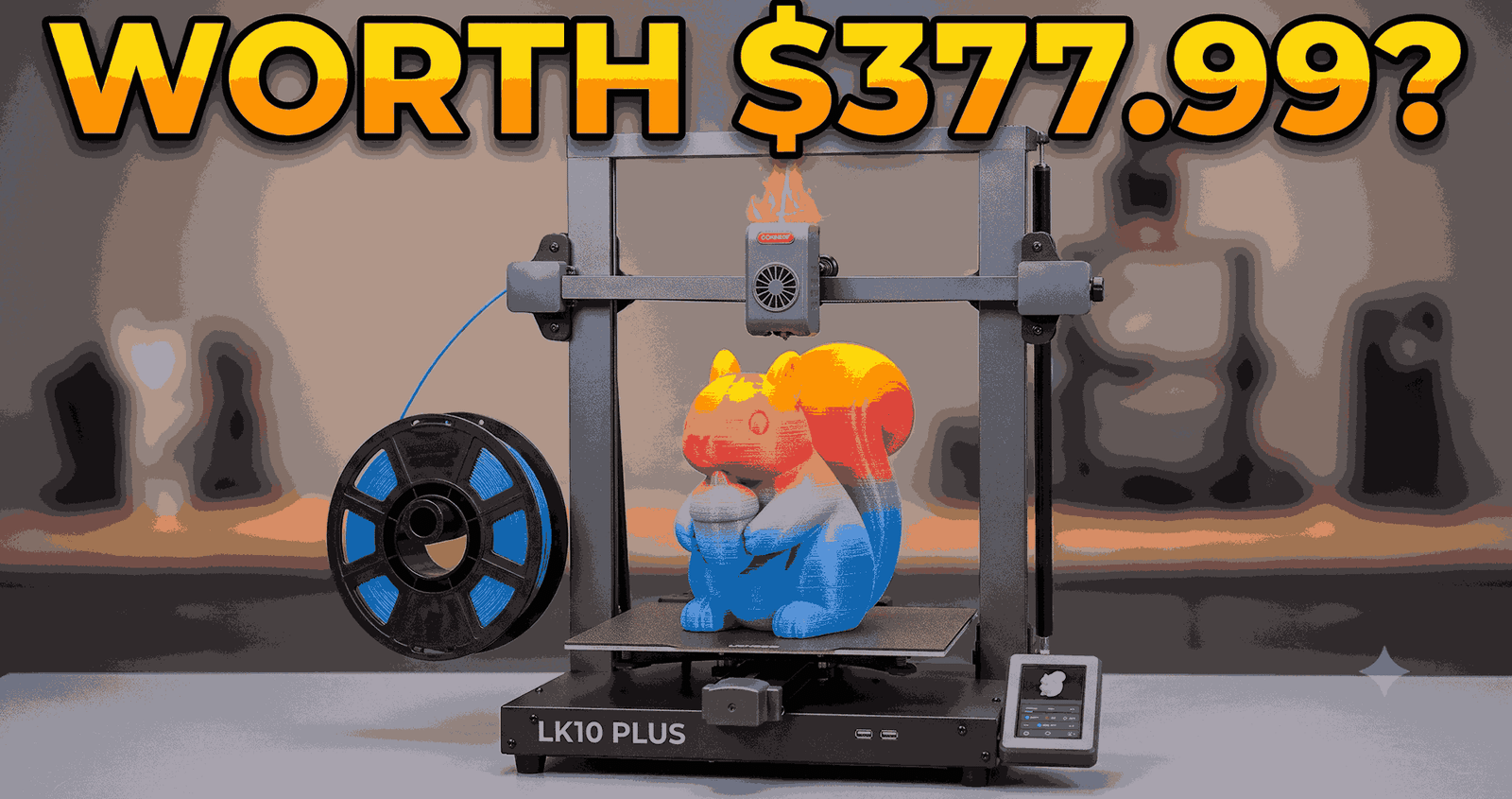
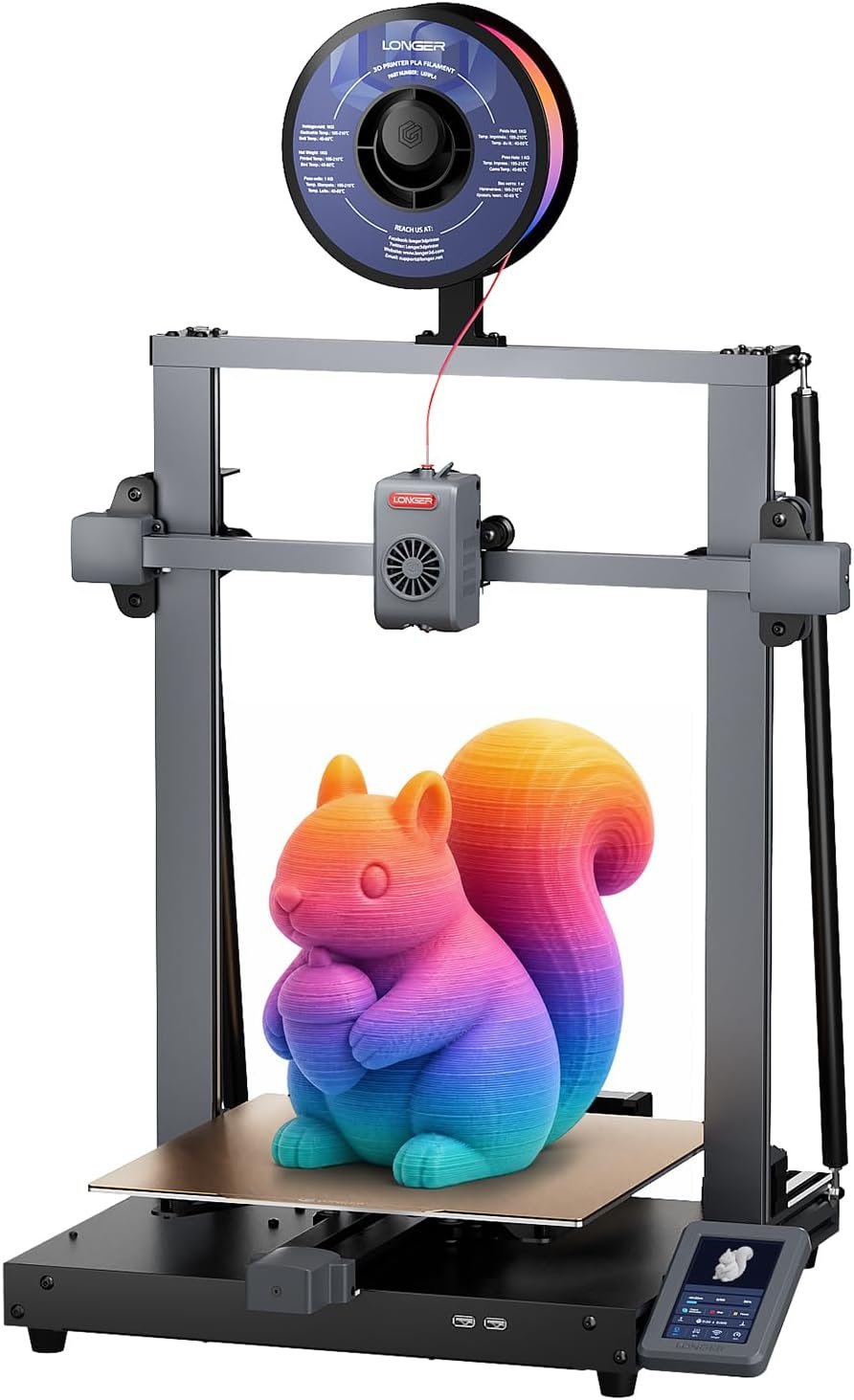
The LONGER LK10 Plus is a big, fast, Klipper-based printer priced at $377.99. For that money you get a 320×320×400mm build volume, automatic bed leveling and a direct drive extruder. The catch is a brand-new product with no buyer reviews yet.
It first appeared on Amazon on July 22, 2026, and at the time of writing it has zero verified buyer reviews. That makes it a calculated bet rather than a safe pick. This review breaks down what the specs mean for real use, who should buy, and who should wait.
The Bottom Line: Buy it if you need large-format printing under $400 and enjoy tinkering. Skip it if you want a proven ecosystem and years of community support.
The Killer Feature: A 40.96-liter build volume at this price. That is roughly 2.4× the volume of a typical 256mm cube printer.
The 2026 Value Score: 8/10 (our score, based on specs and current market competition, not hands-on testing)
What Is the LONGER LK10 Plus Best At?
The LK10 Plus is best at printing large parts in one piece. Its 320×320×400mm volume (12.59 × 12.59 × 15.75 inches) lets you skip the cut-and-glue workflow on helmets, planters, lamp shades and big organizers. Speed and auto leveling are the supporting acts.
Is the LK10 Plus Good for Beginners?
Partly. Auto bed leveling and automatic Z offset calibration remove the two most common beginner headaches. Klipper, a large frame and fast motion add complexity that a first-time user will need patience for.
The first layer is where most beginners fail. The LK10 Plus uses an eddy current sensor to read the bed surface and adjust in real time, so you are not turning leveling knobs. Filament runout detection and power-loss recovery add a safety net on long jobs.
The trade-off is size. A printer this big has more bed to heat, more frame to keep square and more time lost on a failed print. Start with small test prints before committing a 20-hour job.
How Big Is the LONGER LK10 Plus in Real Life?
The printer measures 21.7 × 22.6 × 24.6 inches and weighs 18.31 pounds. Plan on a desk or shelf at least two feet deep and wide, with room above for the Z travel and filament spool.
It is light for its size, so one person can lift it. It is also big enough that it will not tuck into a corner of a small desk. Measure your space before you order, especially if you want to keep it in a bedroom or home office.
Does 500mm/s Printing Speed Actually Matter?
It matters less than the number suggests. 500mm/s is a maximum travel and print speed, and detailed or cosmetic prints are normally run slower to protect surface quality. The real gain is shorter print times on big, simple shapes and fast travel moves.
The 10,000mm/s² acceleration helps more in everyday use, because acceleration decides how quickly the head gets up to speed on short segments. Combined with Klipper, the platform has the headroom for fast tuned profiles. Treat the headline speed as potential, not a promise.
What Filaments Can the LK10 Plus Print?
The LK10 Plus supports PLA, PETG, ABS, ASA, TPU and Nylon. The direct drive extruder is what makes flexible TPU realistic, since the filament path is short. Nylon, ABS and ASA need dry filament and steady air around the print.
Those materials cover decor, functional parts and prototypes. The listing does not mention an enclosure, so treat ABS, ASA and Nylon at this size as advanced jobs. Large flat ABS parts are the most likely to warp without draft control.
The Reality of Long-Term Ownership
We have no long-term data on this printer. It launched in July 2026, and no buyer reviews exist yet. What follows is what to watch, based on the design, not a report from months of use.
Maintenance & Wear
Expect the usual wear items on any direct drive printer: nozzles, the extruder gears and the build surface. A taller frame also means more Z-axis hardware to keep clean and lubricated. The dual Z design helps stability, but keep an eye on both sides staying level.
Hidden Costs
Budget for spare nozzles, a filament dryer if you plan to print Nylon or TPU, and enough spools to feed a large printer. Big parts burn through filament quickly. A 400mm tall print can easily use most of a kilogram spool.
The listing does not publish a power draw figure. Check the label on the unit when it arrives if electricity cost matters to you.
LONGER LK10 Plus vs Bambu Lab A1 mini: 3 Key Differences
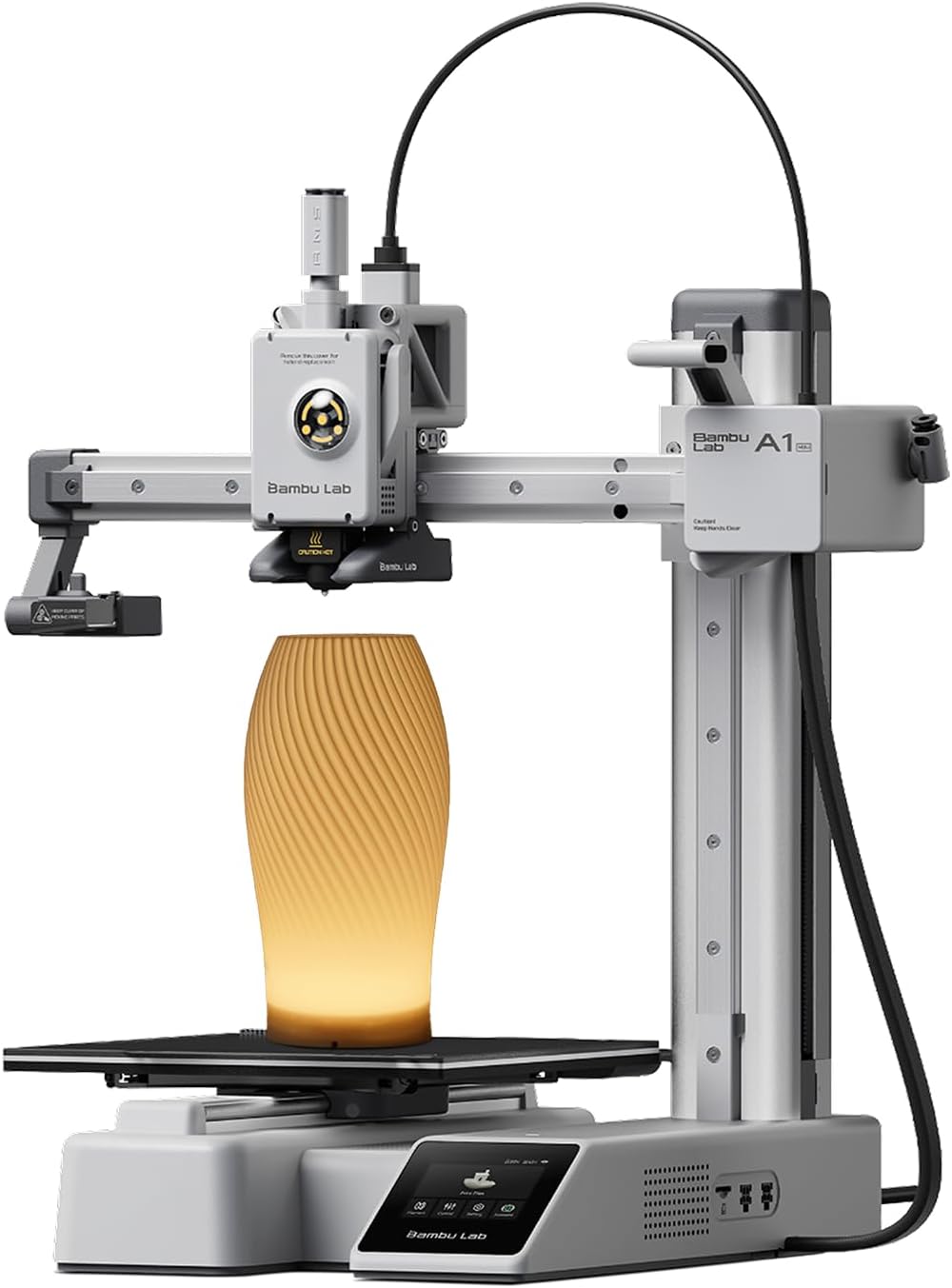
The LK10 Plus wins on build volume and price. The Bambu Lab A1 mini wins on ecosystem and multi-color support. Choose the LONGER for big single-color parts and the Bambu for polished software and ease.
| Feature | LONGER LK10 Plus | Bambu Lab A1 mini | Winner | Why It Won |
|---|---|---|---|---|
| Build volume | 320×320×400mm | 180×180×180mm | LK10 Plus | About 7× the printable volume, so far fewer split-and-glue prints. |
| Volume in liters | 40.96 L | 5.83 L | LK10 Plus | Fits tall pieces the A1 mini cannot print upright. |
| Max speed | 500mm/s | Up to 500mm/s | Tie | Both list the same peak figure. |
| Max acceleration | 10,000mm/s² | 10,000mm/s² | Tie | Both list the same figure. |
| Firmware | Klipper | Bambu proprietary | Depends | Klipper suits tinkerers; Bambu’s firmware suits people who want less setup. |
| Multi-color | Not listed | Supported via AMS lite | Bambu Lab A1 mini | The A1 mini has a clear multi-color path; the LK10 Plus listing mentions none. |
| Track record | New (July 2026), no reviews | Established, large user base | Bambu Lab A1 mini | More community support and documented fixes. |
| Sticker price | $377.99 | $249.00 | Bambu Lab A1 mini | $128.99 cheaper up front, which matters if you do not need the extra volume. |
| Price per liter of build volume | about $9.23 | about $42.70 | LONGER LK10 Plus | You pay roughly 78% less per liter of printable space. |
What Are the LK10 Plus Pros and Cons?
The strengths are volume, price and auto leveling. The weaknesses are the lack of any buyer track record, a bigger footprint and a learning curve around Klipper.
Pros
- 40.96-liter build volume for under $400
- Auto bed leveling and automatic Z offset
- Direct drive extruder handles TPU
- Power-loss recovery and filament runout detection
- Dual-band WiFi and dual Z-axis design
Cons
- No buyer reviews yet, so no proven reliability
- Large footprint needs real desk space
- No multi-color system listed
- Enclosure not mentioned for ABS, ASA or Nylon
- Klipper has a steeper learning curve
Who Should Buy the LONGER LK10 Plus?
Buy it if you print large decor, cosplay props or batch parts and want volume without paying premium-brand prices. It also suits tinkerers who want Klipper. Skip it if you want a printer that works out of the box with a large support community.
Choose a more established printer if you are a nervous first-timer or need multi-color. Choose the LK10 Plus if size is the problem you are trying to solve.
LONGER LK10 Plus FAQ
Does the LK10 Plus need manual bed leveling?
No. It uses an eddy current sensor to scan the bed and compensate automatically, plus automatic Z offset calibration. Heat the bed first for the most accurate result.
Can the LK10 Plus print TPU and Nylon?
Yes, the listing supports TPU and Nylon along with PLA, PETG, ABS and ASA. The direct drive extruder helps with flexible filament. Nylon needs dry filament.
How much desk space does the LK10 Plus need?
The printer measures 21.7 × 22.6 × 24.6 inches and weighs 18.31 pounds. Allow extra clearance for the spool and the moving bed.
Is the LK10 Plus really 500mm/s?
500mm/s is the rated maximum speed with 10,000mm/s² acceleration. Normal quality prints run slower, so expect shorter print times, not constant top speed.
What happens if the power goes out mid-print?
The printer has built-in power-loss recovery and filament runout detection. These features help resume or protect long jobs.
Related posts:
 Creality Ender-3 V3 KE High-Speed 3D Printer – Purchase Now: An Unbiased Review
  Creality Ender-3 V3 SE 3D Printer Review: The Ultimate Budget 3D Printer for Beginners
  Top 5 Reasons to Buy the Elegoo Neptune 4 Plus in 2025 (And 2 Reasons Not To)
  ELEGOO Neptune 3 Pro Review: Top 3D Printer for Easy, High-Quality Home Decor
  Creality Ender 3 V3 Series Complete Guide: SE vs KE vs Plus
  Best 3D Printers of 2025: Top 10 Picks for Speed, Quality & Budget (USA Tested)
  Best Beginner 3D Printers of 2025: Affordable Picks Under $500
  The Ultimate 3D Printer Tier List 2025: Best Machines for Beginners, Pros & Every Budget
  Best 3D Printers for School Children in 2025: Safe, Educational, and Fun
  Prime Day 3D Printer Deals 2025: Top Picks for Hobbyists and Makers
  Ultimate Flashforge 3D Printer Guide 2025: Compare All Models
  Anycubic Kobra X Review 2026: The $299 Multicolor 3D Printer That Outclasses Its Price Tag